
Fantastic Beasts: A Natural History (2022)
Story overview
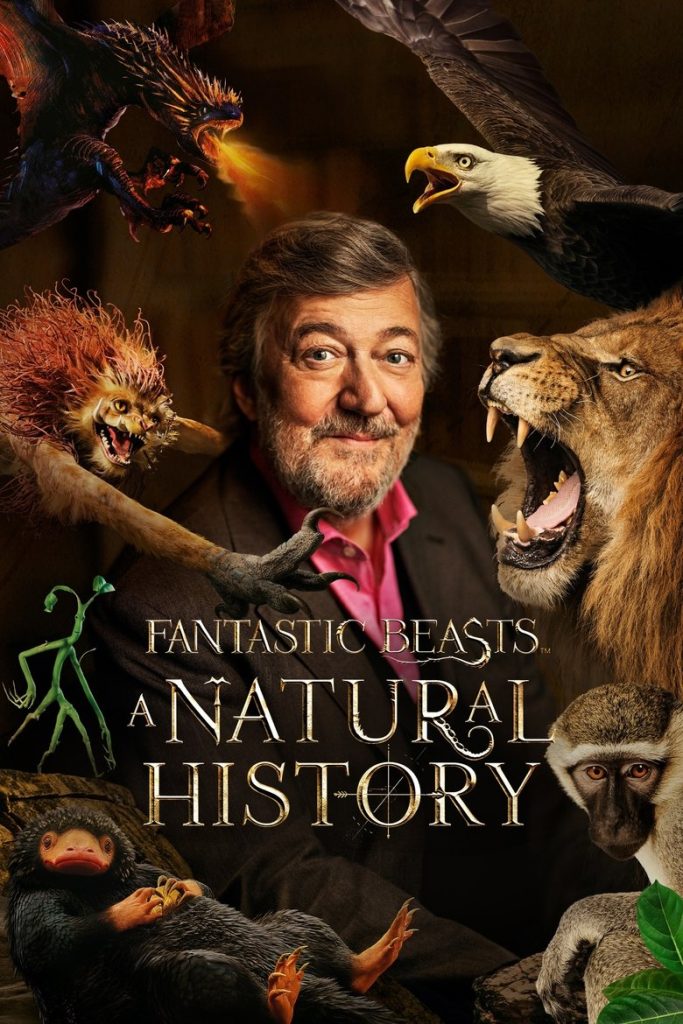
This documentary follows Stephen Fry as he explores the real-world animals and creatures that have inspired mythical beasts throughout history, literature, and film. It blends natural history with cultural storytelling, examining how legends like dragons and unicorns connect to actual species and human imagination.
Parent Guide
A family-friendly documentary that explores the intersection of natural history and mythology without concerning content. Suitable for curious children interested in animals, stories, or science.
Content breakdown
No violence or peril depicted. The documentary focuses on educational content and historical/cultural analysis.
Some footage of predatory animals or discussions of mythical creatures might be slightly intense for very young or sensitive children, but it's presented in a factual, non-frightening manner.
No offensive language. The narration and dialogue are educational and appropriate for all ages.
No sexual content or nudity.
No depiction or discussion of substance use.
Low emotional intensity overall. The tone is informative and engaging, with potential excitement or curiosity about the subject matter.
Parent tips
This educational documentary is suitable for most children, but younger viewers might find some animal footage or discussions of mythical creatures slightly intense. It's a great opportunity to discuss how stories evolve from real-world observations.
Parent chat guide
Parent follow-up questions
- Did you see any animals you recognized?
- What was your favorite creature in the movie?
- Why do you think people create stories about magical animals?
- How are the real animals different from the mythical ones?
- What does this documentary show about how myths develop across cultures?
- How does comparing real and mythical animals help us understand human history?
- In what ways do modern films and stories continue the tradition of creating 'fantastic beasts'?
- How does this documentary challenge or support the idea that myths are purely fictional?
🎭 Story Kernel
The film's true core is a profound exploration of connection—not between wizards and Muggles, but between humanity and the natural world. It positions the 'fantastic beasts' of the Wizarding World as metaphors for Earth's own endangered and miraculous creatures. The driving force isn't plot, but a sense of shared custodianship. By paralleling Newt Scamander's gentle conservation with real-world naturalists like Stephen Fry and Chris Packham, it argues that magic isn't supernatural power, but the awe of understanding and protecting life in all its forms. It's ultimately about finding the extraordinary in the ordinary ecosystems around us.
🎬 Visual Aesthetics
The visual language masterfully blends documentary realism with cinematic magic. Sweeping, David Attenborough-style wildlife shots of real creatures are seamlessly intercut with CGI sequences from the 'Fantastic Beasts' films, creating a cohesive visual tapestry. The color palette shifts deliberately: muted, earthy tones dominate the real-world natural history segments, while the Wizarding World scenes burst with the richer, more saturated colors of fantasy. This isn't just cross-cutting; it's visual argumentation, using parallel imagery to suggest the dragon and the komodo dragon are part of the same continuum of natural wonder.
🔍 Details & Easter Eggs
💡 Behind the Scenes
This BBC-Natural History Unit special was filmed at the actual Natural History Museum, London, using many of the same crews behind 'Planet Earth.' Stephen Fry, who narrates, is a lifelong friend of J.K. Rowling and was her personal choice for the role. The team consulted with the original 'Fantastic Beasts' film's creature designers to ensure the CGI beasts moved with biologically plausible weight and musculature, bridging fantasy and zoological accuracy. Notably, several scenes with the real animals required immense patience, as the filmmakers had to wait for natural behaviors that matched their fictional counterparts.
Where to watch
Choose region:
- HBO Max
- Amazon Video
- Apple TV Store
- Google Play Movies
- YouTube
- Fandango At Home
Trailer
Trailer playback is unavailable in your region.