
Fantastic Planet (1973)
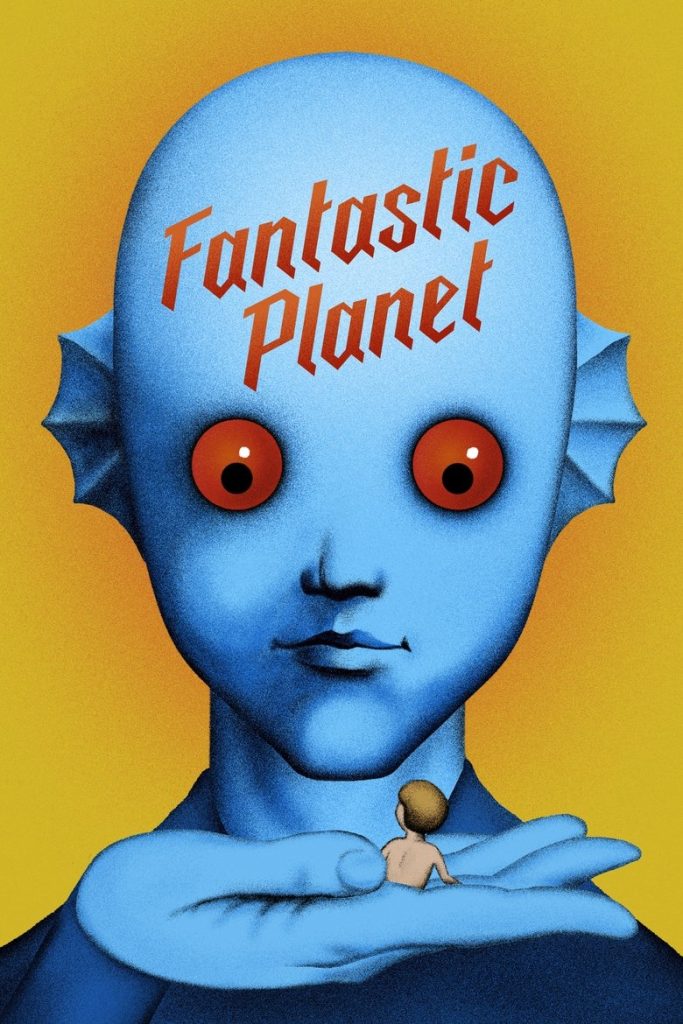
Story overview
Fantastic Planet is a 1973 animated science fiction film set on the alien world of Ygam. The story explores the relationship between the giant blue Draags, who are highly advanced beings, and the tiny human-like Oms who live among them. The Oms are treated as pets or pests by the Draags, leading to themes of oppression, survival, and the quest for understanding between different species. The film uses surreal animation to depict this imaginative alien society and the struggles within it.
Parent Guide
An animated science fiction film with mature themes of oppression and survival, suitable for older children and teens who can process its allegorical content.
Content breakdown
Includes scenes of characters being hunted, captured, and threatened with harm, though depicted through surreal animation rather than realistic violence.
Themes of slavery, systemic cruelty, and survival in hostile environments could be unsettling, especially given the power imbalance between characters.
No concerning language issues noted.
No sexual content or nudity present.
No substance use depicted.
Deals with themes of oppression, survival, and injustice that may provoke strong emotional responses about fairness and morality.
Parent tips
Fantastic Planet presents mature themes of slavery, oppression, and violence through its surreal animated style. While the animation might appear child-friendly at first glance, the content deals with serious subjects including periodic hunts and slaughter of characters, which could be disturbing for younger viewers. The film's abstract storytelling and philosophical undertones make it more suitable for older children and teenagers who can process its allegorical elements.
Parents should be aware that the film depicts unequal power dynamics and systemic cruelty, which might prompt questions about injustice and morality. The PG rating reflects these elements, but individual sensitivity varies—some children might find the imagery and themes unsettling despite the non-realistic animation style.
Parent chat guide
During viewing, pause if children seem confused or distressed by the power dynamics or survival situations. The abstract nature of the film might require occasional clarification about what's happening symbolically versus literally.
After watching, focus discussions on the film's messages about understanding differences and standing against injustice. Ask open-ended questions about how the characters' experiences might relate to real-world situations, while reassuring children about the fictional nature of the story.
Parent follow-up questions
- Did you like the colorful pictures in the movie?
- How did the big blue people and little people look different?
- What was your favorite part to watch?
- How do you think the little people felt?
- Would you want to visit that planet?
- Why do you think the big blue people treated the little people that way?
- What did you think about how the different groups lived together?
- How did the movie make you feel during different parts?
- What would you do if you were one of the little people?
- What did you learn from watching this story?
- What messages about power and fairness did you notice in the film?
- How did the animation style affect how you experienced the story?
- What parallels can you draw between the film's conflicts and real-world situations?
- How did the film handle themes of survival and resistance?
- What did you think about how different species understood each other?
- How does the film use science fiction to comment on social hierarchies and oppression?
- What philosophical questions about consciousness and rights does the story raise?
- How effective was the surreal animation in conveying serious themes?
- In what ways does the film challenge viewers' perspectives on 'otherness'?
- What contemporary issues might this 1973 film still be relevant to today?
🎭 Story Kernel
At its core, 'Fantastic Planet' explores the cyclical nature of oppression and the transformative power of knowledge. The Draags, giant blue humanoids, keep humans (Oms) as pets or exterminate them as pests, mirroring colonial and totalitarian systems. Terr's journey from pampered pet to revolutionary leader demonstrates how access to Draag education—their meditation devices that transmit knowledge directly—becomes the ultimate weapon. The film argues that true liberation comes not through brute force but through understanding the oppressor's technology and culture, culminating in the Oms using Draag teachings to negotiate coexistence rather than conquest.
🎬 Visual Aesthetics
The animation's surreal, psychedelic aesthetic creates a disorienting yet immersive alien world. Director René Laloux employs limited animation with detailed, painterly backgrounds influenced by Roland Topor's grotesque illustrations. The color palette shifts dramatically: warm earth tones in Om enclaves contrast with cold blues and sterile environments of the Draags. Symbolism abounds—the Draags' meditation scenes feature floating geometric shapes representing knowledge transfer, while the wild planet's bizarre creatures embody unchecked biological evolution. Camera perspectives emphasize scale differences, often shooting from low angles to make humans appear insignificant against their giant captors.
🔍 Details & Easter Eggs
💡 Behind the Scenes
The film originated from a collaboration between French director René Laloux and Polish illustrator Roland Topor at a psychiatric institution where both worked. Produced in Czechoslovakia during the Prague Spring's aftermath, its anti-authoritarian themes faced censorship challenges. The surreal soundtrack by Alain Goraguer blends jazz and electronic music, recorded in just two days. Originally titled 'La Planète sauvage,' it won the Special Jury Prize at Cannes in 1973, becoming a cult classic for its unique animation style and political subtext during the Cold War era.
Where to watch
Choose region:
- HBO Max
- HBO Max Amazon Channel
- Criterion Channel
- Cinemax Amazon Channel
- TCM
- Cinemax Apple TV Channel
- Amazon Video
- Apple TV
- Google Play Movies
- YouTube
- Fandango At Home
- The Roku Channel
- Plex
- Plex Channel
- Darkroom
Trailer
Trailer playback is unavailable in your region.