
Far Away From Raven’s Home (2021)
Story overview
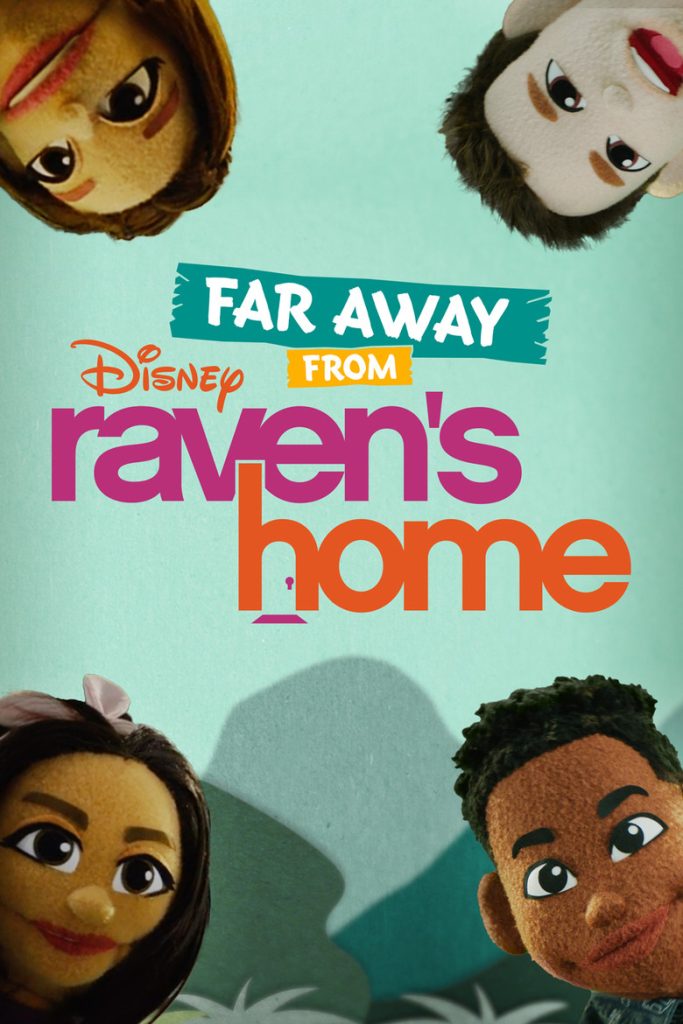
Far Away From Raven's Home is a 2021 comedy film that follows a lighthearted adventure. The story centers on humorous situations and playful character interactions typical of family-friendly comedies. While specific plot details are unavailable, it appears to focus on comedic escapades in a safe, entertaining context suitable for younger audiences.
Parent Guide
A family comedy likely suitable for most children, though specific content details are unavailable. The conservative recommendation assumes typical comedic elements without graphic or intense material.
Content breakdown
May include slapstick comedy or cartoonish peril typical of family comedies.
No indication of frightening or disturbing content based on available information.
No indication of strong or offensive language in this family comedy.
No indication of sexual content or nudity in this family-oriented film.
No indication of substance use or references in this family comedy.
May include mild emotional moments typical of comedic misunderstandings or resolutions.
Parent tips
This comedy film seems designed for family viewing with its lighthearted tone. Since detailed content information isn't available, parents should be prepared for typical comedic elements like slapstick humor or exaggerated situations that might be confusing for very young children. The absence of a specific rating suggests it's likely appropriate for general audiences, but previewing or checking reviews could provide additional insight into the humor style and any potentially sensitive content.
Parent chat guide
Parent follow-up questions
- What was the funniest part of the movie?
- Which character made you laugh the most?
- Can you show me how someone acted silly in the movie?
- What colors or sounds did you like?
- Was there anything that surprised you?
- What made the movie funny to you?
- How did the characters work together or help each other?
- What would you have done differently in a funny situation from the movie?
- What lesson could someone learn from the characters' adventures?
- Which scene would you want to watch again and why?
- What type of humor did the movie use most effectively?
- How did the characters' personalities contribute to the comedy?
- What real-life situations might be similar to the movie's humorous scenarios?
- How did the movie balance comedy with storytelling?
- What made certain jokes or situations work better than others?
- How does this comedy compare to other films in the genre?
- What social or cultural elements might influence the humor?
- How did timing and delivery affect the comedic impact?
- What themes emerged through the humorous situations?
- How might different audiences interpret the comedy differently?
🎭 Story Kernel
At its core, 'Far Away From Raven's Home' explores the suffocating nature of suburban conformity through Raven Baxter's reluctant return to her childhood home. The film cleverly subverts sitcom nostalgia by revealing how the very environment that once nurtured her creativity now threatens to erase her identity. Raven's struggle isn't against external villains but against the gravitational pull of domestic expectations—represented by her family's well-meaning but oppressive attempts to 'fix' her unconventional life. The driving force is Raven's internal conflict between embracing her authentic, chaotic self versus assimilating into the cookie-cutter existence she escaped years earlier. The film ultimately argues that true adulthood means creating your own home rather than returning to someone else's.
🎬 Visual Aesthetics
The cinematography masterfully uses visual claustrophobia to mirror Raven's emotional state. Wide shots of the sprawling, identical suburban houses gradually give way to increasingly tight close-ups as Raven feels trapped. The color palette shifts from the vibrant, saturated tones of Raven's independent life to the muted beiges and pastels of her childhood home, visually representing her fading individuality. Director's use of Dutch angles during family arguments creates unease, while the single continuous shot of Raven navigating her old bedroom—now converted into a generic guest room—powerfully conveys her displacement. The film's few fantasy sequences appear in hyper-saturated colors, highlighting how imagination becomes Raven's only escape from domestic blandness.
🔍 Details & Easter Eggs
💡 Behind the Scenes
The film was shot on location in the same Atlanta suburb where Raven-Symoné spent part of her childhood, adding autobiographical resonance. Several scenes incorporate improvisation between Raven-Symoné and the actors playing her family, capturing authentic familial tension. The production designer intentionally sourced furniture from 1990s catalogs to create the Baxter home's dated aesthetic. Notably, the script underwent significant revisions to move beyond typical sitcom reunion tropes, with Raven-Symoné contributing to her character's more nuanced emotional journey. The title itself references Raven's earlier Disney series while signaling this project's more mature perspective.
Where to watch
Choose region:
- Disney Plus