
Far from the Tree (2021)
Story overview
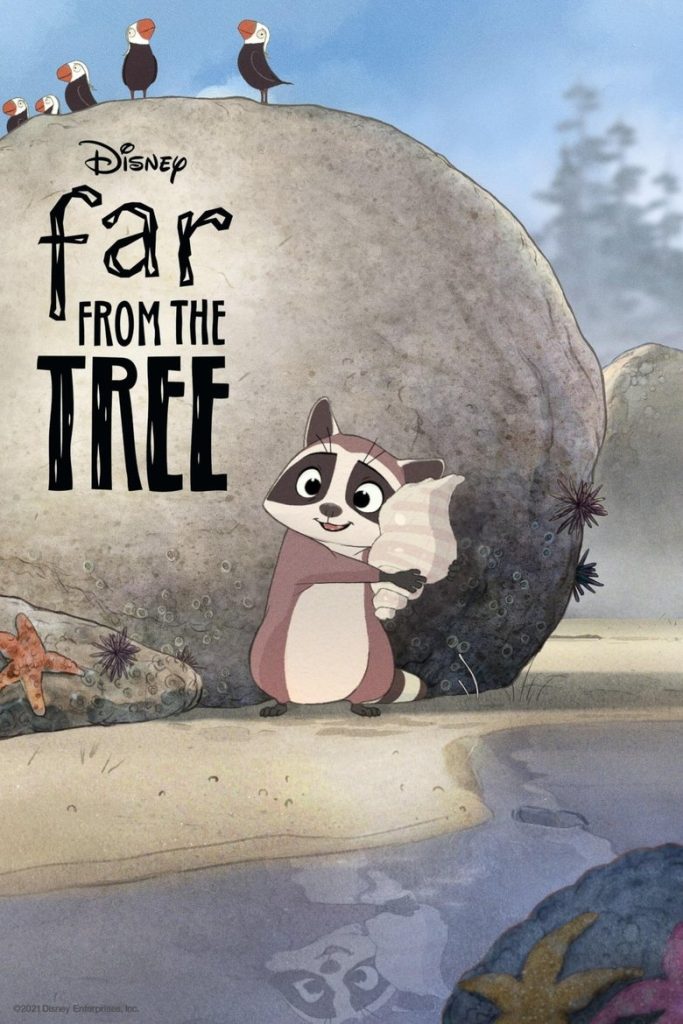
This short animated film follows a young raccoon exploring a Pacific Northwest beach while its parent tries to keep them both safe. The story explores themes of curiosity, parental protection, and the natural tension between exploration and safety. Through gentle animation, it portrays the universal dynamic of a child's desire to discover the world versus a parent's instinct to protect.
Parent Guide
A gentle, family-friendly animated short with no concerning content, suitable for all ages.
Content breakdown
No violence or peril present.
Nothing scary or disturbing in this gentle animation.
No dialogue or language content.
No sexual content or nudity.
No substance use depicted.
Mild tension between parent's concern and child's curiosity, resolved gently.
Parent tips
This G-rated animated short is completely appropriate for all ages with no concerning content. The 7-minute runtime makes it perfect for young children's attention spans. Parents can use this film as a springboard for conversations about safety, curiosity, and parent-child relationships in a gentle, accessible way.
Parent chat guide
Parent follow-up questions
- What did the little raccoon want to do?
- Why was the parent raccoon worried?
- Have you ever wanted to explore something new?
- What do you think is safe to explore?
- How do you feel when someone keeps you safe?
- Why do you think the young raccoon was so curious?
- What are some ways parents keep children safe?
- Have you ever felt torn between exploring and staying safe?
- What did you learn about raccoons from this film?
- How can children balance curiosity with safety?
- What does this film say about the parent-child relationship?
- How do different perspectives (parent vs. child) affect decisions about safety?
- What natural instincts did you see in the raccoons?
- How might this story apply to human families?
- What responsibilities do parents have versus what freedoms children want?
- How does this film portray the tension between protection and independence?
- What universal themes about growing up does this animation explore?
- How might different cultures approach the balance of safety and exploration?
- What does the beach setting symbolize in this story?
- How do short films effectively convey complex relationships?
🎭 Story Kernel
At its core, 'Far from the Tree' examines how cycles of trauma perpetuate across generations, not through grand gestures but through subtle, inherited behaviors and unspoken family dynamics. The film's central tension arises from the protagonist's discovery of her parents' painful past, forcing her to confront how their unresolved pain has shaped her own identity and parenting instincts. The driving force isn't plot advancement but emotional excavation—each character is motivated by a desperate need to either repeat or break familial patterns, creating a powerful study of nature versus nurture where both sides are stained by history.
🎬 Visual Aesthetics
The film employs a muted, almost documentary-like color palette dominated by earthy tones and desaturated blues, visually mirroring the emotional restraint of its characters. Cinematography favors intimate close-ups and shallow depth of field, isolating characters within their emotional landscapes. Key scenes use deliberate framing—characters often appear separated by doorways or windows, emphasizing emotional distance. The visual language remains consistently understated, avoiding melodrama in favor of quiet, observational moments that accumulate emotional weight through subtlety rather than spectacle.
🔍 Details & Easter Eggs
💡 Behind the Scenes
Based on Rachel Lyon's novel, the film was shot on location in coastal Maine, with the production deliberately scheduling shooting during the region's moodiest autumn months to capture the melancholic atmosphere. Director Natalie Krinsky worked with the cast through extensive improvisational workshops to develop the authentic, overlapping dialogue that characterizes family interactions. The screenplay underwent significant revisions to distill the novel's sprawling narrative into its essential emotional throughline, with particular attention to maintaining the source material's nuanced treatment of inherited trauma.
Where to watch
Choose region:
- Disney Plus
Trailer
Trailer playback is unavailable in your region.