Farewell, America (2026)

Released: 2026-01-01 Recommended age: 10+ No IMDb rating yet
Farewell, America

Movie details

  • Genres: Documentary
  • Director: Bilal Motley
  • Original language: en
  • Premiere: 2026-01-01

Story overview

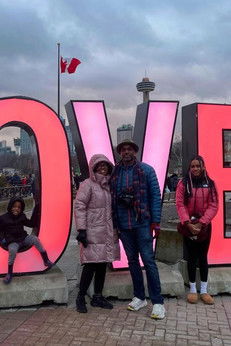
This documentary follows a Black American family's decision to stay in the United States and participate in a pivotal presidential election, rather than emigrate to Canada. It explores themes of civic engagement, racial identity, and political activism through their personal journey.

Parent Guide

Educational documentary suitable for families with older children interested in politics and social issues. Contains mature themes about racial inequality and political tension.

Content breakdown

Violence & peril
None

No physical violence depicted. Contains discussion of systemic racism and political tension which some children might find concerning.

Scary / disturbing
Mild

Themes of racial discrimination and political uncertainty may be unsettling for sensitive viewers. No graphic or intense imagery.

Language
None

No offensive language expected in documentary format. May include political terminology and discussions of sensitive topics.

Sexual content & nudity
None

No sexual content or nudity in this documentary.

Substance use
None

No depiction or discussion of substance use.

Emotional intensity
Moderate

Emotionally charged discussions about racial justice, political participation, and family decisions. The family's dilemma creates narrative tension.

Parent tips

Discuss the importance of voting and civic responsibility with your children. Be prepared to explain historical and current racial issues in age-appropriate ways. The film may prompt questions about political systems and social justice.

Parent chat guide

Use this documentary as a springboard to talk about democracy, elections, and standing up for what you believe in. For younger viewers, focus on the family's unity and decision-making process. For teens, explore deeper themes of systemic change and personal agency.

Parent follow-up questions

  • What did the family decide to do together?
  • How do families make big decisions?
  • What does it mean to vote?
  • Why was the election important to the family?
  • What are some reasons people might want to move to another country?
  • How can families work together for change?
  • What historical factors might influence a Black family's decision to stay or leave?
  • How do elections affect people's daily lives?
  • What does 'civic engagement' mean?
  • How does this documentary reflect current political realities?
  • What are the ethical considerations of staying versus leaving during political turmoil?
  • How can documentary filmmaking influence social change?
⚠️ Deep Film Analysis (Contains Spoilers) · Click to Expand
A farewell letter to American ideals, written in the ink of disillusionment.

🎭 Story Kernel

At its core, 'Farewell, America' is a psychological autopsy of the American Dream's corpse, dissecting the rot beneath the patriotic veneer. The film isn't about a character leaving a country, but about a soul leaving its own beliefs. The protagonist's journey is driven by the slow, agonizing realization that the foundational myths of meritocracy and freedom are transactional fictions. His desperate attempts to expose the truth are less about heroism and more about a final, cathartic scream into a void that has been carefully engineered to absorb dissent without echo. The real conflict is internal: the death of faith.

🎬 Visual Aesthetics

The film's visual language is a masterclass in controlled decay. Director Lin Oeding employs a desaturated, almost sickly color palette—muted browns, grays, and washed-out blues—that mirrors the protagonist's eroding psyche. The camera work is deliberately claustrophobic, using tight close-ups and shallow depth of field to trap characters in their own frames, making even wide American landscapes feel like prisons. Action sequences are brutal and functional, devoid of stylized glamour; every punch and gunshot carries the weight of consequence and systemic failure, visualized through shaky, immersive camerawork that refuses to let the audience look away.

🔍 Details & Easter Eggs

1
The recurring motif of broken clocks and stopped watches in the protagonist's apartment isn't just set dressing; it's a visual foreshadowing of his impending 'end of time'—the moment his personal American narrative conclusively shuts down.
2
In the climactic confrontation, the antagonist's office features a prominently displayed, empty flagpole outside the window. This subtle detail visually underscores the film's thesis: the symbols remain, but the ideals they represent have long since vacated the premises.
3
Early scenes show the protagonist unconsciously aligning books and pens with military precision on his desk, a tiny behavioral tic that perfectly foreshadows his later, explosive rebellion against the rigid, orderly system he once served.

💡 Behind the Scenes

The film's gritty, authentic feel is no accident. Key scenes were shot guerrilla-style in active Washington D.C. locations with minimal permits, capturing raw, unrehearsed public reactions. Lead actor Brandon Perea performed most of his own stunts, including a complex freeway chase sequence filmed on a closed section of the 110 Freeway in Los Angeles. The script underwent significant revisions during production to reflect real-time political anxieties, with the director encouraging improvisation to heighten the sense of visceral, unfolding crisis.

Where to watch

Streaming availability has not been announced yet.

SkyMe App
SkyMe Guide Download on the App Store
VIEW