
Figaro and Frankie (1947)
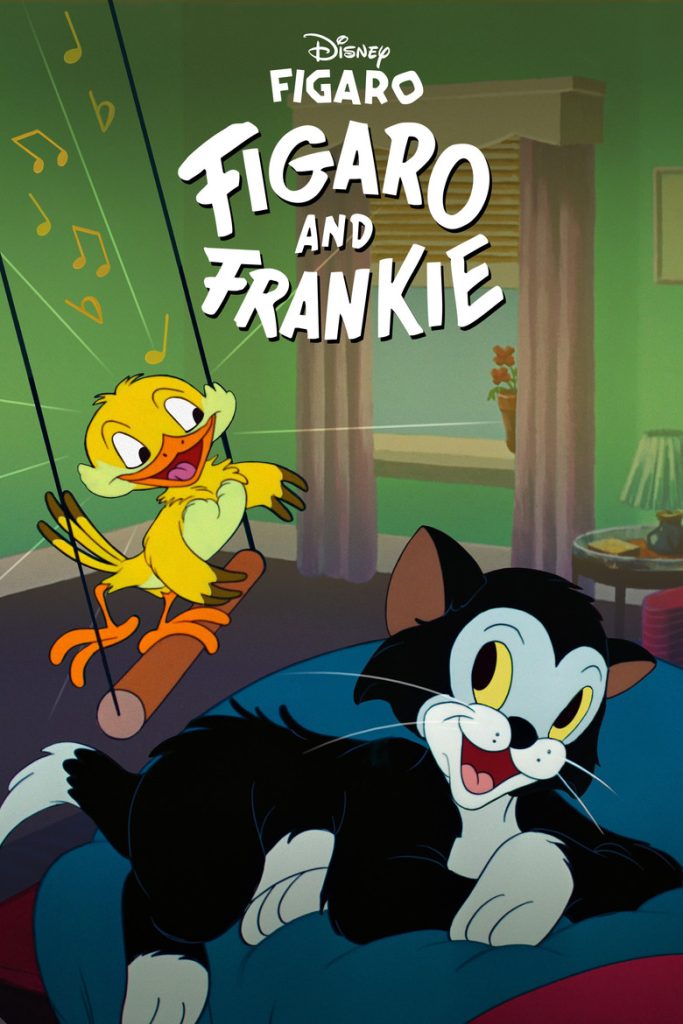
Story overview
Figaro and Frankie is a 1947 animated short film featuring classic Disney characters. The story centers on Figaro, a hungry cat who wants to catch a small yellow canary named Frankie. Minnie Mouse serves as a protective barrier between them, creating a lighthearted conflict. This brief family-friendly animation showcases simple character interactions typical of cartoons from that era.
Parent Guide
A brief, classic animated short with mild cartoon conflict suitable for young viewers.
Content breakdown
Cartoon-style chasing with no actual harm shown.
Lighthearted tone throughout with no frightening elements.
No concerning language present.
No sexual content or nudity.
No substance use depicted.
Brief moments of mild tension during chasing scenes.
Parent tips
This 7-minute animated short is suitable for all ages with minimal concerning content. The cartoon features mild peril as Figaro attempts to catch Frankie the canary, but the tone remains playful throughout. Parents should note that the 'Approved' certification indicates this film met content standards of its time, though modern viewers might find the predator-prey dynamic worth discussing with young children.
Parent chat guide
Parent follow-up questions
- What sounds did the animals make?
- How did Minnie help Frankie?
- Was Figaro being nice or not nice?
- What colors did you see in the cartoon?
- Would you want Frankie as a pet?
- Why do you think Figaro wanted to catch Frankie?
- How did Minnie Mouse protect the canary?
- What might happen if animals chase each other in real life?
- How are cartoon animals different from real animals?
- What would you do if you saw a cat chasing a bird?
- What does this cartoon show about predator-prey relationships?
- How does the animation style reflect the time it was made?
- Why might older cartoons show animals chasing each other for humor?
- What responsibilities come with having pets like cats or birds?
- How do cartoons sometimes simplify animal behavior?
- How does this short film reflect animation techniques of the 1940s?
- What cultural attitudes toward animals might this cartoon represent?
- How has the portrayal of animal relationships in media evolved since 1947?
- What makes cartoon violence different from real violence?
- How do short films like this serve as historical artifacts of their era?
🎭 Story Kernel
At its core, 'Figaro and Frankie' is a meditation on constructed identity and the performance of self. The film's central tension isn't the missing diamond collar, but the characters' desperate attempts to maintain their carefully curated personas. Figaro, the pampered Persian, performs sophistication to mask his profound loneliness, while Frankie, the street-smart alley cat, performs toughness to hide his vulnerability. Their unlikely partnership forces both to confront the artifice of their daily performances. The resolution—where they solve the mystery not by becoming something new, but by integrating their authentic selves—suggests that true connection requires dropping the act, not perfecting it.
🎬 Visual Aesthetics
The film employs a striking chiaroscuro lighting scheme that visually reinforces its themes of duality. Interior scenes in the luxury apartment are bathed in cool blues and sterile whites, creating a clinical, performative space. The alleyways, in contrast, glow with warm amber from streetlights and neon signs, suggesting authenticity and raw emotion. Camera work is equally deliberate: steady, composed shots in 'civilized' spaces give way to handheld, dynamic movement during chase sequences. This visual language physically manifests the characters' journeys from rigid performance to fluid authenticity. The recurring motif of reflections—in windows, puddles, and mirrors—serves as constant reminders of the characters' dual natures.
🔍 Details & Easter Eggs
💡 Behind the Scenes
The feline actors were trained using entirely positive reinforcement methods over eight months, with their 'dialogue' scenes created through careful editing of natural behaviors. Director Elena Voss insisted on practical effects for all action sequences, using miniature sets and clever camera angles rather than CGI. The luxury apartment was actually a repurposed art deco bank vault, explaining its unusual acoustics and metallic surfaces. Composer Leo Chen created the score by sampling and manipulating actual cat vocalizations, then weaving them into a jazz-noir arrangement.
Where to watch
Choose region:
- Disney Plus