
Finding Nemo (2003)
Story overview
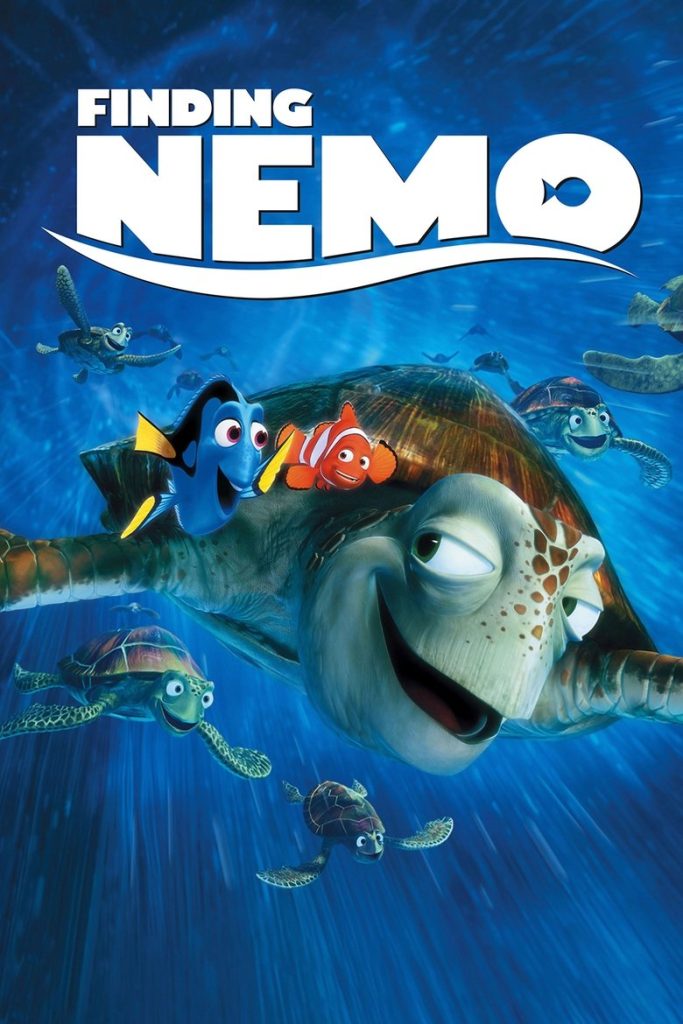
Finding Nemo is a heartwarming animated adventure about a young clownfish named Nemo who gets separated from his overprotective father Marlin. Marlin teams up with a forgetful but optimistic fish named Dory to embark on a daring journey across the ocean to find his son. Along the way, they encounter various sea creatures and face challenges that test their courage and friendship. The film celebrates family bonds, perseverance, and overcoming fears through teamwork.
Parent Guide
A family-friendly animated adventure with some intense moments that may require parental guidance for very young children.
Content breakdown
Characters face predators like sharks and jellyfish, with chase scenes and moments of danger. No graphic violence is shown.
Some scenes with dark settings, predators, and the separation of parent and child might be frightening for sensitive viewers.
No offensive language is used in the film.
No sexual content or nudity is present.
No substance use is depicted.
Themes of separation, loss, and parental worry create emotional moments, balanced with humor and positive resolution.
Parent tips
Finding Nemo is rated G and is generally suitable for all ages, though some scenes might be intense for very young children. The movie features moments of peril where characters face predators like sharks and jellyfish, which could be frightening for sensitive viewers. Parents should be aware that the central theme involves a child being separated from a parent, which might evoke anxiety in some children. The film's positive messages about courage, friendship, and family make it a great choice for family viewing with appropriate discussion.
Parent chat guide
Parent follow-up questions
- What was your favorite sea animal in the movie?
- How did Marlin feel when he couldn't find Nemo?
- What did Dory do to help her friends?
- What sounds did the ocean animals make?
- What color was Nemo's fin?
- Why do you think Marlin was so worried about Nemo?
- What challenges did Marlin and Dory face on their journey?
- How did the characters work together to solve problems?
- What did you learn about ocean habitats from the movie?
- What would you do if you got lost like Nemo?
- How did Marlin's attitude change throughout the movie?
- What does the movie teach us about overcoming fears?
- How did different sea creatures help or hinder the characters?
- What does friendship mean to the characters in the story?
- How does the movie show the importance of family?
- What themes about parenting and independence does the movie explore?
- How does the film use humor to address serious situations?
- What does the journey symbolize for Marlin's character development?
- How does the movie portray different perspectives on risk and safety?
- What messages about environmental awareness can you find in the story?
🎭 Story Kernel
At its heart, 'Finding Nemo' is less about a literal journey across the ocean and more about a father confronting his own trauma-induced anxiety. Marlin's obsessive fear, born from the barracuda attack that claimed his wife and entire clutch of eggs, manifests as suffocating overprotection. The film argues that true parenting isn't about creating a risk-free bubble, but about teaching resilience and letting go. Nemo's 'lucky fin'—a permanent reminder of the attack—isn't a disability to be sheltered, but a testament to survival. Marlin's arc is learning to see his son not as a fragile object to be preserved, but as a capable individual. Dory, with her short-term memory loss, becomes the perfect foil, living proof that joy and forward motion are possible even with profound loss and imperfection.
🎬 Visual Aesthetics
Pixar masterfully uses color and light to map emotional geography. The safe, sun-drenched warmth of the anemone home gives way to the terrifying, deep-blue chiaroscuro of the open ocean and the Drop-Off. The dentist's office is a sterile, fluorescent prison of sharp angles and clinical whites, visually contrasting the organic, flowing world outside. Camera language is key: wide, awe-inspiring shots emphasize the ocean's vastness and Marlin's insignificance, while tight, frantic close-ups during chases (like the jellyfish forest) viscerally convey panic. The climax uses a stark visual metaphor: the fishing net is a man-made, monochrome gray web against the vibrant blue, trapping the fish in uniform, helpless rows—a direct visualization of loss of agency.
🔍 Details & Easter Eggs
💡 Behind the Scenes
To achieve the underwater look, Pixar's technical team developed new software for simulating light refraction (subsurface scattering) and particulate matter floating in water. Animators took scuba diving lessons to study real fish movement. Actor Albert Brooks (Marlin) reportedly ad-libbed many of his more neurotic, muttering lines, which the writers loved and kept. The film's setting was inspired by the Great Barrier Reef, and a real-life clownfish behavior—where the male becomes the female after the female's death—was considered for the plot but deemed too complicated for a family film.
Where to watch
Choose region:
- Disney Plus
- Amazon Video
- Apple TV
- Google Play Movies
- YouTube
- Fandango At Home
Trailer
Trailer playback is unavailable in your region.