
Fire of Love (2022)
Story overview
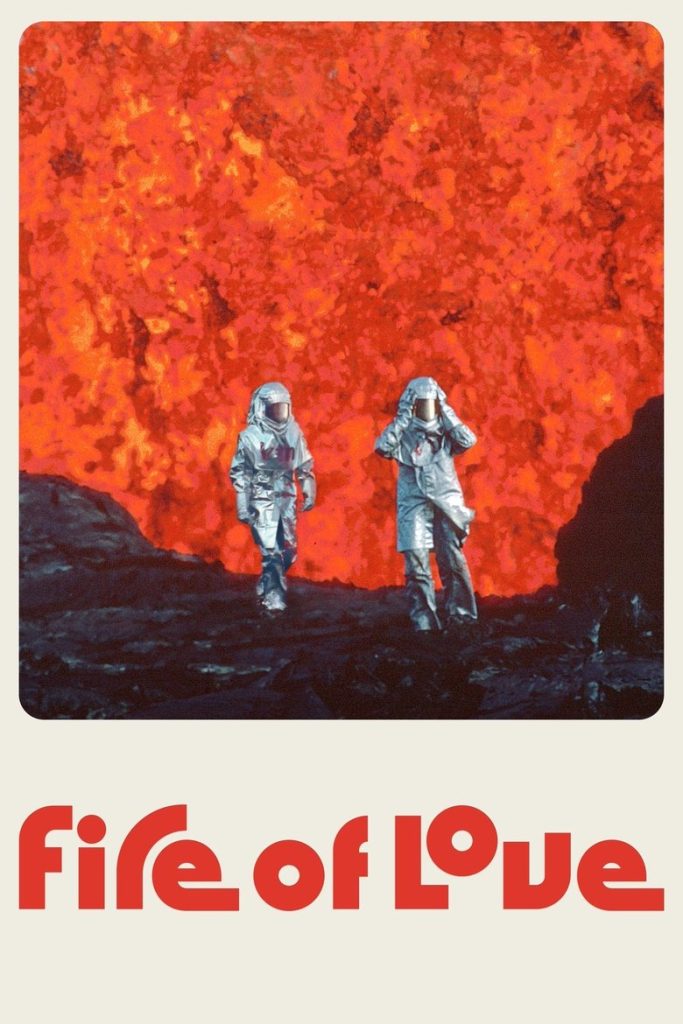
Fire of Love is a 2022 documentary that tells the captivating story of French volcanologists Katia and Maurice Krafft, who shared a deep passion for studying volcanoes and each other. The film explores their scientific work, adventurous spirit, and the tragic love triangle between the two scientists and the volcanoes they dedicated their lives to understanding. Through archival footage and narration, it presents both the beauty and danger of volcanic activity while celebrating their remarkable partnership.
Parent Guide
Educational documentary suitable for most children 8+ with parental guidance for emotional themes and intense natural footage.
Content breakdown
No violent acts between people. Contains peril from volcanic eruptions, lava flows, and explosions. The scientists' deaths are mentioned but not shown graphically.
Volcanic eruptions and flowing lava might be intense for sensitive viewers. Discussion of the scientists' deaths could be unsettling for younger children.
No offensive language. Scientific terminology and French names are used.
No sexual content or nudity. The film focuses on the professional and emotional partnership between the scientists.
No substance use shown or mentioned.
Strong themes of passion, dedication, and tragic loss. The film celebrates life and scientific discovery while acknowledging mortality.
Parent tips
This PG-rated documentary contains stunning volcanic footage that might be intense for very young viewers. While there's no graphic violence, the film addresses the scientists' tragic deaths in a volcanic eruption. The scientific content and geological discussions are educational but may require explanation for younger children. The emotional themes of passion, risk, and loss are handled thoughtfully but could prompt questions about mortality.
Parent chat guide
Parent follow-up questions
- What colors did you see in the volcanoes?
- What tools did the scientists use?
- Would you like to see a volcano someday?
- Why do you think Katia and Maurice loved volcanoes so much?
- What safety equipment did the scientists wear?
- How do volcanoes help scientists learn about Earth?
- What scientific methods did the Kraffts use to study volcanoes?
- How did their partnership help their research?
- What risks do scientists take to advance knowledge?
- How does the film portray the relationship between scientific passion and personal risk?
- What ethical questions does their work raise about dangerous research?
- How does the documentary use their story to discuss broader themes of human curiosity and mortality?
🎭 Story Kernel
At its core, 'Fire of Love' explores the paradoxical nature of passion through the lives of volcanologists Katia and Maurice Krafft. The film reveals that their obsession with volcanoes isn't just scientific curiosity, but a shared existential choice to live intensely rather than safely. Their relationship with each other is inseparable from their relationship with danger—the volcanoes become both their workplace and their metaphor for a life fully lived. The documentary ultimately suggests that for the Kraffts, the choice to risk everything wasn't about death, but about how to truly be alive. Their tragic ending feels less like an accident and more like the inevitable conclusion of their chosen path.
🎬 Visual Aesthetics
The film's visual language masterfully contrasts the intimate 16mm footage shot by the Kraffts themselves with sweeping archival material. The color palette shifts dramatically—from the warm, almost romantic reds and oranges of flowing lava to the cold, clinical blues of scientific observation. The camera often lingers on small, human moments against vast, destructive landscapes, creating a tension between scale and intimacy. Particularly striking are the sequences where Katia and Maurice appear as tiny, brightly colored specks against monochrome volcanic landscapes, visually reinforcing their relationship to the forces they study. The editing rhythm alternates between contemplative observation and explosive action, mirroring volcanic activity itself.
🔍 Details & Easter Eggs
💡 Behind the Scenes
Director Sara Dosa spent three years sifting through over 200 hours of the Kraffts' personal footage, much of which had never been publicly seen. The couple filmed everything themselves using handheld cameras, creating the intimate perspective that defines the film. Miranda July's narration was a late addition—the film initially had no narrator at all. The Kraffts' extensive archive was nearly lost; it was preserved by Maurice's brother after their deaths and later digitized by French scientific institutions. Interestingly, the film uses no reenactments or CGI—every volcanic eruption shown is authentic footage captured by the Kraffts during their 25 years of fieldwork.
Where to watch
Choose region:
- Disney Plus
- Hulu
- Amazon Video
- Apple TV Store
- Google Play Movies
- YouTube
- Fandango At Home
Trailer
Trailer playback is unavailable in your region.