
Fireball: Visitors from Darker Worlds (2020)
Story overview
This documentary explores the impact of meteorites and celestial events on Earth and human culture, featuring scientific insights and philosophical reflections on our place in the universe.
Parent Guide
Educational documentary about meteorites and space phenomena with no concerning content for children.
Content breakdown
No violence or peril depicted; focuses on scientific and historical discussion.
Mildly intense when discussing potential asteroid impacts, but presented in a factual, non-alarming manner.
No offensive language; uses academic and descriptive terminology.
No sexual content or nudity.
No depiction of substance use.
Mild emotional intensity when contemplating existential themes about humanity's place in the universe.
Parent tips
This documentary is educational and suitable for children interested in space and science. It contains no inappropriate content but may include some abstract concepts about existential themes.
Parent chat guide
Parent follow-up questions
- What is a shooting star?
- Have you ever seen a star in the sky?
- What do you think space is like?
- How do meteorites help scientists learn about space?
- Why is it important to study things from space?
- What would you do if you found a meteorite?
- How have meteorites influenced Earth's development?
- What can we learn from studying celestial impacts?
- How does this documentary connect science with human curiosity?
- What philosophical questions does the film raise about human destiny?
- How do different cultures interpret celestial events?
- What are the implications of meteorite research for future space exploration?
🎭 Story Kernel
The film is not a traditional narrative but a scientific and philosophical inquiry into humanity's relationship with cosmic violence. It explores how meteorites and impacts are not just destructive events but also creators—of life, of geological features, and of human culture and mythology. The 'characters' are the scientists and researchers, driven by a profound curiosity to read Earth's history in these celestial scars, seeking to understand our planet's past and prepare for potential future threats. It expresses the idea that we are living on a target in an ongoing cosmic shooting gallery, and our awareness of this fact fundamentally shapes our perspective on our place in the universe.
🎬 Visual Aesthetics
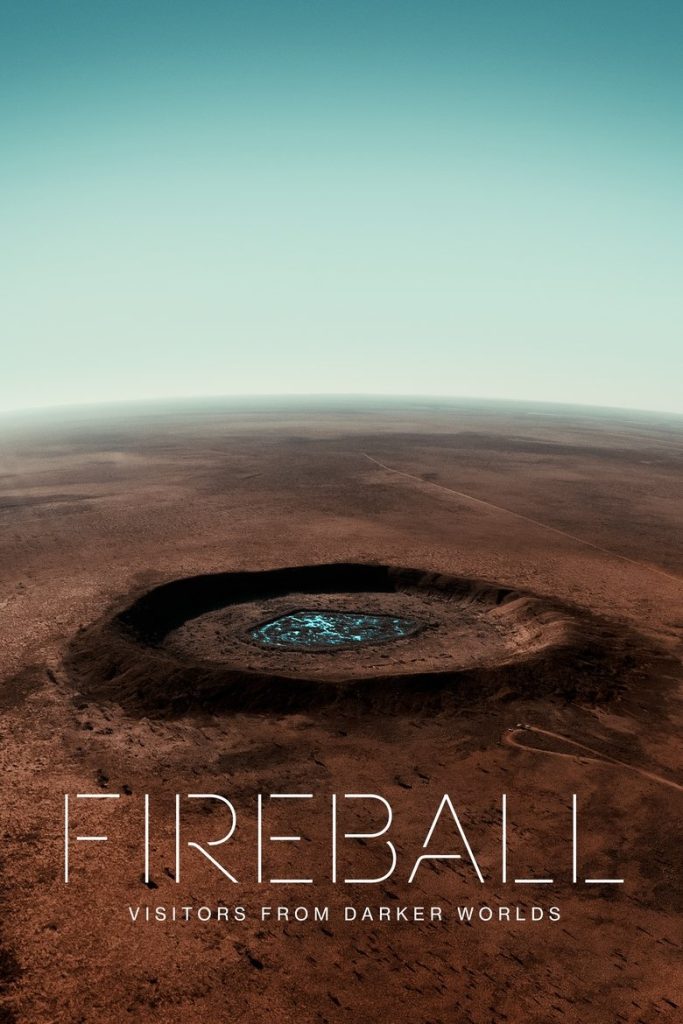
The visual language is a breathtaking blend of macro and micro, cosmic and terrestrial. Werner Herzog and Clive Oppenheimer employ stunning aerial cinematography of impact craters, making Earth itself look alien. This is juxtaposed with intimate, detailed shots of meteorite fragments in labs. The palette shifts from the sterile whites and grays of scientific facilities to the vibrant, otherworldly colors of mineral samples under microscopes and the stark beauty of desert craters. The camera often lingers, creating a contemplative, awe-struck tone, treating both vast landscapes and tiny stones with equal reverence.
🔍 Details & Easter Eggs
💡 Behind the Scenes
This film marks another collaboration between director Werner Herzog and volcanologist Clive Oppenheimer, following their previous documentary 'Into the Inferno.' Their unique partnership blends Herzog's poetic, philosophical inquiry with Oppenheimer's grounded scientific rigor. Key filming locations included the remote and visually stunning Wolfe Creek Crater in Australia and the Nordlinger Ries in Germany. The production involved gaining rare access to scientific facilities like the NASA Johnson Space Center's curation lab, where the Apollo moon rocks are kept, to film meteorite collections.
Where to watch
Choose region:
- Apple TV
- Apple TV Amazon Channel
Trailer
Trailer playback is unavailable in your region.