
Fireworks (2017)
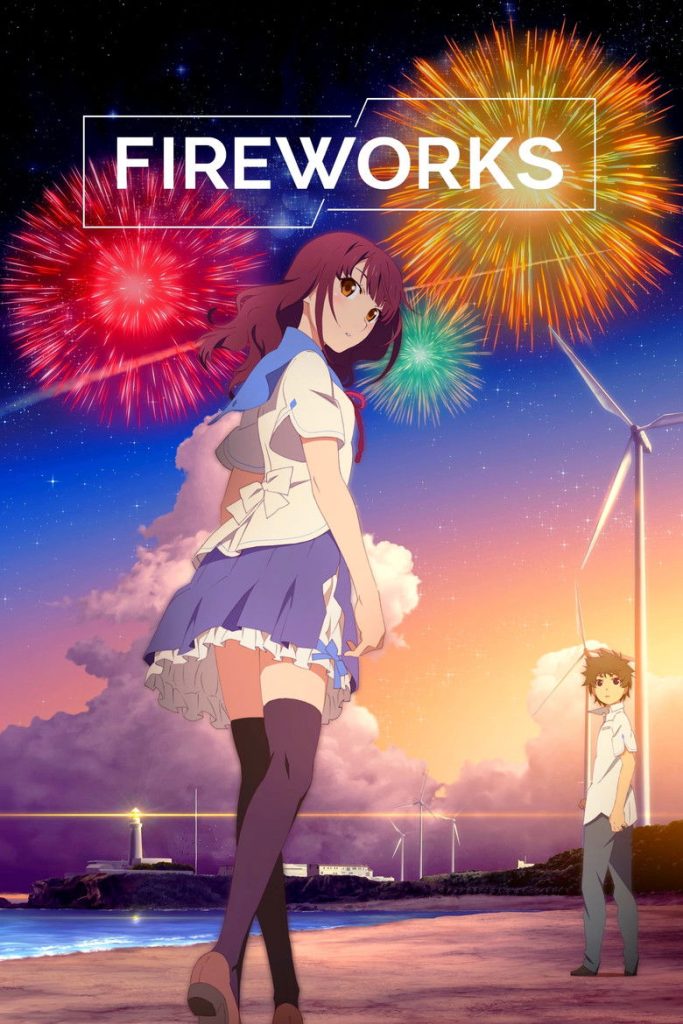
Story overview
In the Japanese town of Moshimo, a group of schoolboys becomes curious about whether fireworks appear round or flat when viewed from different angles. They decide to investigate this question during their town's annual fireworks festival, leading them on a journey of discovery that blends everyday school life with elements of fantasy and romance.
Parent Guide
A gentle animated film suitable for most children with minimal concerning content. The fantasy elements are mild and the emotional themes are age-appropriate for elementary school viewers.
Content breakdown
Some mild peril as characters run through town and climb to different viewpoints. No actual violence or dangerous situations.
No scary or disturbing content. The fantasy elements are gentle and non-threatening.
No offensive language. Typical school-age dialogue.
No sexual content or nudity. Contains mild romantic themes appropriate for the age group.
No substance use depicted.
Some emotional moments related to friendship dynamics and young romance, but nothing intense or distressing.
Parent tips
This animated film explores themes of friendship, curiosity, and young romance through a gentle fantasy lens. The story is appropriate for most children but contains some emotional moments and mild peril that may require parental guidance for younger viewers.
Parent chat guide
Parent follow-up questions
- What colors did you see in the fireworks?
- Did you like the characters? Which one was your favorite?
- What was your favorite part of the movie?
- Why were the boys arguing about the fireworks?
- What did they discover by looking from different places?
- How did the characters show they were good friends?
- What does this story teach us about different perspectives?
- How did the fantasy elements help tell the story?
- What might the fireworks represent beyond just being pretty lights?
- How does this film explore the transition from childhood to adolescence?
- What commentary does the film make about how we perceive reality?
- How does the animation style contribute to the emotional impact of the story?
🎭 Story Kernel
At its core, 'Fireworks' explores adolescent desire versus harsh reality through a supernatural premise. Norimichi and Yusuke's competition for Nazuna isn't just about romance—it's about agency in a world that feels predetermined. The magical orb becomes a metaphor for the teenage belief that 'if I could just do it over,' everything would be perfect. Yet each reset reveals new complications, suggesting that escaping reality creates its own prisons. The film's true conflict isn't between the boys, but between accepting life's imperfections and chasing an impossible ideal. The ambiguous ending questions whether their 'perfect day' is liberation or delusion.
🎬 Visual Aesthetics
Shaft's signature visual style dominates with tilted angles and surreal backgrounds that mirror the characters' emotional disorientation. The fireworks themselves transform from distant spectacle to intimate magic—their explosion patterns becoming visual representations of branching timelines. Water motifs recur throughout, from the swimming pool to rain scenes, symbolizing both emotional fluidity and the 'sink or swim' nature of their choices. The shifting color palette moves from mundane school-day blues to vibrant sunset hues during reset sequences, visually distinguishing 'reality' from 'possibility.' The final underwater sequence uses distorted light and slow motion to create a dreamlike state where fantasy and reality become indistinguishable.
🔍 Details & Easter Eggs
💡 Behind the Scenes
The film adapts a 1993 live-action TV drama, with director Akiyuki Shinbo intentionally avoiding the original's plot to create something entirely new. Voice actor Suzu Hirose recorded Nazuna's lines before animation began, allowing the animators to match her breathing and emotional cadence. The iconic swimming pool scene required three months of animation alone, with artists studying real underwater light refraction. Composer Satoru Kōsaki incorporated traditional Japanese festival music into the score, then digitally distorted it to create the timeline-reset sound effect.
Where to watch
Choose region:
- HBO Max
- HBO Max Amazon Channel
- Amazon Video
- Apple TV Store
- Google Play Movies
- YouTube
Trailer
Trailer playback is unavailable in your region.