
First They Killed My Father (2017)
Story overview
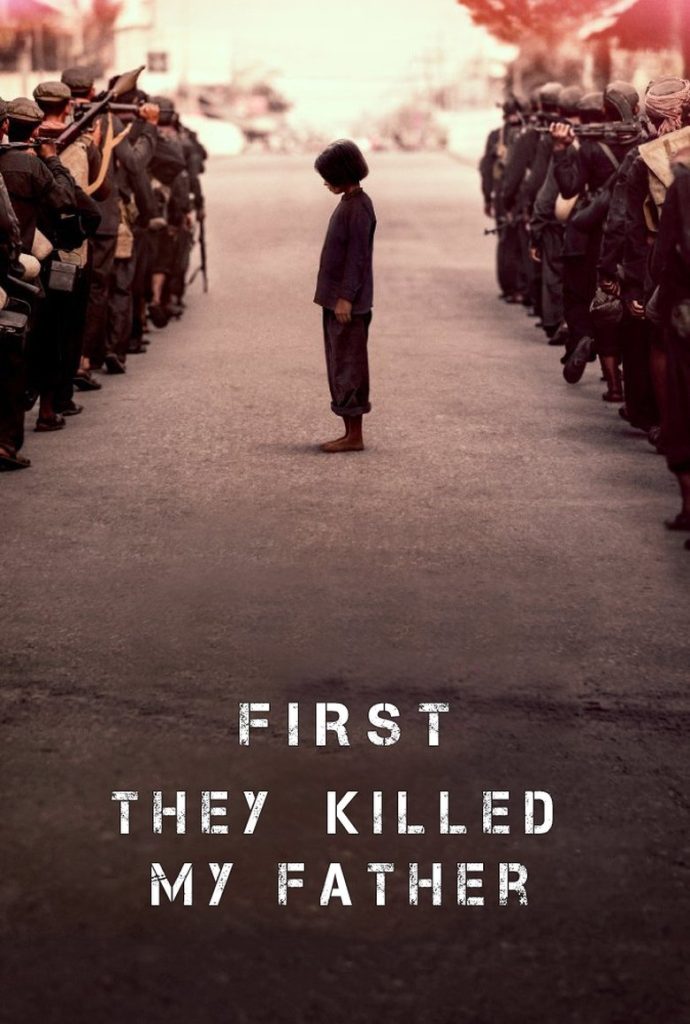
First They Killed My Father is a 2017 war drama based on a true story of survival during the Khmer Rouge regime in Cambodia. It follows a young girl's harrowing journey as her family is torn apart by political upheaval and forced into labor camps. The film depicts the resilience of the human spirit amidst unimaginable hardship and loss.
Parent Guide
A historically significant but intensely emotional film about war and survival. Requires mature understanding of political violence and human suffering.
Content breakdown
Depictions of war violence, forced labor, family separation, and life-threatening situations. Not graphic but emotionally intense.
Themes of political persecution, loss of family members, and survival under oppressive conditions. Emotionally heavy content.
Occasional tense dialogue related to survival situations. No strong profanity noted.
No sexual content or nudity present in the film.
No depiction of substance use.
High emotional intensity throughout, dealing with trauma, loss, and survival against overwhelming odds.
Parent tips
This film is rated TV-MA for mature audiences due to its intense themes and depictions of war-related violence. It portrays historical atrocities that may be deeply disturbing, especially for younger viewers. Parents should consider their child's emotional maturity and sensitivity to traumatic content before viewing.
The movie contains scenes of peril, family separation, and the harsh realities of survival under oppressive conditions. While it offers educational value about a significant historical period, the emotional weight requires careful consideration. Previewing the film yourself is strongly recommended to assess appropriateness for your family.
Parent chat guide
For younger viewers who may encounter references to the film, focus on universal themes of courage and perseverance. Explain that while bad things happen in history, stories like this remind us of human strength and the importance of remembering the past to build a better future.
Be prepared to address questions about war, political violence, and why such events occur. Frame discussions around historical understanding rather than graphic details, and reassure children about their own safety and stability.
Parent follow-up questions
- How did the girl show she was brave?
- What does it mean to be a family?
- How can we help people who are sad?
- Why was it important for the girl to remember her family?
- What does 'survival' mean in this story?
- How do people stay strong during hard times?
- What historical events does this film help us understand?
- How did the characters show resilience in difficult situations?
- Why is it important to learn about difficult parts of history?
- How does this film portray the psychological impact of war on children?
- What historical accuracy considerations should viewers keep in mind?
- How does the film balance depicting trauma with maintaining narrative hope?
🎭 Story Kernel
The film's core theme is the brutalization of innocence and the systematic erasure of identity under totalitarian rule. It expresses how ideology weaponizes fear to dismantle family, culture, and self. The characters are driven not by traditional arcs of heroism, but by primal survival instincts—hunger, fear, and the desperate, often wordless, need to protect remaining family fragments. Through young Loung Ung's perspective, we experience history not as a political narrative, but as a sensory and emotional assault where childhood is violently replaced with the calculus of endurance. The real drama lies in watching how a regime methodically strips away everything that makes a person human, reducing life to its most basic, animal state.
🎬 Visual Aesthetics
Director Angelina Jolie and cinematographer Anthony Dod Mantle employ a visceral, ground-level visual language. The camera often adopts Loung's low-angle perspective, making adult authority figures loom ominously and the world feel vast and threatening. The color palette undergoes a deliberate journey: vibrant, saturated hues of Phnom Penh life drain into the monochromatic greens, browns, and grays of the labor camps, mirroring the loss of joy and individuality. Key sequences, like the forced march from the city or the tense river crossing, use sweeping, chaotic handheld shots to convey disorientation and collective panic, while intimate close-ups on Loung's face capture micro-expressions of confusion, terror, and hardening resilience.
🔍 Details & Easter Eggs
💡 Behind the Scenes
The film is a deeply personal project, co-written and directed by Angelina Jolie and based on the memoir of Loung Ung, who also co-wrote the screenplay. It was shot entirely in Cambodia, in the Khmer language, with a predominantly Cambodian cast and crew, many of whom had personal or familial connections to the events depicted. Sareum Srey Moch, who plays young Loung, was selected from an open casting call of over 3,000 children. Notably, the film's premiere in Cambodia was attended by the country's former king, Norodom Sihanouk, and received widespread emotional responses from survivors of the regime.
Where to watch
Choose region:
- Netflix
- Netflix Standard with Ads
Trailer
Trailer playback is unavailable in your region.