
First to the Moon (2018)
Story overview
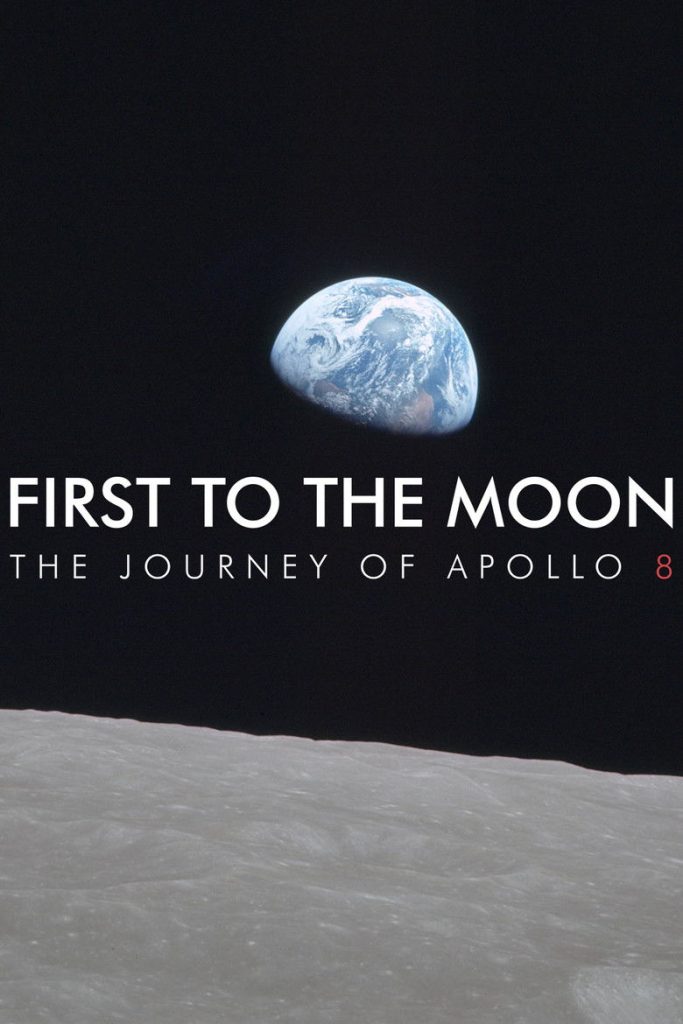
First to the Moon is a 2018 documentary about the Apollo 8 mission, the first crewed spacecraft to orbit the Moon. Through restored archival footage and audio, astronauts Frank Borman, Jim Lovell, and Bill Anders share their personal stories of how they came to be part of this historic mission and describe the experience of traveling to the Moon. The film focuses on the technical challenges, teamwork, and human achievement of space exploration during a turbulent time in world history.
Parent Guide
Educational documentary about space exploration with no concerning content. Best for children with interest in science or history.
Content breakdown
Discusses risks of space travel but no graphic depictions. Some tension during launch and mission moments.
No scary or disturbing content. All footage is historical documentary material.
No offensive language. Professional, historical dialogue.
No sexual content or nudity.
No depiction of substance use.
Some emotional moments when discussing the significance of the mission, but generally factual in tone.
Parent tips
This documentary is suitable for children interested in space, history, or science. It contains no inappropriate content but may be slow-paced for younger viewers. The runtime is over 2 hours, so consider breaking it into segments for younger children. The historical context includes references to the Cold War and 1960s social turmoil, which parents may want to explain.
Parent chat guide
Parent follow-up questions
- What is the Moon?
- What do astronauts do?
- Can you draw a picture of a rocket?
- Why did they want to go to the Moon?
- How did they prepare for the mission?
- What was the most exciting part of their journey?
- What risks did the astronauts face?
- How did the Apollo 8 mission help future Moon landings?
- Why was this mission during the Cold War significant?
- How did the political climate of the 1960s influence space exploration?
- What ethical considerations surround space missions?
- How has documentary filmmaking changed how we view historical events?
🎭 Story Kernel
The film's core tension isn't the technical challenge of reaching the moon, but the psychological unraveling of the first human to achieve it. It explores how absolute isolation transforms triumph into existential horror. The protagonist's drive shifts from patriotic ambition to primal survival, then to a desperate search for meaning in the void. The movie asks: what value does a 'first' hold when there's no one to witness it? It's less about space exploration and more about the human mind confronting its own insignificance against the cosmic scale it sought to conquer.
🎬 Visual Aesthetics
The cinematography masterfully uses claustrophobic close-ups inside the capsule contrasted with terrifyingly vast lunar landscapes. A desaturated color palette drains warmth from both space and flashbacks, making Earth memories feel as distant as stars. The camera often floats weightlessly, mirroring the protagonist's disorientation. Key symbolic shots include the reflection of Earth in his helmet visor—showing the world he's physically left but psychologically carries—and the gradual dimming of instrument lights paralleling his fading hope.
🔍 Details & Easter Eggs
💡 Behind the Scenes
The lead actor underwent two weeks of zero-gravity simulation training, performing all emotional scenes while suspended from wires. Most lunar surface shots were filmed in a volcanic region chosen for its stark, otherworldly terrain. The capsule interior was a fully functional replica built by retired aerospace engineers, with all switches performing actual functions. Sound designers recorded actual vacuum chamber tests to create the authentic silence of space.
Where to watch
Choose region:
- Amazon Prime Video
- fuboTV
- Peacock Premium
- Amazon Prime Video with Ads
- Peacock Premium Plus
- The Roku Channel
- Fandango at Home Free
- Pluto TV
- Amazon Prime Video Free with Ads
- Tubi TV
- Amazon Video
- Apple TV Store
- Google Play Movies
- YouTube
- Fandango At Home
Trailer
Trailer playback is unavailable in your region.