
Fists of Freedom: The Story of the ’68 Summer Games (1999)
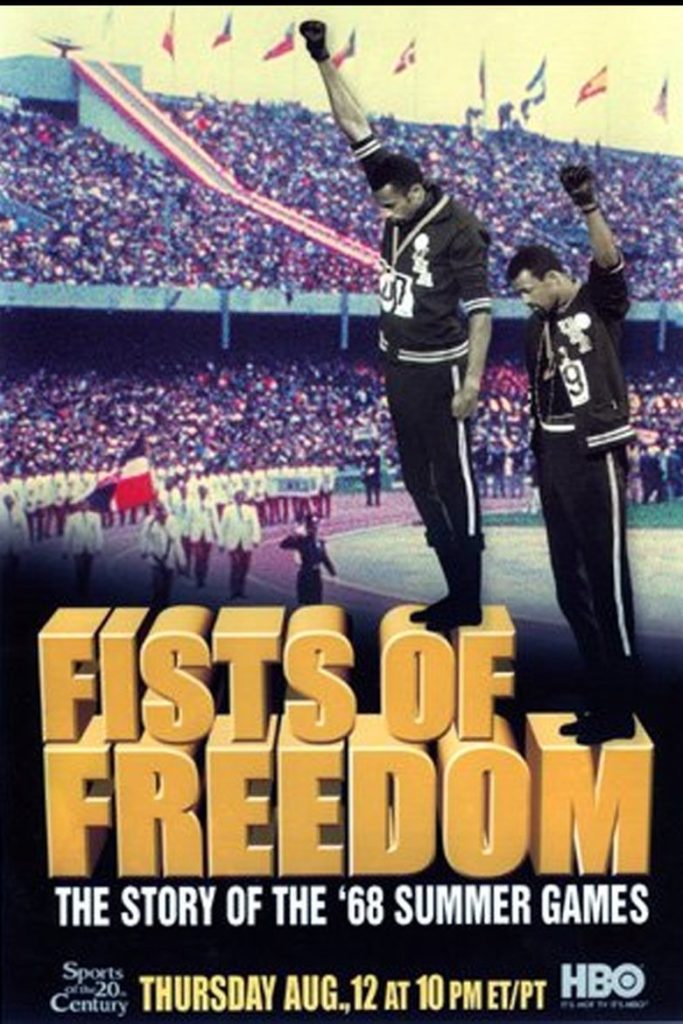
Story overview
This documentary explores the 1968 Summer Olympics in Mexico City, focusing on the political and social context of that turbulent year. It examines the iconic protest by American athletes Tommie Smith and John Carlos, who raised their fists in a Black Power salute during the medal ceremony. The film delves into the global significance of this moment and its impact on civil rights and international sports.
Parent Guide
Educational documentary about historical protest at 1968 Olympics with themes of civil rights and social justice.
Content breakdown
No violent content depicted.
Discussion of racism and social inequality may be emotionally challenging for sensitive viewers.
No offensive language expected in this historical documentary.
No sexual content or nudity.
No depiction of substance use.
Themes of injustice and political tension may provoke strong emotional responses.
Parent tips
This documentary is suitable for older children and teens interested in history, sports, or social justice. It deals with mature themes like racism, political protest, and social inequality, but presents them in an educational context without graphic content. Consider watching together to discuss the historical events and their relevance today.
Parent chat guide
Parent follow-up questions
- What sports did you see in the movie?
- What colors were the medals?
- How do people show they are happy when they win?
- Why were the athletes raising their fists?
- What does it mean to protest something?
- How do you think the athletes felt during the ceremony?
- What was happening in the world in 1968 that might have influenced the athletes?
- Why do you think their protest was so controversial?
- How do sports and politics sometimes intersect?
- What does the Black Power salute symbolize in historical context?
- How effective was this form of protest in creating change?
- What responsibilities do public figures have when addressing social issues?
🎭 Story Kernel
The film is not merely a sports documentary but a profound exploration of the collision between personal conviction and global spectacle. It expresses how the 1968 Olympics became a stage where athleticism was weaponized for political statement, revealing the immense pressure on Tommie Smith and John Carlos as they transformed from athletes into unwilling symbols. What drives them is not just the desire for victory, but a crushing responsibility to their community and a moral imperative that outweighed Olympic glory. The core theme is the cost of conscience in an arena designed to celebrate apolitical human achievement, showing how a silent gesture on a podium screamed louder than any national anthem.
🎬 Visual Aesthetics
The visual language masterfully contrasts the polished, sanitized spectacle of the Olympic broadcast with gritty, intimate archival footage and modern interviews. The color palette often desaturates the vibrant 1968 games footage when discussing the social turmoil outside the stadium, visually separating the bubble of sport from the reality of protest. Slow-motion replays of the famous podium moment are used not for athletic analysis but to dissect the micro-expressions of fear, defiance, and resolve on the athletes' faces. The camera lingers on empty stadiums and quiet moments, emphasizing the haunting silence that followed their gesture, making the historical footage feel intensely immediate and personal.
🔍 Details & Easter Eggs
💡 Behind the Scenes
The documentary faced significant challenges in securing clearances for the iconic Olympic footage, requiring years of negotiation with the International Olympic Committee archives. Director George Roy utilized previously unheard audio recordings from coaches and officials discovered in university collections. Notably, the interviews with Smith and Carlos were conducted separately, then edited to create a dialogue, as the two men had complex feelings about revisiting the event together. Much of the contemporary footage of Mexico City was shot at the original locations, now vastly changed, requiring careful historical matching for cutaway shots.
Where to watch
Choose region:
- HBO Max
- HBO Max Amazon Channel