
Ford v Ferrari (2019)
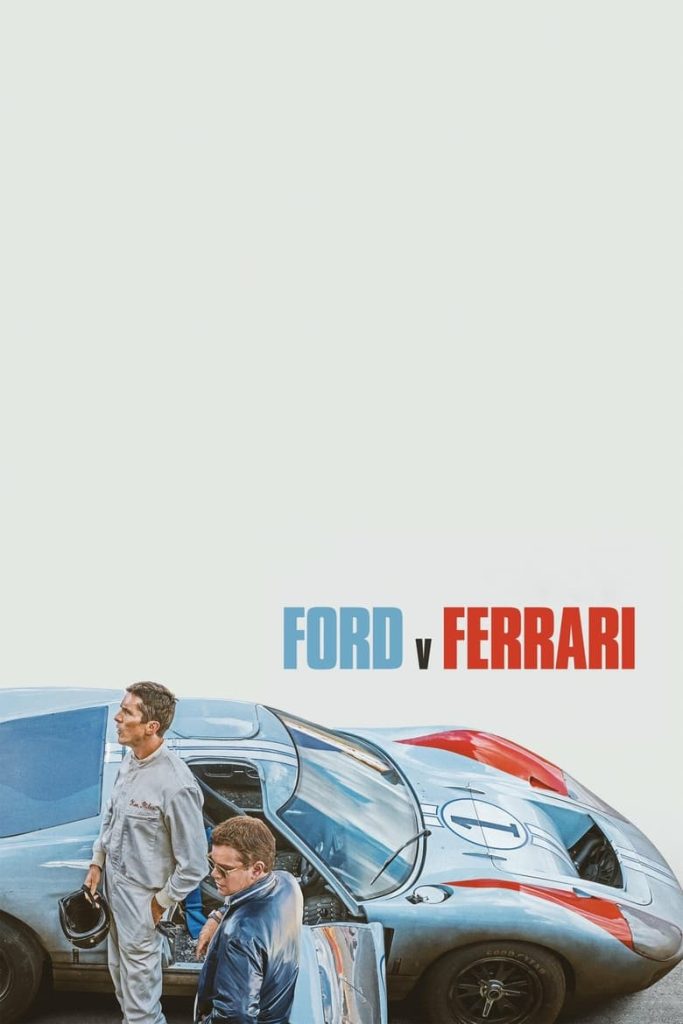
Story overview
Ford v Ferrari tells the true story of American car designer Carroll Shelby and British driver Ken Miles as they work together in the 1960s to build a revolutionary race car for Ford Motor Company. Their goal is to challenge the dominant Ferrari racing team at the prestigious 24 Hours of Le Mans endurance race in France. The film explores their struggles against corporate bureaucracy, engineering challenges, and personal conflicts while pursuing automotive excellence.
Parent Guide
A historical racing drama with intense sequences and competitive themes suitable for older children and teens.
Content breakdown
Racing sequences include high-speed crashes, car collisions, and moments of vehicular peril. While not graphically violent, these scenes create tension and show realistic racing dangers.
Loud engine noises, intense racing sequences, and crash scenes may be startling or concerning to sensitive viewers. No horror elements or supernatural content.
Occasional strong language consistent with PG-13 rating, including some profanity in tense situations. Not pervasive throughout the film.
No sexual content or nudity. Characters have normal marital relationships shown respectfully.
Social drinking in period-appropriate settings (1960s). Characters occasionally smoke cigarettes, reflecting the time period. No substance abuse themes.
High-stakes competition creates tension throughout. Characters experience frustration, anger, disappointment, and intense pressure. Positive themes of perseverance and teamwork balance the intensity.
Parent tips
This historical drama features intense racing sequences with high-speed crashes, loud engine noises, and moments of peril that may be too intense for younger viewers. The PG-13 rating comes primarily from racing violence and occasional strong language. While there's no graphic gore, the racing scenes create significant tension and include realistic crash sequences that could be disturbing to sensitive children.
Parents should note the film's 2.5-hour runtime may challenge younger attention spans. The story involves complex themes of corporate politics, personal ambition, and professional rivalry that are best understood by older children and teens. The film portrays a positive father-son relationship and themes of perseverance, but also shows characters dealing with frustration and anger in competitive situations.
Parent chat guide
After the movie, discuss the themes of teamwork versus individual achievement, and how the characters balanced personal goals with corporate demands. Talk about how people handle pressure and disappointment in competitive environments. For older children, you could discuss the historical significance of the Ford-Ferrari rivalry and how it changed automotive racing.
Parent follow-up questions
- Did you like the fast cars?
- What was your favorite color of car?
- Was it too loud when the cars raced?
- How did the cars make you feel?
- Would you want to ride in a race car?
- What was the hardest part about building the race car?
- Why do you think the drivers wanted to win so much?
- How did the characters work together as a team?
- What did you learn about racing safety?
- How would you feel watching a real car race?
- What challenges did the team face besides just building a fast car?
- How did corporate decisions affect the racing team's work?
- What qualities made the drivers successful?
- Why is historical accuracy important in movies based on true stories?
- How did the film show the balance between innovation and safety?
- How did the film portray the tension between artistic passion and corporate interests?
- What ethical considerations arise in high-stakes competitive sports?
- How accurate do you think the film's portrayal of 1960s automotive culture was?
- What leadership qualities were demonstrated by different characters?
- How does the film comment on American versus European approaches to engineering and competition?
🎭 Story Kernel
At its core, 'Ford v Ferrari' is a film about the tension between art and commerce, personified by the battle between Carroll Shelby and Henry Ford II. It's not merely about building a faster car, but about preserving creative integrity within a suffocating corporate structure. Ken Miles' tragic arc underscores the film's central thesis: true genius is often incompatible with corporate politics, and victory is hollow when it's co-opted by branding. The real race is against the dehumanizing machinery of capitalism, where passion becomes a commodity to be managed, packaged, and sold.
🎬 Visual Aesthetics
Director James Mangold employs a tactile, visceral visual language. The camera is often low and intimate, placing us inside the cockpit to feel every vibration and g-force. The color palette is dominated by the corporate blues and grays of Ford, contrasted with the warm, earthy tones of Shelby's garage—a visual representation of cold bureaucracy versus human passion. The racing sequences are masterclasses in spatial clarity; we always understand the position, speed, and danger, making the chaos coherent. The film's look is clean and classical, rejecting frenetic modern editing for a rhythm that mirrors the mechanical precision of its subjects.
🔍 Details & Easter Eggs
💡 Behind the Scenes
Christian Bale, notorious for his physical transformations, actually had to gain weight for the role of the lean Ken Miles. Matt Damon, playing Shelby, did many of his own driving stunts. The production used a combination of practical effects, real vintage cars, and clever CGI to create the racing sequences, with many filmed at the actual Willow Springs raceway. Notably, Tracy Letts (Henry Ford II) performed the famous 'You've made me cry!' breakdown scene in one take, with the crew's stunned reaction being genuine.
Where to watch
Choose region:
- Hulu
- fuboTV
- YouTube TV
- Amazon Video
- Apple TV
- Google Play Movies
- YouTube
- Fandango At Home
Trailer
Trailer playback is unavailable in your region.