
Four Good Days (2021)
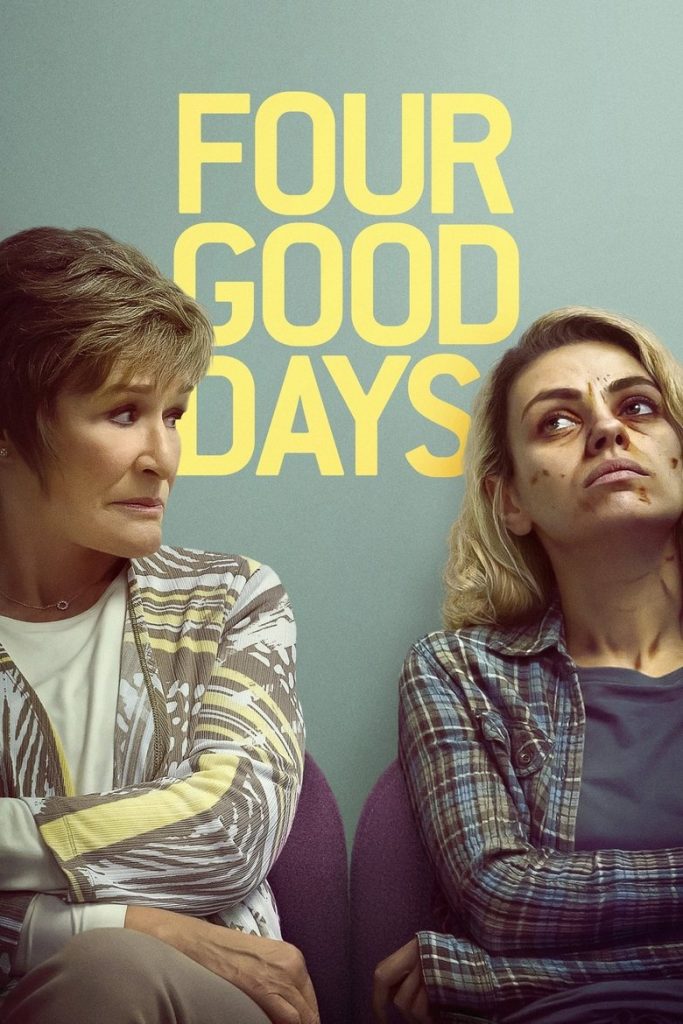
Story overview
Four Good Days is a 2021 drama directed by Rodrigo García, starring Glenn Close and Mila Kunis. The film follows a mother who supports her adult daughter through four critical days of recovery from opioid addiction, depicting their strained relationship, the challenges of sobriety, and the emotional toll of substance abuse on families.
Parent Guide
A realistic and emotionally intense drama about opioid addiction and recovery, featuring strong language and mature themes. Not suitable for children; recommended for mature teens 16+ with parental discussion.
Content breakdown
No physical violence, but includes peril related to drug use and withdrawal symptoms, such as a character in distress during detox.
Disturbing scenes of drug use, withdrawal symptoms, and emotional turmoil; may be upsetting for sensitive viewers due to the realistic portrayal of addiction.
Frequent strong language, including f-words, s-words, and other profanity, consistent with the R rating.
Brief references to sexual behavior and implied situations, but no explicit nudity or sexual scenes.
Central theme with frequent depictions of opioid use, drug paraphernalia, withdrawal, and discussions of addiction and recovery; graphic at times.
High emotional intensity throughout, focusing on family conflict, guilt, hope, and the stress of recovery; may be overwhelming for younger viewers.
Parent tips
This R-rated drama deals with mature themes of drug addiction and recovery. It contains strong language, emotional intensity, and realistic depictions of substance abuse. Best suited for mature teens and adults; parental guidance is strongly recommended for viewers under 17. Watch with older teens to discuss addiction, family dynamics, and recovery.
Parent chat guide
Parent follow-up questions
—
—
—
- What did you think about the way addiction was shown in the movie?
- How did the mother's support help the daughter?
- Why is recovery from addiction so difficult?
- What would you do if a friend or family member struggled with substance abuse?
🎭 Story Kernel
At its core, 'Four Good Days' is less about addiction itself and more about the excruciating calculus of trust in its aftermath. The film asks: when does support become enabling, and when does tough love become abandonment? Molly's journey isn't just toward sobriety, but toward earning back the fundamental right to be believed. Deb's struggle isn't just with her daughter's addiction, but with her own trauma—the psychic scars of countless relapses that make every promise feel like a potential landmine. The driving force isn't hope, but the terrifying gamble of hope against a history of despair.
🎬 Visual Aesthetics
The film employs a stark, unflinching visual language that mirrors emotional austerity. The color palette is dominated by washed-out blues and grays, reflecting the emotional numbness and clinical reality of recovery. Camera work is intimate yet detached—often using tight close-ups on faces during conversations, trapping characters in their shared pain. There are no sweeping, dramatic shots; instead, the visuals feel observational, almost documentary-like. This creates a sense of raw authenticity, making the emotional breakthroughs feel earned rather than manufactured. The absence of visual glamour reinforces the movie's central truth: recovery is ugly, mundane work.
🔍 Details & Easter Eggs
💡 Behind the Scenes
Glenn Close and Mila Kunis performed most of their intense scenes in chronological order, a rare luxury in filmmaking that allowed their emotional arc to build naturally. Kunis reportedly spent time with recovering addicts and medical professionals to understand the physicality of withdrawal. The film is based on a true story first told in a Washington Post article by Eli Saslow, who also co-wrote the screenplay, ensuring a grounded, journalistic approach to the narrative. Much of the film was shot in a real, functioning suburban home to enhance the mundane, domestic reality of the struggle.
Where to watch
Choose region:
- Amazon Prime Video
- Peacock Premium
- Amazon Prime Video with Ads
- Peacock Premium Plus
- The Roku Channel
- Tubi TV
- Amazon Video
- Apple TV Store
- Google Play Movies
- YouTube
- Fandango At Home
Trailer
Trailer playback is unavailable in your region.