
Fractured (2019)
Story overview
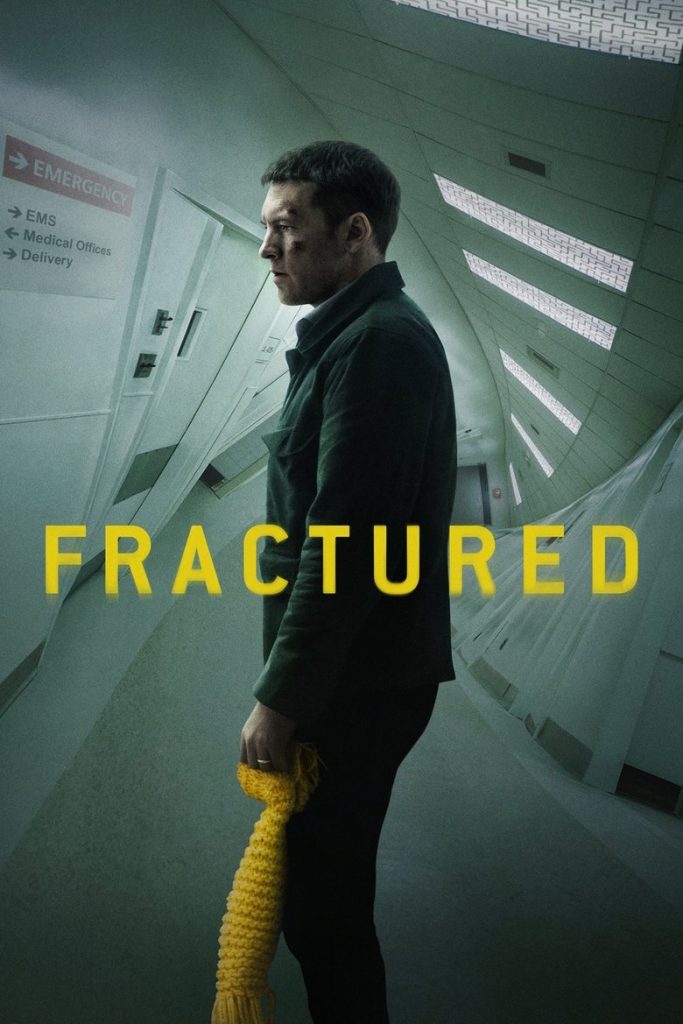
Fractured is a psychological thriller about a father, Ray, who faces a terrifying situation when his daughter breaks her arm during a road trip. After rushing her to a hospital, he briefly falls asleep, only to wake up and discover that the hospital staff has no record of his wife and daughter ever being there. The film follows Ray's desperate search for his missing family, blurring the lines between reality and paranoia as he uncovers unsettling truths about the hospital and his own sanity.
Parent Guide
A tense psychological thriller that explores parental anxiety and institutional distrust through a mysterious hospital disappearance. Best for mature teens due to its suspenseful atmosphere and thematic complexity.
Content breakdown
Includes a child's arm injury (shown with brief blood), tense confrontations, and psychological peril as the protagonist searches frantically. No graphic or prolonged violence.
Creates sustained psychological tension through eerie hospital settings, disappearing family members, and reality-bending sequences. Themes of helplessness and institutional distrust may be disturbing.
Occasional strong language including 'f--k' and 's--t' in tense situations. Not pervasive throughout.
No sexual content or nudity.
Brief social drinking in one scene. No substance abuse depicted.
High emotional intensity centered on parental fear, desperation, and psychological unraveling. The protagonist's escalating anxiety drives the narrative.
Parent tips
This film contains intense psychological tension, hospital settings that may be unsettling, and themes of parental fear and helplessness. It's best suited for mature teens who can handle suspenseful narratives without becoming overly anxious. The TV-MA rating reflects moderate violence, strong language, and disturbing scenes. Parents should be prepared to discuss themes of trust, reality versus perception, and medical ethics with older viewers.
Parent chat guide
Parent follow-up questions
—
—
- How would you feel if you got hurt on a trip like the girl did?
- Why do you think the hospital people didn't remember Ray's family?
- What techniques did the film use to make you question what was real?
- How does Ray's character change throughout his search? What does this say about parental love?
- Do you think the ending was satisfying? Why or why not?
- How does the film comment on modern healthcare systems?
🎭 Story Kernel
At its core, 'Fractured' is a tense exploration of gaslighting and institutional distrust through the lens of paternal desperation. The film's true engine is Ray Monroe's escalating paranoia, driven not by supernatural forces but by the terrifyingly mundane horror of being systematically disbelieved. His journey exposes how easily reality can be dismantled when authority figures weaponize doubt against a vulnerable individual. The narrative cleverly mirrors real-world experiences of medical dismissal and bureaucratic indifference, transforming a hospital's sterile corridors into a psychological labyrinth where the protagonist's sanity becomes the central mystery. The ending's revelation that his family was indeed trapped underground validates his perception while condemning the system that failed them.
🎬 Visual Aesthetics
Director Brad Anderson employs a claustrophobic visual language dominated by sickly green-tinged fluorescent lighting and oppressive symmetrical framing that makes the hospital feel both sterile and malevolent. The camera frequently adopts Ray's subjective perspective—unsteady handheld shots during moments of panic, tight close-ups on bewildered faces that reflect his growing isolation. A deliberate color drain occurs as the film progresses, with warm tones disappearing entirely by the third act, mirroring Ray's emotional desaturation. The architectural spaces themselves become characters through repeated shots of identical corridors and circular tracking shots that enhance the narrative's psychological disorientation.
🔍 Details & Easter Eggs
💡 Behind the Scenes
Sam Worthington prepared for his role as Ray Monroe by studying accounts of medical gaslighting and spending time with parents who had experienced traumatic hospital incidents. The hospital set was constructed inside an actual decommissioned medical facility in Winnipeg, Canada, with the production design team deliberately making different wings subtly identical to enhance disorientation. Director Brad Anderson, known for psychological thrillers like 'The Machinist,' insisted on practical effects for the underground sequences, using real water and confined spaces to generate authentic actor discomfort that translates to screen.
Where to watch
Choose region:
- Netflix
- Netflix Standard with Ads
Trailer
Trailer playback is unavailable in your region.