
Francesco de Carlo: Cose di Questo Mondo (2019)
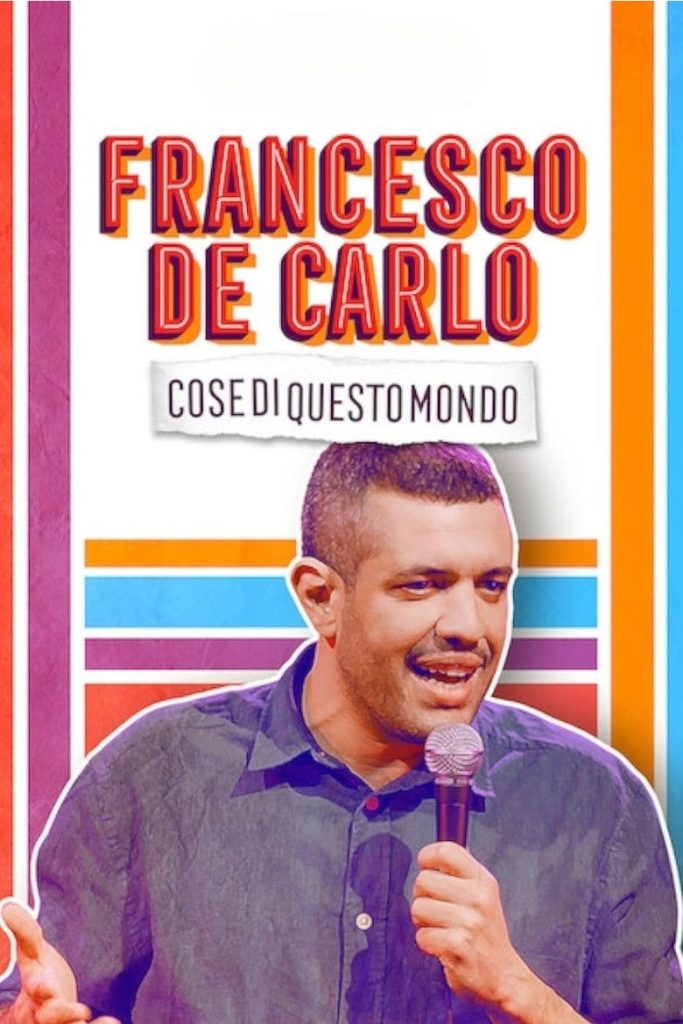
Story overview
Francesco de Carlo: Cose di Questo Mondo is a 2019 Italian stand-up comedy special filmed in Milan. Comedian Francesco de Carlo shares humorous observations about everyday life, covering topics like personal habits, religion, politics, and insights gained from his travels around the world. The performance is a solo act where de Carlo engages the audience with his witty commentary on contemporary issues.
Parent Guide
A stand-up comedy special featuring observational humor about life, religion, and politics. Best for pre-teens and teens who understand Italian and can appreciate conversational comedy without visual stimulation.
Content breakdown
No violence, action sequences, or perilous situations. This is a comedian speaking on stage.
Nothing frightening or disturbing. The content is comedic commentary on everyday topics.
Italian language only. As a comedy special, there may be occasional mild colloquial expressions or comedic exaggeration, but no strong profanity is expected based on the description.
No sexual content or nudity. The comedian discusses general life observations.
No depiction or discussion of substance use. The focus is on travel experiences and social commentary.
Low emotional intensity. The tone is consistently humorous and conversational throughout.
Parent tips
This is a stand-up comedy special in Italian with no subtitles, so it's best suited for children who understand the language. The content includes discussions of religion and politics presented in a comedic way, which may require parental guidance for younger viewers to provide context. Since it's a live performance, there are no visual effects or action scenes—just one comedian talking on stage for 61 minutes. Consider your child's attention span for this format.
Parent chat guide
Parent follow-up questions
—
- What was the funniest part you remember?
- Do you think you'd like to be a comedian on stage?
- Why do you think comedians talk about politics and religion?
- How does traveling help people understand different cultures?
- What makes political humor effective or problematic?
- How does de Carlo use personal experiences to connect with universal themes?
🎭 Story Kernel
Francesco de Carlo's special isn't really about the 'things of this world' he lists—it's about the profound loneliness of modern existence when stripped of performative identity. The driving force isn't comedy for comedy's sake, but a desperate attempt to connect through shared recognition of life's inherent contradictions. De Carlo positions himself as both observer and participant in the absurdities he describes, creating a meta-commentary on the comedian's role as societal mirror. The 'plot' is his gradual revelation that the jokes are coping mechanisms for universal anxieties about meaning, aging, and human connection in a digitized world.
🎬 Visual Aesthetics
The visual language is deceptively simple—a single camera setup in a classic comedy club—but the framing is intimate, with tight shots that capture micro-expressions of doubt between punchlines. The warm, dim lighting creates a confessional booth atmosphere rather than a showbiz spectacle. When De Carlo paces the stage, the camera follows with slight unease, mirroring his restless energy. The absence of cutaway shots to laughing audiences at key moments isolates him, visually reinforcing his themes of solitary observation. The color palette leans toward muted browns and deep reds, suggesting both grounded reality and simmering intensity beneath the comedy.
🔍 Details & Easter Eggs
💡 Behind the Scenes
Filmed at the historic Zelig comedy club in Milan, a venue known for launching Italy's most influential comedians. De Carlo insisted on recording during a single live performance rather than multiple takes, preserving authentic audience reactions. The special was directed by his longtime collaborator who also works in documentary filmmaking, explaining the observational, non-flashy visual approach. Notably, De Carlo wrote entirely new material for this special rather than touring it first—a risky move that explains the raw, workshop-like energy of some segments.
Where to watch
Choose region:
- Netflix
- Netflix Standard with Ads