
Frankenweenie (1984)
Story overview
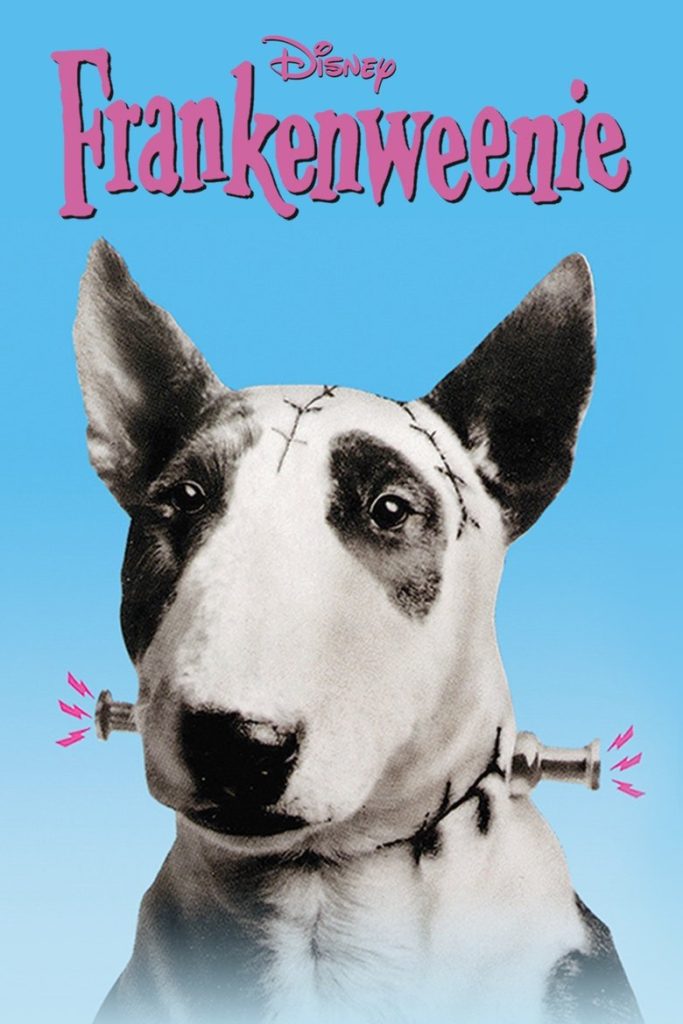
Frankenweenie is a 1984 short film directed by Tim Burton that tells the story of young Victor, a creative boy who loves making homemade monster movies starring his beloved dog Sparky. When Sparky tragically dies in a car accident, Victor uses his scientific knowledge to bring his pet back to life, inspired by classic Frankenstein stories. The reanimated Sparky, with visible stitches and bolts, causes panic among Victor's neighbors who mistake him for a dangerous monster. The film explores themes of love, loss, scientific curiosity, and acceptance as Victor tries to prove that Sparky remains the same loyal friend despite his altered appearance.
Parent Guide
A charming, creative short film that introduces monster movie themes in a child-friendly way. The central themes of pet loss and reanimation are handled with sensitivity and humor rather than horror. Mild scary moments are balanced by Sparky's ultimately friendly nature and the film's comedic tone.
Content breakdown
Sparky's death in a car accident (off-screen, implied by sound and reaction). Mild peril when neighbors panic and chase Sparky with torches and pitchforks in a comedic homage to classic monster movies. No physical violence occurs.
The reanimation scene with electrical equipment might startle sensitive viewers. Sparky has visible stitches and bolts but isn't gory. Some tense moments when Sparky is chased. The theme of pet death could be emotionally challenging for children who have lost pets.
No offensive language. Clean family-friendly dialogue throughout.
No sexual content or nudity.
No substance use depicted.
Moderate emotional moments around Sparky's death and Victor's grief. The neighborhood's rejection of Sparky creates social tension. Ultimately uplifting resolution with acceptance and friendship themes.
Parent tips
This short film (29 minutes) is a gentle introduction to monster movie themes suitable for most children. The PG rating comes from mild scary moments and the central theme of pet death. The reanimation scenes are presented more as creative science than horror, with Sparky looking stitched but not gory. The neighborhood panic scenes are comedic rather than truly frightening. Good for discussions about grief, scientific ethics, and not judging by appearances. The black-and-white cinematography and classic monster movie homages might need explaining to younger viewers.
Parent chat guide
Parent follow-up questions
- Did you like Sparky the dog?
- Was Victor a good friend to Sparky?
- What was your favorite part of the movie?
- Why were Victor's neighbors scared of Sparky?
- How did Victor bring Sparky back to life?
- What does this movie teach us about judging people by how they look?
- What scientific principles was Victor using?
- How does this film reference classic Frankenstein stories?
- What ethical questions does the movie raise about bringing things back to life?
- How does Tim Burton use black-and-white cinematography to create mood?
- What commentary does the film make about suburban conformity versus individuality?
- How does this early Burton work foreshadow his later style?
🎭 Story Kernel
At its core, 'Frankenweenie' is less about reanimating the dead and more about the desperate, messy process of grieving. Victor Frankenstein's drive isn't scientific curiosity but a child's refusal to accept absolute loss. The film explores how grief can isolate us—Victor retreats to his attic lab—and how the monstrous consequences of forcing life back (Sparky's unraveling, the town's chaos) are metaphors for the unnatural, destructive pain of refusing to let go. The true resolution isn't keeping Sparky 'alive,' but the community's acceptance of this strange new normal, suggesting that love, not science, ultimately makes peace with death.
🎬 Visual Aesthetics
Burton weaponizes stark black-and-white cinematography, evoking both classic Universal monster movies and the binary moral world of a child. The suburban setting of New Holland is rendered in exaggerated, angular sets with oppressive shadows, visually trapping Victor in his sorrow. Camera work often adopts low angles, making adults loom ominously while keeping us grounded in Victor's perspective. The lightning-bolt reanimation scene is a masterclass in expressionist horror, with frantic Dutch angles and dramatic shadows. The color palette's absence makes the rare flashes of life—the electricity, Sparky's collar—feel all the more vital and unnatural.
🔍 Details & Easter Eggs
💡 Behind the Scenes
This 2012 stop-motion film is a feature-length remake of Burton's own 1984 live-action short, which got him fired from Disney for being 'too dark.' The voice cast is a Burton repertory company: Catherine O'Hara and Martin Short play multiple townsfolk, Winona Ryder is Elsa Van Helsing, and Martin Landau channels Bela Lugosi as Mr. Rzykruski. The puppets were meticulously crafted, with over 200 individual faces for Victor to capture subtle expressions. It was filmed in 3D but designed for black-and-white, making it the first stop-motion feature and first black-and-white film released in IMAX 3D.
Where to watch
Choose region:
- Disney Plus
- Amazon Video
- Apple TV Store
- Google Play Movies
- YouTube
- Fandango At Home