
Free Guy (2021)
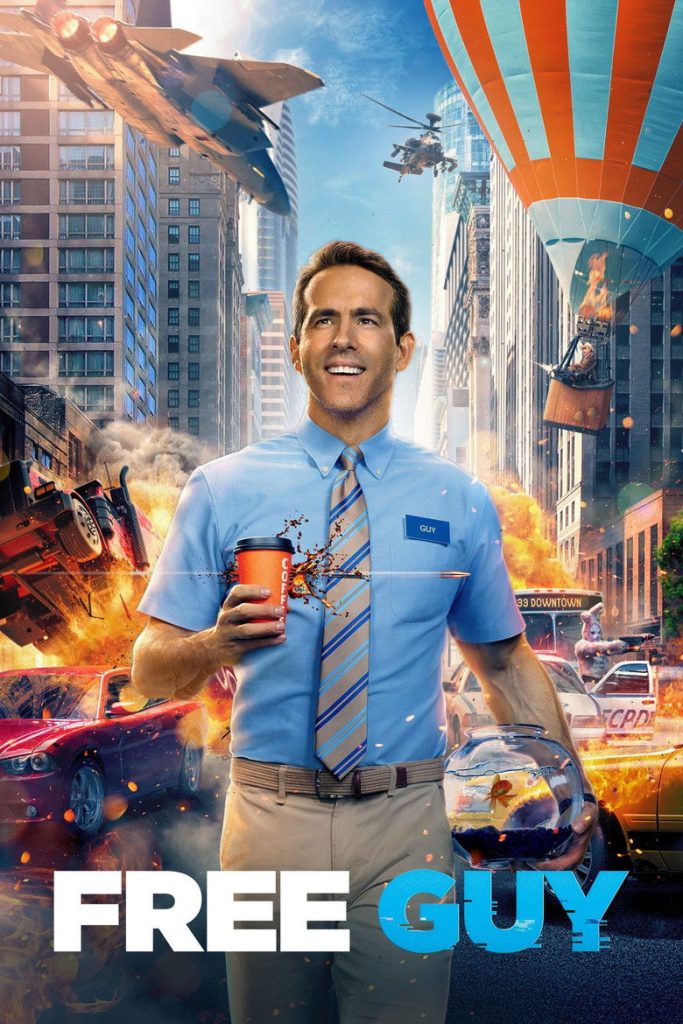
Story overview
Free Guy is a 2021 comedy adventure film set in a video game world. The story follows Guy, a non-player character who becomes self-aware and decides to break free from his programmed routine. As he embarks on this journey, he discovers the true nature of his existence and the real world beyond the game. The film explores themes of free will, identity, and the impact of technology on human connections.
Parent Guide
Free Guy is a fun, action-packed comedy suitable for older children and teens. The PG-13 rating reflects cartoonish video game violence, mild suggestive content, and some language. The film's themes of identity and technology are thought-provoking but presented accessibly.
Content breakdown
Cartoonish video game violence including shooting, explosions, and car chases. Characters get hit or shot but respawn quickly. Some scenes of peril and destruction within the game environment.
Some intense action sequences and moments of peril, but presented in a comedic, exaggerated style. No truly frightening or disturbing imagery.
Occasional mild language and crude humor. No strong profanity.
Mild romantic elements and suggestive references. No nudity or explicit sexual content.
No depiction of substance use.
Some emotional moments related to identity and relationships, but overall lighthearted tone.
Parent tips
Free Guy is rated PG-13 for action violence, suggestive references, and language. The movie contains cartoonish video game violence where characters get shot or hit but quickly respawn without lasting consequences. There are some mild romantic elements and occasional crude humor that might not be suitable for younger children.
Parents should be aware that the film includes scenes of peril and destruction within the game environment, though it's presented in a comedic, exaggerated style typical of action video games. The themes of artificial intelligence gaining consciousness and questioning reality could spark interesting conversations with older children about technology ethics and what makes us human.
Parent chat guide
Consider asking your children about their thoughts on artificial intelligence and whether they think technology can truly become self-aware. The movie also touches on themes of friendship and standing up for what's right, which are good starting points for discussing values and relationships.
Parent follow-up questions
- What was your favorite color in the movie?
- Which character made you laugh the most?
- What game would you like to play like Guy?
- How did Guy help his friends?
- What would you do if you were in a video game?
- What makes Guy different from other characters in the game?
- Why do you think Guy wanted to change his routine?
- How did the characters work together to solve problems?
- What does it mean to be 'real' in the movie?
- What would you create if you could design a video game?
- How does the movie show the difference between following rules and making choices?
- What do you think about the relationship between the game world and the real world?
- How does the movie handle the idea of artificial intelligence becoming self-aware?
- What messages does the film send about friendship and loyalty?
- How does the humor in the movie affect how serious situations are presented?
- How does Free Guy comment on modern gaming culture and player behavior?
- What philosophical questions does the film raise about consciousness and free will?
- How does the movie portray the ethics of technology and artificial intelligence?
- What social commentary does the film make about our relationship with digital worlds?
- How does the film balance entertainment with deeper themes about identity and purpose?
🎭 Story Kernel
Free Guy isn't just about a video game character gaining consciousness—it's a sharp critique of corporate ownership and creative exploitation. The real conflict isn't between Guy and Dude, but between Millie's original vision and Antwan's monetized distortion of her creation. Every character's motivation reveals capitalism's layers: Guy seeks authentic existence beyond programmed loops, Millie fights for artistic integrity, Keys compromises for survival, and Antwan represents pure profit extraction. The film argues that true agency comes not from following predetermined paths (like Guy's daily routine) but from rewriting the rules themselves—whether in code or corporate structures. The romantic subplot between Guy and Millie mirrors the creator's relationship with her creation, questioning who truly 'owns' a character once it develops autonomy.
🎬 Visual Aesthetics
The film employs a dual visual language that distinguishes between the 'real world' and Free City. The game world bursts with oversaturated colors, exaggerated physics, and chaotic camera movements during action sequences—mirroring the sensory overload of open-world games. Notice how Guy's apartment shifts from sterile blue tones to warm yellows as he develops consciousness. The cinematography cleverly uses gaming conventions: quick-cuts during heists mimic gameplay montages, while steady shots during emotional moments (like Guy's first coffee deviation) highlight his awakening. Symbolically, the sunglasses represent both literal programming tools and metaphorical lenses through which we perceive reality—whether through corporate agendas or personal authenticity. The destruction of the server room becomes a visual metaphor for dismantling exploitative systems.
🔍 Details & Easter Eggs
💡 Behind the Scenes
Ryan Reynolds improvised many of Guy's cheerful NPC lines, drawing from his experience playing Deadpool's breaking-the-fourth-wall humor. The film's production involved extensive collaboration with actual game developers at Ubisoft, who consulted on authentic gaming aesthetics. Taika Waititi's villainous performance as Antwan was largely improvised, with his chaotic energy contrasting deliberately with the programmed world. Boston's Prudential Center doubled for Free City's business district, while the destruction sequences used practical effects blended with CGI. The script went through multiple revisions over a decade, originally conceived as a more straightforward action comedy before evolving into its current meta-commentary form.
Where to watch
Choose region:
- Disney Plus
- fuboTV
- YouTube TV
- Amazon Video
- Apple TV
- Google Play Movies
- YouTube
- Fandango At Home
Trailer
Trailer playback is unavailable in your region.