
From Up on Poppy Hill (2011)
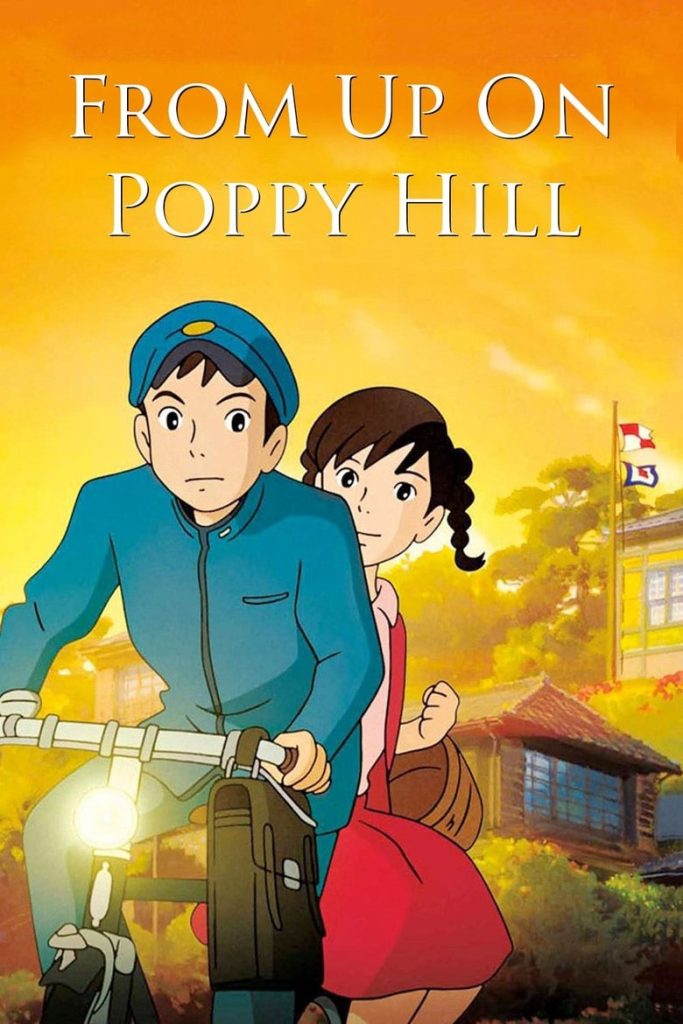
Story overview
From Up on Poppy Hill is a gentle animated drama set in 1963 Japan during a period of post-war recovery and preparation for the Olympics. The story follows two high school students, Umi and Shun, whose growing friendship faces challenges when a secret from their past emerges. The film explores themes of hope, change, and the tension between preserving tradition and embracing the future, all against a backdrop of historical transition.
Parent Guide
A gentle historical drama suitable for children who can handle emotional themes and slower pacing.
Content breakdown
No violence or physical peril depicted.
Mild emotional tension related to family secrets and historical context.
No offensive language.
No sexual content or nudity.
No substance use depicted.
Mild emotional themes related to family, loss, and historical change.
Parent tips
This PG-rated film is suitable for most children but deals with mature themes like family secrets, loss, and historical conflict in a thoughtful way. The animation is beautiful and calm, with no intense action or scary scenes, making it accessible for younger viewers who can handle slower-paced storytelling. Parents should be prepared to discuss Japan's post-war recovery and how the characters navigate complex emotions related to their past.
Parent chat guide
Parent follow-up questions
- What was your favorite part of the movie?
- How did the characters help each other?
- What colors did you see in the animation?
- Did you like the music in the movie?
- How did the movie make you feel?
- Why do you think the students wanted to save their clubhouse?
- How did Umi and Shun become friends?
- What does it mean when a country is recovering from a war?
- How did the characters show they cared about their community?
- What traditions did you notice in the movie?
- How does the film show Japan changing after World War II?
- Why might family secrets be difficult to discover?
- What responsibilities did Umi have at home, and why?
- How do the characters balance respect for the past with hope for the future?
- What does the film suggest about how young people can make a difference?
- How does the historical context of 1963 Japan influence the characters' decisions?
- What does the film suggest about how societies heal after conflict?
- How do Umi and Shun's personal journeys reflect larger social changes?
- In what ways does the film explore the tension between individual identity and family history?
- How does the animation style contribute to the film's emotional tone?
🎭 Story Kernel
At its core, 'From Up on Poppy Hill' is about Japan's struggle to reconcile its traditional past with its modernizing future during the 1963 Tokyo Olympics preparations. The conflict over preserving the dilapidated Latin Quarter clubhouse mirrors the nation's own debate about cultural heritage versus progress. Umi and Shun's personal journey—including the shocking revelation that they might be siblings—becomes a metaphor for Japan examining its own familial and historical connections. Their eventual discovery that they aren't related represents the possibility of creating new bonds while honoring the past, suggesting that identity isn't fixed but can be thoughtfully reconstructed.
🎬 Visual Aesthetics
The film's visual language masterfully contrasts two Japans: the bustling, modernizing port city below and the nostalgic, slightly decaying Latin Quarter above. Director Goro Miyazaki employs a warm, muted color palette of ochres, browns, and seafoam greens that evokes 1960s photography rather than vibrant anime. The camera lingers on everyday details—steaming rice bowls, handwritten letters, weathered wood—creating an intimate, tactile world. The Latin Quarter's chaotic, layered interiors visually represent accumulated history, while Umi's ritual of raising signal flags each morning establishes both character and thematic continuity between past and present.
🔍 Details & Easter Eggs
💡 Behind the Scenes
This marked Goro Miyazaki's second directorial effort after 'Tales from Earthsea,' with his legendary father Hayao serving as planner and writer—creating a unique father-son collaboration. The film is based on a 1980 manga by Chizuru Takahashi and Tetsurō Sayama. Studio Ghibli conducted extensive historical research on 1960s Yokohama, with background artists visiting the actual locations to capture architectural details. The Latin Quarter set was particularly detailed, with animators studying real student clubhouses from Tokyo universities of the era. Voice casting included Masami Nagasawa and Junichi Okada, both major Japanese stars taking on animation roles.
Where to watch
Choose region:
- HBO Max
- HBO Max Amazon Channel
- Amazon Video
- Apple TV
- Google Play Movies
- YouTube
- Fandango At Home
Trailer
Trailer playback is unavailable in your region.