
George W. Bush: The 9/11 Interview (2011)
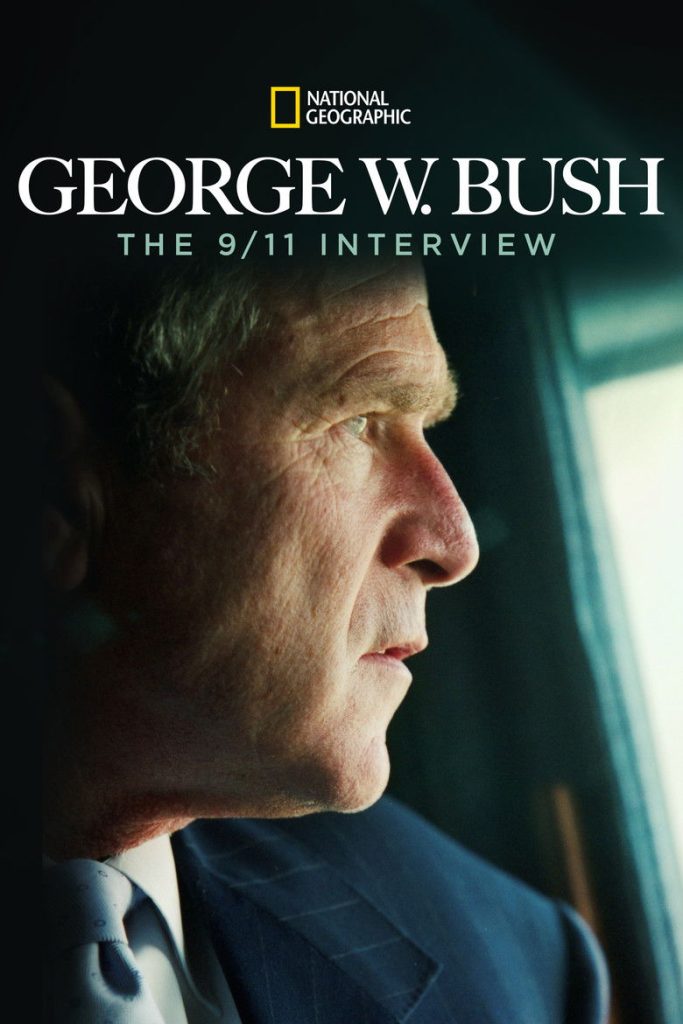
Story overview
This 2011 documentary features former President George W. Bush reflecting on his experiences during the September 11, 2001 terrorist attacks. Through an interview format, he discusses the chaotic moments after the attacks, the difficulty in obtaining accurate information, his decision-making process, and his emotional visit to Ground Zero. The program focuses on historical recollection and political leadership during a national crisis, without graphic imagery but with intense emotional themes.
Parent Guide
A historical documentary featuring intense discussion of the 9/11 terrorist attacks. While not visually graphic, the emotional and thematic content requires maturity to process. Best suited for teenagers with adult guidance.
Content breakdown
Discusses terrorist attacks that caused mass casualties, but without graphic visuals. Descriptions of destruction and references to 'bloodlust' among rescue workers. The peril is historical rather than depicted.
Thematic discussion of terrorism, national trauma, and emotional responses to tragedy. References to fear, chaos, and destruction. Could be disturbing for those sensitive to discussions of terrorism or unfamiliar with 9/11 events.
Includes one quoted use of 'damn' by President Bush. Otherwise standard documentary language.
No sexual content or nudity present.
No depiction or discussion of substance use.
High emotional intensity through discussion of national tragedy, leadership under pressure, grief, anger ('bloodlust' reference), and historical trauma. The interview format creates personal, reflective intensity.
Parent tips
This documentary deals with mature historical events and may require parental guidance for younger viewers. Consider watching together to provide context and answer questions. The content focuses on political decision-making and emotional responses to terrorism, which could be distressing or confusing for children unfamiliar with 9/11. The '18+' rating suggests it's intended for adult audiences, but mature teenagers with historical interest might benefit from supervised viewing.
Parent chat guide
Parent follow-up questions
- What do you think leaders do to help people?
- How can we feel safe when scary things happen in the world?
- What did you learn about how President Bush helped people after the attacks?
- Why is it important to remember events like 9/11?
- What challenges do leaders face during emergencies?
- How do you think the country changed after 9/11?
- What insights did you gain about presidential decision-making under pressure?
- How does this interview contribute to our understanding of this historical event?
🎭 Story Kernel
The film isn't a conventional documentary but a psychological portrait of leadership under unimaginable pressure. Through the interview format, it explores how George W. Bush processes the defining moment of his presidency in real-time. The core tension lies between the public figure expected to provide closure and the private man still grappling with trauma. What drives Bush isn't political calculation but an almost primal need to make sense of events that defied comprehension, revealing how crisis leadership emerges not from certainty but from the struggle to find meaning amid chaos.
🎬 Visual Aesthetics
The visual language is deliberately stark and intimate, rejecting documentary conventions for something more psychologically penetrating. The camera remains tightly focused on Bush's face, using shallow depth of field to isolate him from the neutral background. Natural lighting creates subtle shadows that shift with his expressions. The color palette is muted—grays, blues, and earth tones—mirroring the sober subject matter. There are no cutaways to archival footage; the film forces us to watch a man reliving trauma through memory alone, making the interview feel less like journalism and more like a therapeutic session.
🔍 Details & Easter Eggs
💡 Behind the Scenes
The interview was conducted in 2011 at Bush's Dallas office, a decade after 9/11, but the filmmakers chose to present it without temporal markers to create a timeless quality. Director Errol Morris insisted on using his Interrotron device—a modified teleprompter that allows subjects to look directly into the camera while seeing the interviewer's face. This creates the intense eye contact that defines the film's psychological intimacy. The production team spent months researching Bush's mannerisms and speech patterns to design questions that would bypass political talking points and access genuine reflection.
Where to watch
Choose region:
- Disney Plus