Get Out (2017)
Story overview
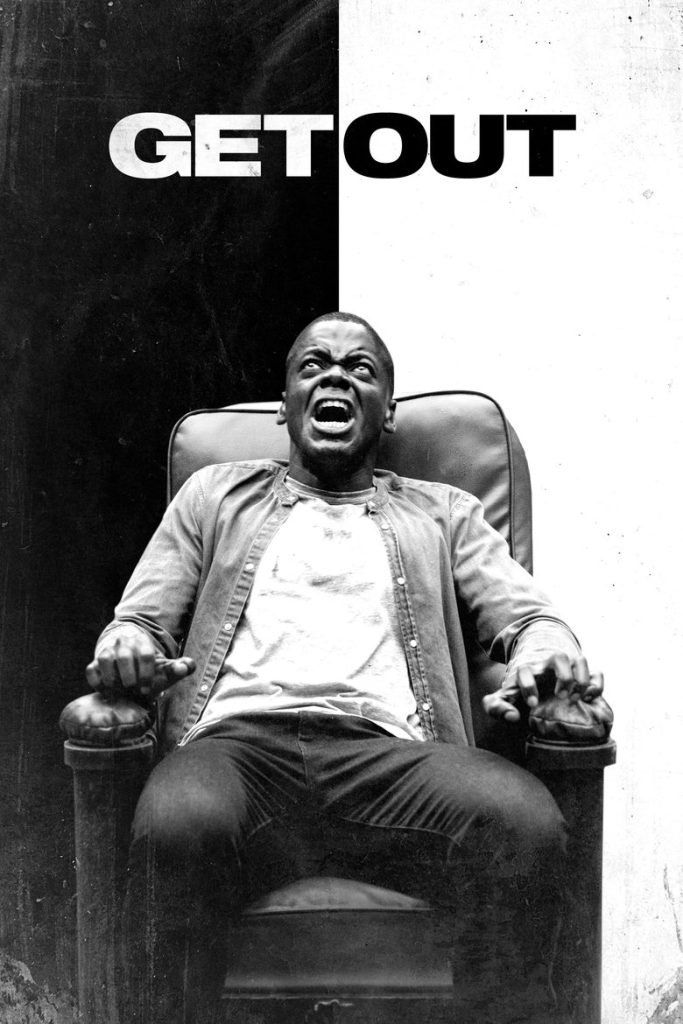
Get Out is a 2017 mystery thriller horror film. It follows a young Black man who visits his white girlfriend's family estate, where unsettling events unfold. The movie explores themes of racial tension and social commentary through suspenseful storytelling.
Parent Guide
Mature psychological horror with strong thematic content requiring parental guidance for teenagers.
Content breakdown
Contains intense peril situations and psychological threats rather than graphic violence.
Features disturbing psychological concepts, suspenseful sequences, and unsettling scenarios.
Includes some strong language and racially charged dialogue.
Contains brief romantic situations and suggestive dialogue.
Shows social drinking in some scenes.
High psychological tension and emotionally charged situations throughout.
Parent tips
This R-rated horror film contains intense psychological themes and disturbing content unsuitable for children. Parents should watch it first to assess appropriateness for mature teenagers. The movie deals with racial issues and manipulation in ways that may require discussion.
Parent chat guide
Parent follow-up questions
- Did you see anything that made you feel scared?
- What was your favorite part of the movie?
- How did the characters help each other?
- What colors did you see in the movie?
- Can you tell me about the animals in the story?
- What made the main character feel uncomfortable in the story?
- How did people treat each other differently in the movie?
- What clues helped solve the mystery?
- Why is it important to trust your feelings?
- How did the setting make the story more interesting?
- What social issues does the movie address through its story?
- How does the film build suspense without showing violence?
- What does the movie say about first impressions and assumptions?
- How do the characters' backgrounds affect their experiences?
- What makes this horror story different from others you've seen?
- How does the film use genre conventions to discuss racial dynamics?
- What commentary does the movie make about modern society?
- How does the director create psychological tension throughout?
- What ethical questions does the story raise about relationships?
- How does the film balance entertainment with social critique?
🎭 Story Kernel
The movie expresses the insidious nature of liberal racism, where prejudice is masked by performative allyship. It's driven by characters who commodify Black bodies under the guise of admiration, revealing a deep-seated envy and desire for control. Chris's journey isn't just about survival; it's an awakening to a systemic exploitation that operates in plain sight, turning social niceties into tools of oppression. The Armitages' motivations stem from a twisted belief in racial superiority, seeking to harvest Black physicality while erasing their consciousness, a metaphor for cultural appropriation taken to its literal extreme.
🎬 Visual Aesthetics
The visual aesthetics use a bright, suburban palette to subvert horror tropes, with crisp cinematography that mirrors the polished facade of the Armitages' world. Camera language often isolates Chris in frames, emphasizing his alienation, while slow zooms and lingering shots build unease. Symbolism is rich, like the teacup stirring representing hypnosis and control, and the use of the sunken place as a visual metaphor for marginalization. Action is restrained until the climax, where violence erupts in a raw, cathartic release, contrasting with the earlier calm.
🔍 Details & Easter Eggs
💡 Behind the Scenes
Jordan Peele drew inspiration from real social anxieties and classic horror films like 'The Stepford Wives.' The sunken place was conceived as a visual metaphor for marginalization. Actor Daniel Kaluuya performed the hypnosis scene in one take to capture raw emotion. Filming locations included Alabama and California, with the Armitage house specifically chosen for its unsettling, pristine appearance. Peele initially considered a different ending but opted for the police car arrival to subvert expectations and highlight systemic issues.
Where to watch
Choose region:
- HBO Max
- HBO Max Amazon Channel
- Amazon Video
- Apple TV
- Google Play Movies
- YouTube
- Fandango At Home
Trailer
Trailer playback is unavailable in your region.