
Girls State (2024)
Story overview
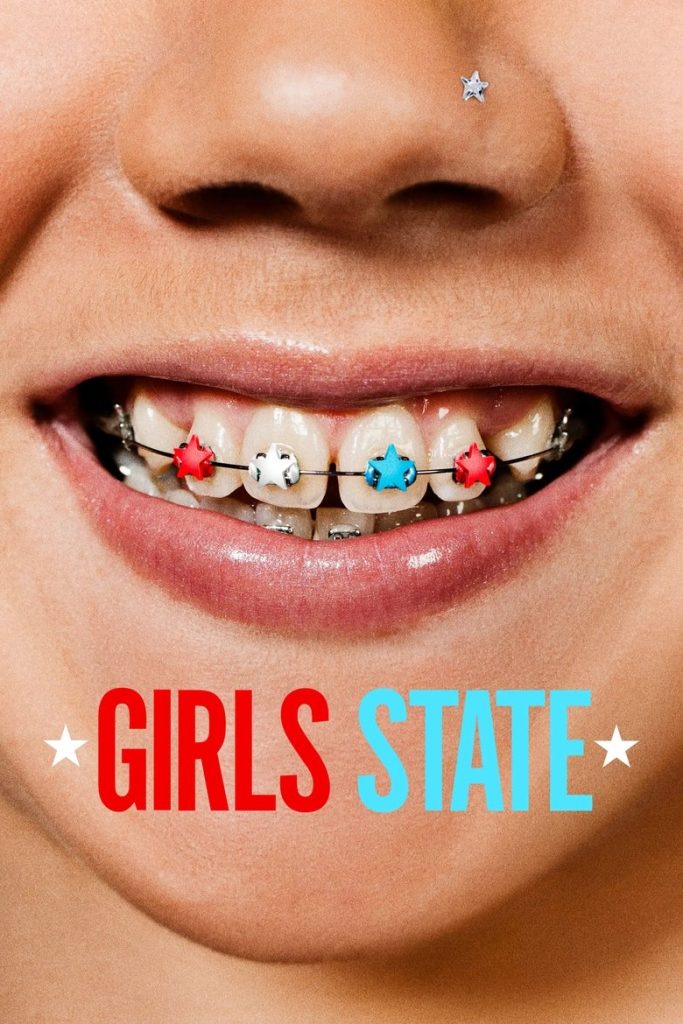
Girls State is a 2024 documentary that follows teenage girls from diverse backgrounds in Missouri as they participate in an immersive political simulation. The film explores how these young women navigate leadership, democracy, and governance while building a government from scratch, offering insights into their perspectives on American political systems.
Parent Guide
Educational documentary about teenage girls participating in political simulation with minimal concerning content. Best for mature middle schoolers and high school students interested in politics, leadership, or social studies.
Content breakdown
No violence or physical peril depicted. The film focuses on political processes and discussions.
No scary or disturbing imagery. Some discussions of social issues may be thought-provoking but not frightening.
May include occasional mild language typical of teenage conversation (e.g., 'hell,' 'damn'). No strong profanity expected in educational documentary context.
No sexual content or nudity. The documentary focuses on political education and leadership development.
No depiction of substance use. The setting is an educational program for teenagers.
Some emotional moments as girls navigate political disagreements and leadership challenges, but overall intensity is low. Focus is on educational content rather than dramatic tension.
Parent tips
This documentary provides an excellent opportunity to discuss democracy, leadership, and civic engagement with older children. Parents should be aware that while rated TV-14, the content is primarily educational and focuses on political processes. The film may include occasional mild language and discussions of social issues relevant to teenagers. Consider watching together with children ages 13+ to facilitate discussions about government, gender dynamics in politics, and youth activism.
Parent chat guide
Parent follow-up questions
—
- What is a leader?
- How do people work together?
- What is voting?
- What surprised you about how the girls worked together?
- What makes a good leader in your opinion?
- How do different backgrounds affect how people see problems?
- How did gender dynamics play out in the political simulation?
- What did you think about how the girls handled disagreements?
- How does this documentary change your view of youth involvement in politics?
- What systemic issues did you notice in how the government was built?
🎭 Story Kernel
Girls State serves as a poignant, often frustrating companion piece to Moss and McBaine’s Boys State, shifting the lens to a Missouri program where 500 teenage girls navigate a simulated government. While the boys’ version felt like a high-stakes Machiavellian playground, this film exposes the structural inequities embedded in the program itself. It is less about the pursuit of raw power and more about the realization of its systemic limitations. The documentary captures a pivotal moment in American history, filmed as the Supreme Court’s Dobbs decision loomed, forcing these young women to confront the fragility of their own bodily autonomy while practicing the very politics that govern it. It is a study of ambition filtered through a double standard, highlighting how these girls are taught to lead while being simultaneously policed on their attire, behavior, and institutional funding.
🎬 Visual Aesthetics
The cinematography employs an observational, fly-on-the-wall style that oscillates between the grand scale of the university campus and the suffocating intimacy of dorm room debates. Moss and McBaine use tight close-ups to capture the internal calculations of the protagonists—specifically Emily Worthmore’s growing disillusionment and Cecilia Bartin’s sharp rhetorical pivots. The visual language emphasizes the contrast between traditional, almost performative patriotic pageantry and the raw, modern anxieties of the participants. Symbolism is found in the physical boundaries of the Missouri campus, which act as a microcosm for the broader American political landscape. The editing creates a rhythmic tension, juxtaposing the girls' earnest legislative efforts with the realization that their state is fundamentally different—and more restricted—than the one their male counterparts inhabit, highlighting a visual and social divide that persists throughout the film.
🔍 Details & Easter Eggs
💡 Behind the Scenes
Girls State is the spiritual successor to the 2020 documentary Boys State, which won the Grand Jury Prize at Sundance. Directors Jesse Moss and Amanda McBaine chose Missouri specifically because it is one of the few states where the Boys and Girls State programs are held simultaneously on the same campus, allowing for a direct comparison of the two experiences. The film was produced by Davis Guggenheim’s Concordia Studio and Apple Original Films. The filmmakers had to navigate strict rules regarding filming on a college campus while capturing the spontaneous, unscripted interactions of hundreds of teenagers during a high-pressure week.
Where to watch
Choose region:
- Apple TV
- Apple TV Amazon Channel
Trailer
Trailer playback is unavailable in your region.