Gladiator (2000)
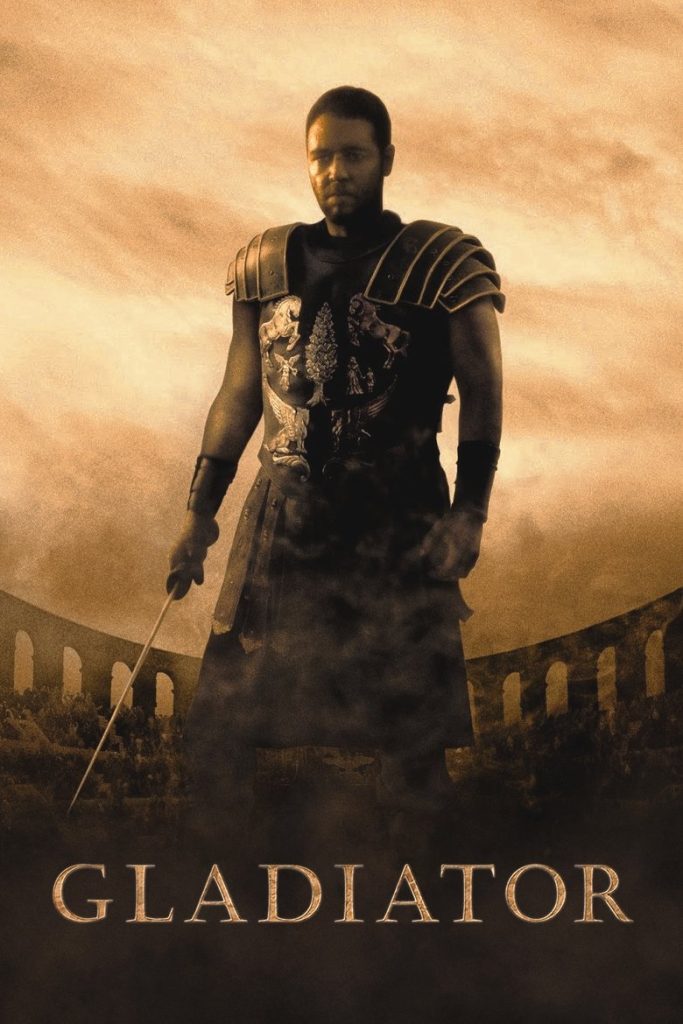
Story overview
Gladiator is an epic historical drama set in ancient Rome. It follows a respected general who is betrayed and forced into slavery as a gladiator. The film depicts his journey through brutal combat arenas while seeking justice against those who wronged him. Themes of honor, loyalty, and political corruption are central to the story.
Parent Guide
An intense historical epic with graphic violence and mature themes, suitable only for mature teenagers with parental guidance.
Content breakdown
Frequent, graphic combat violence including battles, gladiator fights, and executions with blood, gore, and dismemberment. Characters are killed with swords, spears, and other weapons in realistic detail.
Intense peril throughout, including life-threatening situations in combat arenas. Some disturbing emotional content involving betrayal, grief, and revenge themes.
Occasional strong language including profanity. Some historical-appropriate insults and threats.
Brief non-sexual nudity in arena context (mostly male). Some suggestive dialogue but no explicit sexual content.
Social drinking in palace scenes. No prominent substance abuse depicted.
High emotional stakes involving betrayal, loss, revenge, and moral dilemmas. Intense father-son relationships and themes of honor under pressure.
Parent tips
Gladiator is rated R for intense, graphic violence throughout. The film contains numerous battle scenes, gladiatorial combat, and executions with blood and gore. There are also brief moments of non-sexual nudity in the arena context, strong language, and intense emotional themes including betrayal, grief, and revenge.
This film is not suitable for young children due to its visceral violence and mature themes. The 155-minute runtime and complex political plot may also challenge younger viewers' attention spans. Parents should consider their child's sensitivity to realistic combat violence before viewing.
Parent chat guide
Help children distinguish between the film's dramatic portrayal and historical reality. Discuss how characters make moral choices in difficult circumstances, and what alternatives might exist to violent conflict resolution.
Parent follow-up questions
- What did you think about the big fights in the movie?
- How did the music make you feel during different parts?
- What was your favorite costume or setting?
- Did any parts make you feel scared or worried?
- What would you do if you saw someone being treated unfairly?
- Why do you think people in ancient Rome watched gladiator fights?
- What makes someone a good leader versus a bad leader in the movie?
- How do the characters show loyalty to each other?
- What are some ways to solve problems without fighting?
- How did the main character change from beginning to end?
- How does the film portray the difference between justice and revenge?
- What historical inaccuracies might exist in the movie's portrayal of Rome?
- How do power and corruption affect the characters' decisions?
- What role does honor play in the main character's choices?
- How does the film use violence to tell its story?
- How does the film comment on violence as entertainment in both ancient and modern contexts?
- What philosophical questions about mortality and legacy does the film raise?
- How are political systems portrayed as vulnerable to corruption?
- What does the film suggest about the relationship between personal honor and societal expectations?
- How does the cinematography and score enhance the emotional impact of violent scenes?
🎭 Story Kernel
At its core, Gladiator is about the collision between two competing visions of power. Maximus represents the stoic, duty-bound leader who finds strength in service and honor, even in slavery. Commodus embodies the narcissistic, emotionally fragile ruler who craves validation through spectacle and control. The film explores how both men use the arena—Maximus as a means to expose corruption, Commodus as a tool for manipulation—revealing that Rome's greatest battles weren't against barbarians, but against its own decaying morality. Their conflict questions whether true power comes from love and loyalty or fear and pageantry.
🎬 Visual Aesthetics
Ridley Scott employs a desaturated, earthy color palette for battle scenes and Rome's underbelly, contrasting with the golden opulence of the palace, visually emphasizing the gulf between rulers and the ruled. The camera often adopts a shaky, documentary-like intimacy during combat, making violence feel visceral and personal. Wide shots of the Colosseum dwarf individual gladiators, symbolizing how Rome consumes its heroes. Recurring imagery of wheat fields represents Maximus's lost peace and spiritual connection to his family, while fire symbolizes both destruction and purification throughout his journey.
🔍 Details & Easter Eggs
💡 Behind the Scenes
Russell Crowe performed most of his own stunts and insisted on wearing actual heavy armor to authentically portray exhaustion. The Colosseum was largely CGI, built from only one partial set piece. Oliver Reed died during production, requiring his remaining scenes to be completed using body doubles and digital face replacement—a pioneering technique at the time. The famous line 'Are you not entertained?' was improvised by Crowe during filming.
Where to watch
Choose region:
- Peacock Premium
- Paramount+ Amazon Channel
- Kanopy
- YouTube TV
- Philo
- Starz Amazon Channel
- Peacock Premium Plus
- Paramount Plus Essential
- Paramount Plus Premium
- Amazon Video
- Apple TV
- Google Play Movies
- YouTube
- Fandango At Home
- JustWatchTV
- Spectrum On Demand
- Plex
Trailer
Trailer playback is unavailable in your region.