
Glass (2019)
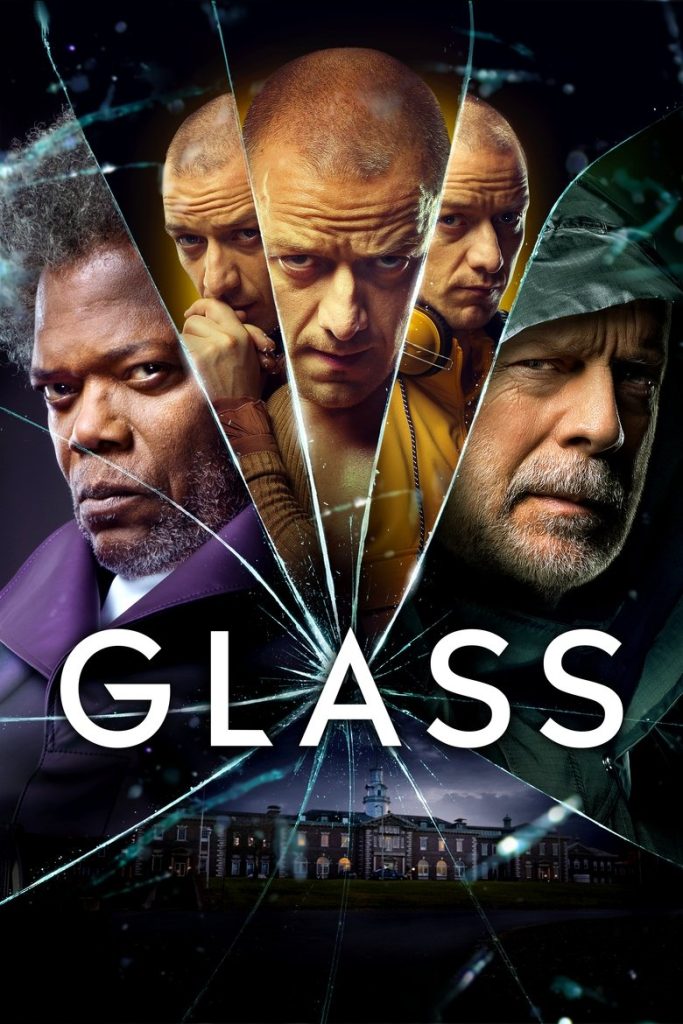
Story overview
Glass is a 2019 psychological thriller that concludes M. Night Shyamalan's superhero trilogy. The film follows David Dunn, a man with superhuman strength and invulnerability, as he tracks Kevin Wendell Crumb, a man with dissociative identity disorder who manifests 24 distinct personalities, some of which are violent. They are both captured and placed in a psychiatric institution where Dr. Ellie Staple attempts to convince them that their extraordinary abilities are delusions. Meanwhile, the mastermind Elijah Price (Mr. Glass) orchestrates events to prove that superhumans exist. The film explores themes of identity, reality, and the nature of heroism and villainy through tense psychological drama and supernatural elements.
Parent Guide
Glass is a complex psychological thriller with mature themes that requires viewer discretion. The film contains moderate violence, intense psychological situations, and disturbing content related to mental illness. While rated PG-13, it pushes the boundaries of that rating with its dark themes and emotional intensity. Best suited for mature teens who can handle psychological thrillers and discussions about identity and reality.
Content breakdown
Several fight scenes with physical confrontations, though not excessively graphic. Characters are shown in peril, including being restrained, threatened, and attacked. Some scenes show characters breaking bones (heard, not shown graphically) and being injured. There's a climactic confrontation with physical violence and destruction.
Psychological tension throughout as characters question their sanity. Disturbing portrayal of dissociative identity disorder with sudden personality shifts. Some jump scares and intense moments. The institutional setting and treatment of patients may be unsettling. Themes of manipulation and psychological control.
Some mild profanity including 'hell,' 'damn,' and 'ass.' Occasional stronger language but within PG-13 limits. No excessive or aggressive cursing.
No sexual content or nudity. Some brief romantic references but no sexual situations.
No substance use shown. Characters are in a medical setting where medications might be referenced but not shown being used recreationally.
High emotional intensity throughout as characters grapple with identity, reality, and purpose. Themes of institutionalization, mental health struggles, and existential questions create sustained tension. Characters experience fear, confusion, anger, and desperation. The psychological manipulation creates emotional distress for both characters and viewers.
Parent tips
Glass contains intense psychological themes, violence, and disturbing content that may be challenging for younger viewers. The film deals with mental illness, particularly dissociative identity disorder, in a dramatic and sometimes frightening context. There are scenes of peril, physical confrontations, and emotional intensity. The PG-13 rating reflects moderate violence, scary moments, and some strong language. Parents should consider their child's sensitivity to psychological thrillers and themes of identity before viewing.
Parent chat guide
Parent follow-up questions
—
- What parts of the movie felt scary to you?
- How did you feel when the characters were in danger?
- Can you tell me what was happening in the hospital scenes?
- What did you think about how the movie showed someone with multiple personalities?
- Why do you think Dr. Staple wanted to convince them they weren't special?
- How did the ending make you feel about the characters' choices?
- How does the film comment on society's treatment of people who are different?
- What philosophical questions about identity and reality does the movie raise?
- Do you think the portrayal of mental illness was respectful or sensationalized? Why?
🎭 Story Kernel
At its core, 'Glass' is about the tyranny of narratives—how institutions weaponize stories to control those who don't fit their worldview. The characters are driven by their need to either prove or disprove their own mythologies: David Dunn seeks validation of his purpose, Kevin Crumb's alters fight for survival, and Elijah Glass desperately wants his comic-book theory of superhumans to be real. The film's central conflict isn't hero versus villain, but individual identity versus institutional categorization. The psychiatric facility becomes a metaphor for society's need to pathologize difference, with Dr. Staple representing the medical establishment's desire to explain away the extraordinary as mental illness.
🎬 Visual Aesthetics
Shyamalan employs a deliberate visual language that mirrors the film's themes of fragility and perception. The color palette shifts from the muted blues and greens of Dunn's rainy Philadelphia to the sterile, clinical whites of the psychiatric facility, finally exploding into the vibrant primary colors of the comic-book-inspired finale. Camera work is notably restrained—tight close-ups emphasize characters' isolation, while wide shots of the institution's hallways create a sense of institutional oppression. The action sequences feel intentionally grounded and clumsy compared to typical superhero fare, visually reinforcing the film's thesis that these are broken people, not gods.
🔍 Details & Easter Eggs
💡 Behind the Scenes
James McAvoy prepared for his role as Kevin Crumb by working with a dissociative identity disorder specialist and creating distinct physicality for each alter—The Beast's movements were inspired by big cats, while Hedwig's childlike posture came from observing children's gait. The psychiatric facility scenes were filmed at the former Allentown State Hospital in Pennsylvania, a real decommissioned mental institution that provided authentic atmospheric decay. Samuel L. Jackson spent most of his filming time in a wheelchair and minimal makeup, relying entirely on vocal delivery and eye movements to portray Glass's calculated menace.
Where to watch
Choose region:
- HBO Max
- HBO Max Amazon Channel
- Cinemax Amazon Channel
- USA Network
- Cinemax Apple TV Channel
- Amazon Video
- Apple TV Store
- Google Play Movies
- YouTube
- Fandango At Home
Trailer
Trailer playback is unavailable in your region.