Glory (1989)
Story overview
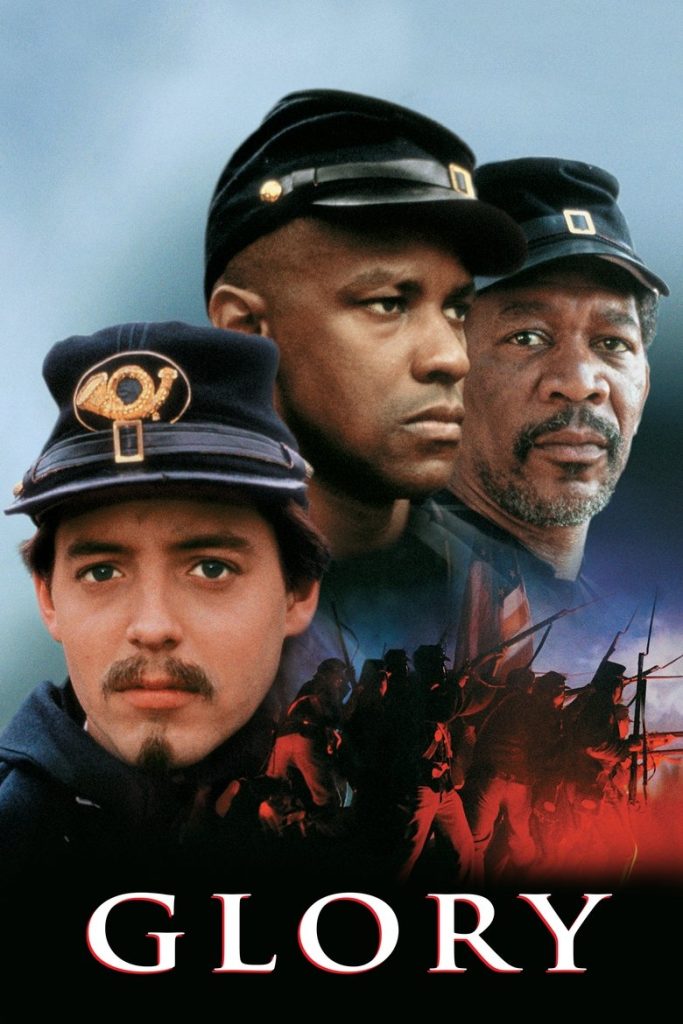
Glory is a 1989 historical war drama based on the true story of the 54th Massachusetts Infantry Regiment, the first all-Black volunteer unit in the Union Army during the American Civil War. The film follows Colonel Robert Gould Shaw as he leads these soldiers, who face racism from both their own side and the Confederates while fighting for freedom and equality. It portrays their training, battles, and ultimate sacrifice at Fort Wagner, highlighting themes of courage, dignity, and the struggle against prejudice.
Parent Guide
Glory is a powerful and historically significant film that depicts the bravery of Black soldiers in the Civil War, but it contains intense war violence, strong thematic elements, and some language, making it most appropriate for teens and adults with parental guidance.
Content breakdown
Graphic and intense war violence throughout, including battle scenes with soldiers being shot, stabbed, and killed; depictions of blood, wounds, and amputations; a scene of a character being whipped; explosions and combat peril. The violence is realistic and central to the film's portrayal of war.
Disturbing scenes include the brutality of war, racism and discrimination faced by the soldiers, emotional moments of loss and sacrifice, and tense battle sequences. Thematic elements of slavery and prejudice may be unsettling for sensitive viewers.
Some strong language, including racial slurs (e.g., 'nigger' used in historical context), 'hell', 'damn', and other mild profanity. The language reflects the period and attitudes but may be offensive.
No sexual content or nudity; the film focuses on war and historical drama without romantic or sexual elements.
Brief and minor depictions of alcohol use, such as characters drinking in social or military settings; no drug use or abuse portrayed.
High emotional intensity due to themes of racism, sacrifice, and war; scenes of camaraderie, loss, and triumph evoke strong feelings. The film's climax is particularly moving and may be impactful for viewers.
Parent tips
This film is rated R primarily for intense war violence and some strong language. It is best suited for mature teens and adults due to its graphic depictions of battle, including scenes of soldiers being shot, wounded, and killed, with blood and injuries shown. Thematic elements include racism, discrimination, and the horrors of war, which may be disturbing for younger viewers. Parents should consider their child's sensitivity to violence and emotional content before viewing. The film offers valuable historical lessons on Civil War history and civil rights, but requires guidance for younger audiences.
Parent chat guide
Parent follow-up questions
—
- What did the soldiers in the movie want to fight for?
- How did the characters show bravery?
- Why was it important for them to work together?
- What challenges did the 54th Regiment face from their own army?
- How does the film show the effects of war on soldiers?
- What can we learn about history from this story?
- How does Glory portray the intersection of race and war in American history?
- What moral dilemmas do characters like Shaw face, and how do they resolve them?
- In what ways does the film highlight systemic racism, and how does it relate to today?
🎭 Story Kernel
At its core, 'Glory' is less a traditional war film and more a profound examination of dignity as the ultimate form of resistance. The driving force isn't military victory—the 54th Massachusetts's assault on Fort Wagner is a tactical failure—but the characters' relentless pursuit of recognition as human beings and soldiers. Colonel Shaw's journey from idealistic abolitionist to committed leader mirrors his men's transformation from property to warriors. The film argues that true glory lies not in battlefield success but in the defiant assertion of one's humanity against a society that systematically denies it, making every drill, uniform fitting, and final charge an act of political and personal revolution.
🎬 Visual Aesthetics
Director Edward Zwick and cinematographer Freddie Francis employ a visual language that evolves with the regiment's dignity. Early scenes use washed-out palettes and distant framing, visually treating the Black soldiers as background elements. As they train and bond, the cinematography becomes more intimate, with closer shots and warmer tones during campfire scenes. The final assault is shot with brutal, chaotic handheld cameras and explosive flashes against the dark night, emphasizing both the violence and their impossible position. Symbolically, the burning of Charleston uses orange hellfire against black sky, while the final beach crossing frames them as silhouettes against the ocean—men becoming legends against elemental backdrops.
🔍 Details & Easter Eggs
💡 Behind the Scenes
Denzel Washington won his first Oscar for Best Supporting Actor as Trip, delivering his famous 'whipping scene' in a single take after studying historical accounts of slave punishments. The Fort Wagner assault was filmed on Jekyll Island, Georgia, where producers had to import tons of dark sand to match Massachusetts beaches. Matthew Broderick, then known for comedic roles, immersed himself in Robert Gould Shaw's actual letters at the Harvard archives. The film's authentic uniforms came from meticulous research at the Massachusetts Historical Society, where the original 54th's flag is preserved—the same flag shown in the final scene.
Where to watch
Choose region:
- Netflix
- YouTube TV
- Amazon Video
- Apple TV Store
- Google Play Movies
- YouTube
- Fandango At Home
- Spectrum On Demand
Trailer
Trailer playback is unavailable in your region.