
Glory Road (2006)
Story overview
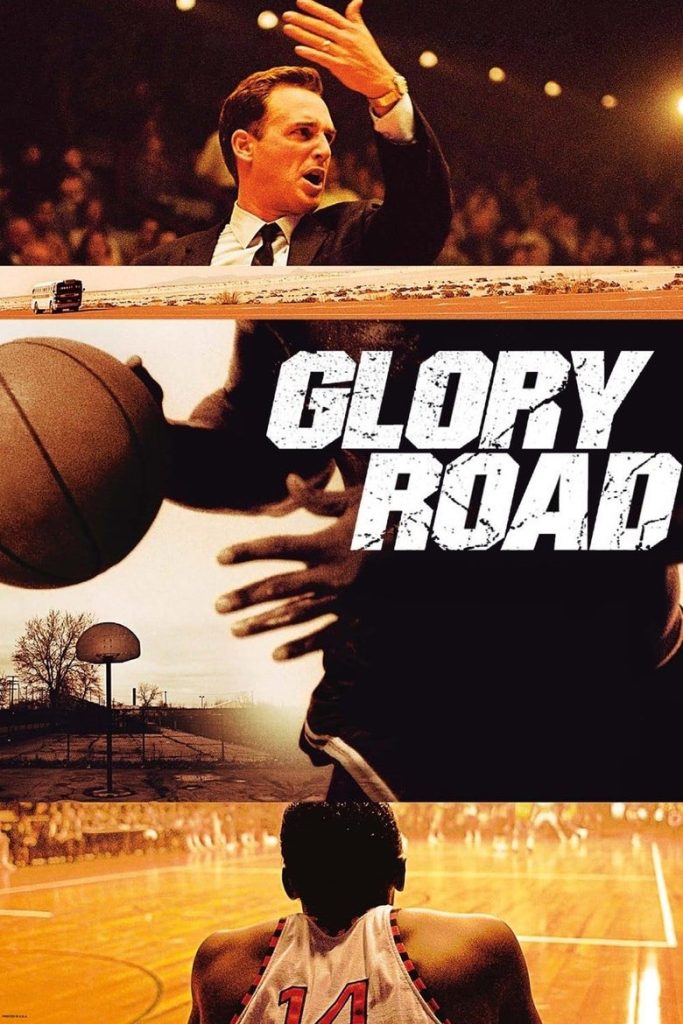
Glory Road is a 2006 historical drama based on the true story of the 1966 Texas Western College basketball team. The film follows coach Don Haskins as he leads the first all-black starting lineup to win the NCAA national championship. It explores themes of racial integration, teamwork, and overcoming prejudice in college sports during the Civil Rights era. The story highlights the challenges faced by the players both on and off the court as they break racial barriers in collegiate athletics.
Parent Guide
Historical drama about racial integration in college basketball with positive messages about teamwork and overcoming prejudice, but includes period-appropriate racism and tense situations.
Content breakdown
Some tense confrontations and threats related to racial prejudice, but no graphic violence. Basketball game action includes typical sports contact.
Scenes depicting racial discrimination and hostility may be unsettling. Some tense moments during games and confrontations.
Period-appropriate racial slurs and derogatory terms reflecting the era's attitudes. Some mild sports-related language.
No sexual content or nudity present.
No substance use depicted.
Emotional themes of discrimination, perseverance, and triumph. Some scenes may evoke strong feelings about injustice and prejudice.
Parent tips
This film deals with significant historical racism and discrimination, which may require context for younger viewers. While the basketball action is exciting, some scenes depict racial slurs, threats, and tense confrontations that reflect the era's realities. The PG rating suggests parental guidance is advised due to these thematic elements rather than graphic content. The overall message is positive about overcoming prejudice through courage and teamwork.
Parent chat guide
Parent follow-up questions
- Did you like watching the basketball games?
- What was your favorite part of the movie?
- How did the players work together as a team?
- What colors were the teams' uniforms?
- Did you see anyone being kind to others?
- Why were some people mean to the Texas Western players?
- How did Coach Haskins help his team succeed?
- What does it mean to be treated unfairly?
- How did the players support each other?
- What can we learn from how the team worked together?
- Why was it significant that Texas Western had an all-black starting lineup?
- How did racism affect the players both on and off the court?
- What leadership qualities did Coach Haskins demonstrate?
- How did the film show the importance of perseverance?
- What historical context is important to understand this story?
- How does this film reflect the broader Civil Rights movement of the 1960s?
- What systemic barriers did the players face beyond individual prejudice?
- How does the film balance historical accuracy with dramatic storytelling?
- What contemporary parallels exist in sports or society today?
- How did the film handle the complexity of racial integration during that era?
🎭 Story Kernel
At its core, 'Glory Road' is less about basketball than about the psychology of breaking systems. Coach Haskins doesn't just want to win; he weaponizes excellence as a form of social protest. The driving force isn't racial harmony, but the raw, uncomfortable assertion that Black athletes' superior skill could dismantle segregation's logic from within the very arena that excluded them. The film explores the burden of being 'the first'—the pressure to be flawless, the isolation, and the transformation of sport into a high-stakes political act. Each player's motivation intertwines personal ambition with collective destiny, making every game feel like a referendum on equality.
🎬 Visual Aesthetics
The film employs a deliberate visual dichotomy. Early scenes at Texas Western use a muted, dusty palette—washed-out yellows and browns that mirror the institutional neglect. In stark contrast, the championship game against Kentucky is awash in the crisp, almost sterile whites and blues of the privileged arena, making the Black players' dark uniforms visually defiant. The basketball action shifts from chaotic, playground-style energy in practice to a rigid, mechanical precision in games, mirroring Haskins' coaching philosophy. Slow-motion is used sparingly but powerfully, often focusing on faces during racist taunts, forcing the audience to sit with the emotional impact rather than the athletic spectacle.
🔍 Details & Easter Eggs
💡 Behind the Scenes
The film meticulously recreates the 1966 NCAA championship game, using the actual play-by-play commentary from the original broadcast. Actor Josh Lucas spent time with the real Don Haskins to master his stoic demeanor and West Texas accent. Several scenes were shot at the University of Texas at El Paso (formerly Texas Western), including the gym where the real team practiced. Jon Voight underwent extensive makeup to resemble Coach Adolph Rupp, studying his mannerisms from archival footage. The basketball sequences were choreographed by former NBA player and coach, ensuring period-accurate moves and styles of play.
Where to watch
Choose region:
- Disney Plus
- Amazon Video
- Apple TV
- Google Play Movies
- YouTube
- Fandango At Home
Trailer
Trailer playback is unavailable in your region.