
God’s Crooked Lines (2022)
Story overview
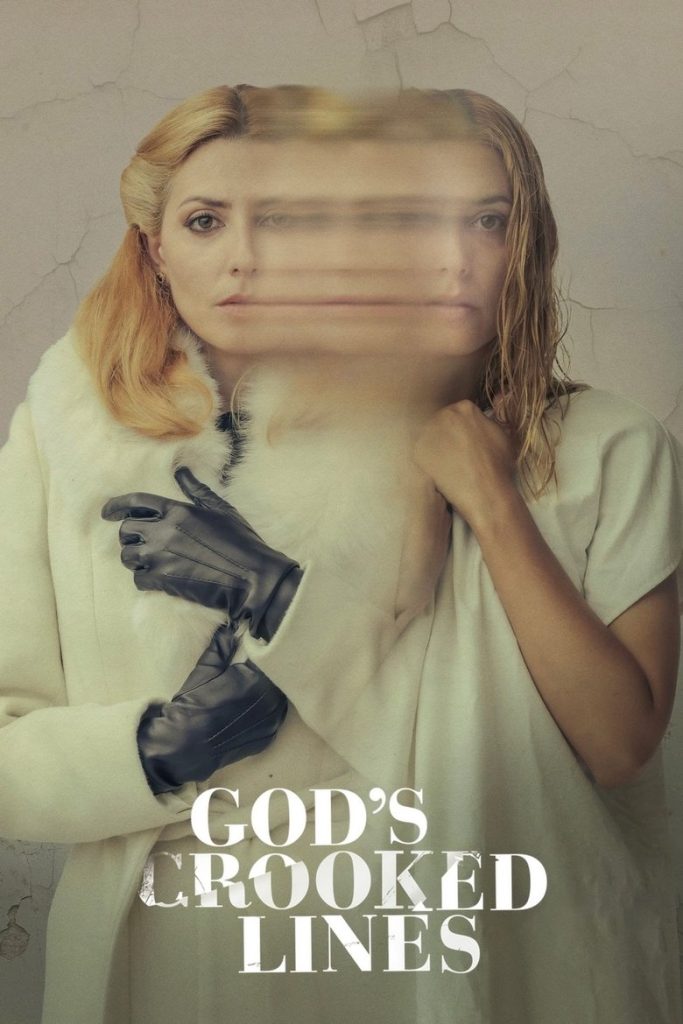
God's Crooked Lines is a 2022 mystery thriller set in a psychiatric institution. The story follows a detective who goes undercover as a patient to investigate a suspicious death. As she navigates the complex environment, she begins to question her own sanity and the truth behind the case. The film explores themes of mental health, deception, and the blurred lines between reality and perception.
Parent Guide
A psychological thriller with mature themes suitable for older teens and adults.
Content breakdown
Psychological tension and peril situations, but minimal physical violence.
Disturbing themes related to mental institutions and psychological manipulation.
May contain some mature language consistent with TV-MA rating.
Possible suggestive content but not graphic.
May include references to medication or substances in medical context.
High psychological tension and emotionally complex situations.
Parent tips
This TV-MA rated film contains mature themes and psychological tension that may be unsuitable for younger viewers. The setting in a psychiatric institution and themes of mental instability could be disturbing or confusing for children. Parents should consider the emotional maturity of their teens before viewing, as the film deals with serious subject matter in a suspenseful context.
Parent chat guide
Parent follow-up questions
- What was your favorite part of the movie?
- How did the characters feel in the story?
- What colors did you see in the movie?
- Was there anything that made you feel happy?
- What would you tell a friend about this movie?
- What was the main problem the detective was trying to solve?
- How do you think the patients in the hospital felt?
- What clues did the detective find during her investigation?
- Why do you think someone might pretend to be someone else?
- What makes a mystery story interesting to watch?
- What ethical questions does the undercover investigation raise?
- How does the film create suspense without showing violence?
- What does the title 'God's Crooked Lines' suggest about the story?
- How are mental health issues portrayed in the film?
- What techniques did the filmmaker use to make viewers question what's real?
- How does the film comment on institutional power and patient rights?
- What does the blurred reality theme say about perception versus truth?
- How effective is the psychological thriller approach compared to more violent alternatives?
- What social commentary might be embedded in the mental health institution setting?
- How does the film handle the complexity of determining sanity and truth?
🎭 Story Kernel
At its core, 'God's Crooked Lines' explores the terrifying fluidity between sanity and insanity within institutional power structures. The film isn't about whether Alice is mentally ill, but about how diagnosis becomes a weapon in the hands of those controlling the narrative. The driving force isn't mystery-solving but institutional gaslighting—the asylum's staff aren't just treating patients but actively constructing reality to maintain authority. The true horror emerges when the line between therapeutic intervention and psychological torture dissolves completely, questioning whether any institution claiming to heal can avoid becoming what it purports to cure.
🎬 Visual Aesthetics
The cinematography masterfully employs claustrophobic framing and disorienting Dutch angles to mirror Alice's deteriorating sense of reality. A muted, institutional color palette of grays and sickly greens dominates, with occasional bursts of red (blood, lipstick, emergency lights) signaling moments of truth or danger. Long, unbroken corridor shots create labyrinthine tension, while reflections in windows and polished floors constantly question which side of sanity we're observing. The camera often lingers on institutional details—peepholes, medication carts, restraint straps—making the environment itself a character that watches, controls, and judges.
🔍 Details & Easter Eggs
💡 Behind the Scenes
The film adapts Torcuato Luca de Tena's 1979 novel, with director Oriol Paulo deliberately choosing to set it in the 1970s to emphasize pre-modern psychiatric practices. Bárbara Lennie prepared for her role as Alice by spending time with real-life private investigators and studying method acting techniques. The asylum was filmed in a former tuberculosis sanatorium in the Catalan mountains, whose decaying architecture provided authentic period atmosphere. Notably, the production consulted with mental health professionals to accurately depict historical treatments while avoiding romanticization of institutional abuse.
Where to watch
Choose region:
- Netflix
- Netflix Standard with Ads