
Godzilla: City on the Edge of Battle (2018)
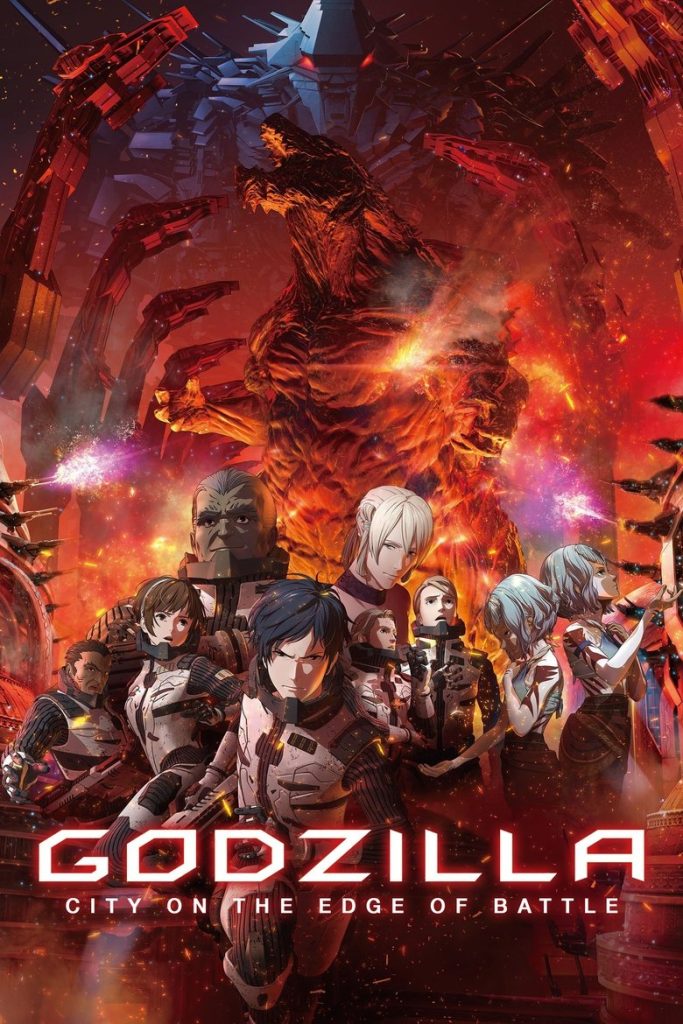
Story overview
In this animated sci-fi sequel, humanity continues its desperate struggle against Godzilla, the colossal monster that has dominated Earth. The story follows a group of survivors who discover Mechagodzilla, a powerful robotic weapon from ancient times, which they hope will be the key to defeating Godzilla and reclaiming their world. The film explores themes of survival, sacrifice, and technological warfare in a post-apocalyptic setting.
Parent Guide
An intense animated sci-fi film with frequent monster battles and themes of survival warfare. Best suited for mature pre-teens and teens who can handle animated action violence and emotional intensity.
Content breakdown
Frequent animated monster battles with destruction of cities and military vehicles. Characters are in constant peril from Godzilla's attacks. No graphic gore, but intense action sequences with explosions, laser beams, and collapsing structures.
Godzilla is portrayed as an overwhelming, nearly unstoppable force. Scenes of cities being destroyed and characters facing certain death. The post-apocalyptic setting and desperate survival situation create a tense atmosphere.
Minimal strong language. Some intense dialogue during battle sequences but no frequent profanity.
No sexual content or nudity present.
No depiction of substance use.
Characters face life-or-death situations regularly. Themes of sacrifice, loss, and desperation. The constant threat from Godzilla creates sustained tension throughout the film.
Parent tips
This animated film features intense monster battles, destruction of cities, and themes of war and survival. While there's no graphic gore, the action sequences are frequent and may be overwhelming for younger viewers. The story deals with loss and desperation, which could be emotionally challenging. The TV-14 rating suggests it's most suitable for teens and mature pre-teens. Parents should consider their child's sensitivity to animated violence and peril before viewing.
Parent chat guide
Parent follow-up questions
- Did you see any big monsters in the movie?
- What colors did you see in the movie?
- Did you see any robots?
- What was your favorite part of the movie?
- How did the characters try to stop Godzilla?
- What would you do if you saw a giant monster?
- Do you think using Mechagodzilla was a good solution? Why or why not?
- What does the movie teach us about working together?
- How did the characters show bravery?
- What does the film suggest about humanity's relationship with technology?
- How does the animation style affect how we perceive the violence?
- What ethical questions does the use of Mechagodzilla raise?
🎭 Story Kernel
At its core, 'Godzilla: City on the Edge of Battle' explores humanity's self-destructive obsession with control and revenge, rather than adaptation. The film's narrative is driven by the characters' relentless pursuit to defeat Godzilla using the ancient, autonomous weapon system known as Mechagodzilla City, which they discover buried underground. This quest reveals a tragic irony: in trying to reclaim their past dominance, they risk becoming as cold and mechanistic as the very technology they wield. The protagonist, Haruo, embodies this conflict, torn between his vendetta and the realization that survival might require coexistence or a new form of symbiosis with the planet, not conquest. The story critiques how trauma can blind societies to progressive solutions, leading them to repeat history's mistakes in a cycle of violence.
🎬 Visual Aesthetics
The film employs a stark, desaturated color palette dominated by grays and muted greens, emphasizing a post-apocalyptic world stripped of vibrancy and hope. Camera work often uses wide, static shots to convey the immense scale and loneliness of the ruined landscapes, contrasting with tight, frantic close-ups during action sequences to heighten tension. The visual style blends CGI with anime aesthetics, creating fluid, dynamic movements for Godzilla and the Mechagodzilla City, which symbolizes cold, geometric precision against organic chaos. Symbolism is evident in the recurring imagery of roots and networks, representing both the invasive nature of the city's technology and the interconnectedness of life, subtly hinting at themes of ecological balance and human alienation from nature.
🔍 Details & Easter Eggs
💡 Behind the Scenes
The movie is part of the Godzilla anime trilogy directed by Kōbun Shizuno and Hiroyuki Seshita, produced by Polygon Pictures using 3DCG animation, which allowed for detailed, cinematic visuals despite a TV series budget. Voice actor Mamoru Miyano, who plays Haruo, noted in interviews that he aimed to convey the character's internal struggle through subtle vocal shifts, reflecting the film's themes of humanity versus technology. Filming locations were entirely digital, created through extensive motion capture and virtual sets, inspired by real-world ruins and sci-fi architecture to enhance the dystopian feel. The production team studied real military tactics and biological systems to design the action sequences and Mechagodzilla City's behavior, blending realism with fantastical elements.
Where to watch
Choose region:
- Netflix
- Netflix Standard with Ads