
Going to the Mat (2004)
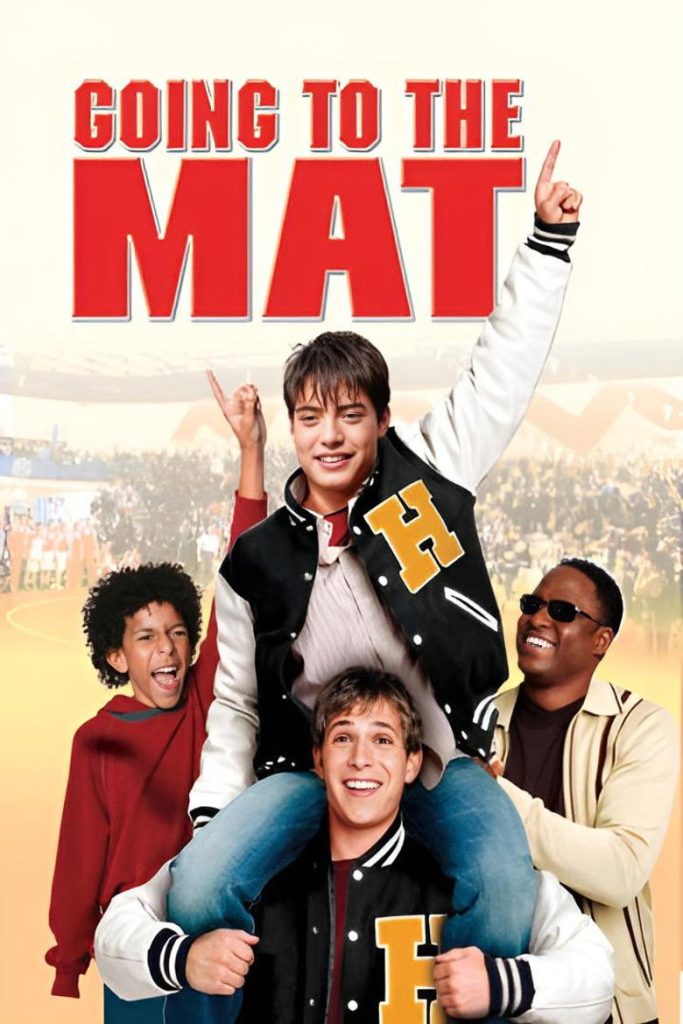
Story overview
Going to the Mat (2004) is a family-friendly TV movie about Jace Newfield, a blind teenager who transfers to a new school and faces social challenges. To gain acceptance from his peers, who initially perceive him as aloof, Jace decides to join the wrestling team. The film explores themes of perseverance, friendship, and overcoming adversity, as Jace navigates his disability and strives to fit in through sportsmanship and determination.
Parent Guide
A wholesome family drama with uplifting themes, appropriate for children ages 8 and up. It contains no concerning content, focusing on personal growth and positive relationships.
Content breakdown
Includes wrestling scenes with controlled physical contact, such as grappling and holds, but no aggression or injury. Mild peril when Jace faces social rejection, but resolved positively.
No scary or disturbing elements. The tone is supportive and inspirational throughout.
No offensive or strong language. Dialogue is family-appropriate and respectful.
No sexual content or nudity. Characters interact platonically.
No depiction of alcohol, drugs, or tobacco use.
Mild emotional moments related to Jace's struggles with acceptance and disability, but overall uplifting and resolved with positive outcomes.
Parent tips
This G-rated film is suitable for most ages, focusing on positive messages about resilience and inclusion. Parents can discuss how Jace handles bullying and social isolation, and how teamwork and empathy help him succeed. Note that wrestling scenes involve mild physical contact but are non-violent. The movie portrays a blind protagonist realistically, offering opportunities to talk about disabilities and adaptability.
Parent chat guide
Parent follow-up questions
- What did you like about Jace?
- How did Jace's friends help him?
- Why was it hard for Jace to make friends at first?
- What does it mean to be a good teammate?
- How does the movie show that disabilities don't define a person?
- What strategies did Jace use to overcome obstacles?
- Discuss how the film addresses stereotypes about blindness.
- What real-life lessons about resilience can be applied from Jace's experience?
🎭 Story Kernel
At its core, 'Going to the Mat' is about the paradox of perception—how a blind protagonist sees more clearly than his sighted peers. Jace Newfield's journey isn't just about mastering wrestling despite his disability; it's about dismantling the assumptions others project onto him. The film explores how disability becomes a lens through which society filters its expectations, and how Jace's determination forces everyone around him to confront their own limitations. His victory isn't merely athletic—it's the triumph of internal vision over external judgment, proving that true strength comes from self-awareness rather than physical advantage.
🎬 Visual Aesthetics
The film employs a tactile visual language, with close-ups on hands, textures, and physical contact to mirror Jace's sensory experience. The wrestling scenes are shot with gritty, documentary-style realism—no glamorous slow-motion here. The color palette shifts from the sterile blues of Jace's initial isolation to warmer earth tones as he integrates into the team. Symbolically, the recurring focus on ropes and boundaries (both literal wrestling ropes and social barriers) visually reinforces the theme of confinement and breakthrough. The camera often adopts Jace's perspective, blurring backgrounds to simulate his limited vision, creating an intimate connection with his worldview.
🔍 Details & Easter Eggs
💡 Behind the Scenes
Andrew Lawrence, who plays Jace, trained with actual blind wrestlers to authentically portray the character's techniques. The wrestling scenes were choreographed by former NCAA athletes, with Lawrence performing most of his own moves. Filmed in Utah, the production used a real high school wrestling team as extras, adding documentary-like authenticity to the matches. Interestingly, the script was workshopped with disability advocates to ensure accurate representation, resulting in nuanced details like Jace's specific orientation techniques when entering spaces.
Where to watch
Choose region:
- Disney Plus
- Amazon Video
- Google Play Movies
- YouTube
- Fandango At Home