
Gone with the Wind (1939)
Story overview
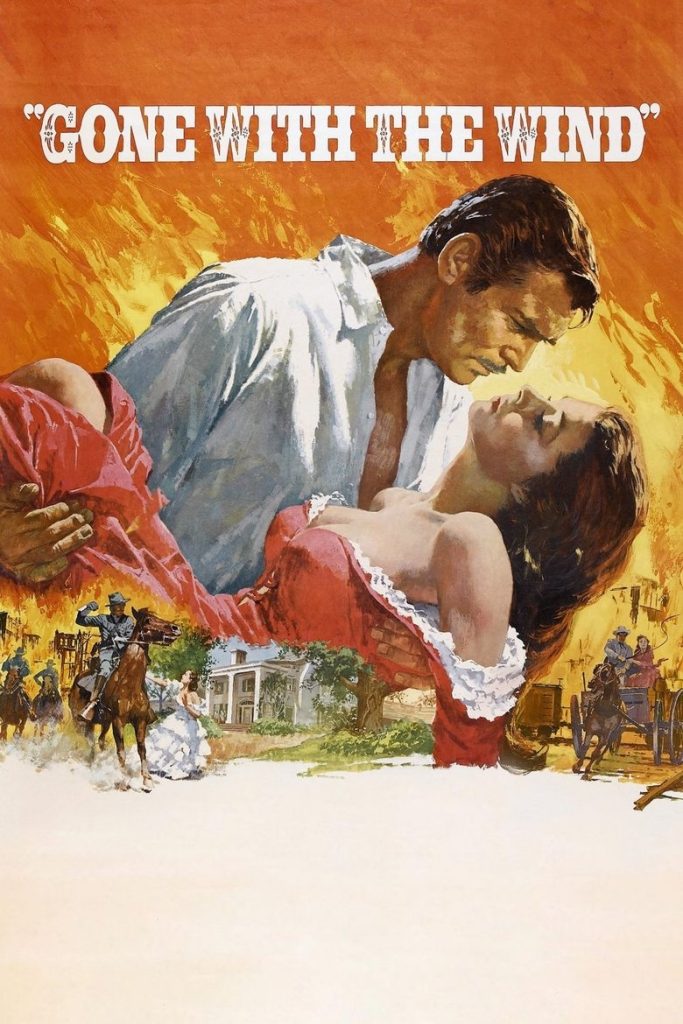
Gone with the Wind is a sweeping historical epic set during the American Civil War and Reconstruction Era. It follows Scarlett O'Hara, a strong-willed Southern belle, as she navigates love, loss, and survival amidst societal upheaval. The film portrays her complex relationships and personal growth against the backdrop of war and changing times.
Parent Guide
A classic historical drama with mature themes requiring parental guidance for younger viewers.
Content breakdown
Includes war scenes with implied violence, peril during battles, and emotional distress from loss and danger.
Contains emotional intensity, scenes of wartime suffering, and dramatic confrontations that may be unsettling.
Period-appropriate dialogue includes some mild insults and romantic tension, but no modern profanity.
Includes romantic relationships, kissing, and implied sexual situations within historical context, no explicit content.
Shows social drinking in historical context, primarily in social settings.
Strong emotional themes including love, loss, survival, and dramatic personal conflicts throughout.
Parent tips
This classic film is rated G but contains mature themes that may require parental guidance. At over 3.5 hours long, it's best viewed in segments with younger viewers. The historical setting includes depictions of slavery and war that provide opportunities for important conversations about American history.
Parents should be prepared to discuss the film's portrayal of race relations and gender roles from the 1930s perspective. While not graphic, the film includes emotional intensity, romantic complications, and scenes of peril that might be challenging for sensitive viewers.
Parent chat guide
After viewing, focus conversations on character motivations and historical accuracy. Discuss how films can both reflect and shape our understanding of history. Encourage critical thinking about the portrayal of different social groups and relationships in the story.
Parent follow-up questions
- What was your favorite part of the movie?
- How did the characters show they cared about each other?
- What did you notice about how people lived long ago?
- How did the music make you feel during different scenes?
- What colors or costumes did you like best?
- What challenges did the main character face during the war?
- How did people's lives change because of the war?
- What makes someone strong or brave in difficult times?
- How do you think the characters felt when they lost their home?
- What did you learn about how people lived in the past?
- How does the film portray relationships between different social groups?
- What historical events did you recognize from the movie?
- How do the characters' choices affect their lives and others?
- What perspectives might be missing from this historical story?
- How does the film show people adapting to major changes?
- How does the film reflect 1930s attitudes about race, class, and gender?
- What historical inaccuracies or simplifications did you notice?
- How does Scarlett's character development relate to the historical context?
- What commentary does the film make about survival and morality?
- How might this film be received differently if made today?
🎭 Story Kernel
At its core, 'Gone with the Wind' is about the death of a way of life and the brutal pragmatism required to survive its collapse. Scarlett O'Hara isn't driven by romance but by a primal, almost territorial instinct to possess—first Tara, then security, then Rhett himself. Her famous resilience is less admirable virtue and more animalistic survival reflex, revealing how the Old South's genteel facade masked a ruthless will to endure. The film suggests that civilization is a thin veneer easily stripped away by war and scarcity, leaving only raw human appetite.
🎬 Visual Aesthetics
The film's visual language is a study in contrast between the opulent, painterly warmth of pre-war Georgia and the stark, desaturated tones of devastation. The burning of Atlanta sequence uses deep reds and oranges not just for spectacle but as a visceral metaphor for the South's consuming itself. Notice how Scarlett is often framed against vast landscapes or ruined buildings, visually dwarfed by the forces she's battling. The famous crane shot pulling back from Scarlett amid hundreds of wounded soldiers emphasizes her insignificance within historical catastrophe.
🔍 Details & Easter Eggs
💡 Behind the Scenes
Vivien Leigh endured grueling conditions during the burning of Atlanta scene, breathing smoke and ash for hours. The famous 'Frankly, my dear, I don't give a damn' line almost didn't make it past censors—'damn' was considered dangerously profane in 1939. Most of Tara's exterior was a detailed facade built on a California backlot, while the iconic staircase was constructed separately on a soundstage. Clark Gable reportedly disliked his famous mustache but kept it at the director's insistence that it gave Rhett necessary sophistication.
Where to watch
Choose region:
- HBO Max
- HBO Max Amazon Channel
- Cinemax Amazon Channel
- TCM
- Cinemax Apple TV Channel
- Amazon Video
- Apple TV
- Google Play Movies
- Fandango At Home
- Spectrum On Demand
- Plex
- FlixHouse
Trailer
Trailer playback is unavailable in your region.