
Good Will Hunting (1997)
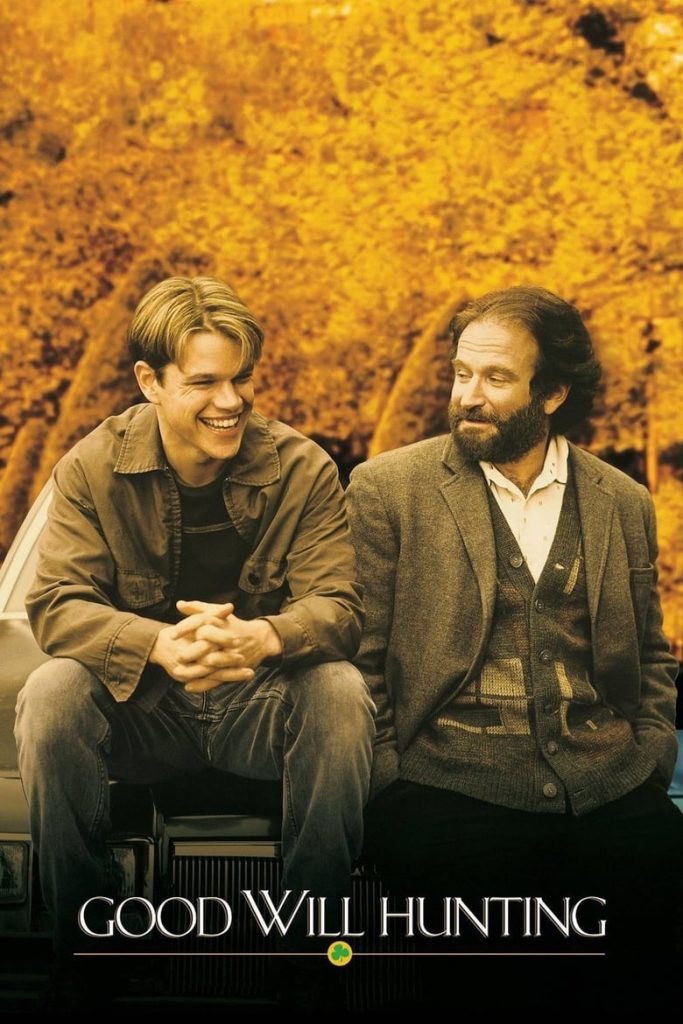
Story overview
Good Will Hunting is a 1997 drama about a brilliant but troubled young janitor at MIT who secretly solves advanced math problems. When his genius is discovered, he's given a chance to reach his potential through therapy instead of jail time. The film explores themes of trauma, relationships, and finding one's path with guidance from a compassionate therapist.
Parent Guide
Mature drama with strong language and emotional themes requiring parental guidance for teens.
Content breakdown
Brief physical altercation mentioned, but not graphically shown. Some tense emotional confrontations.
Discussions of childhood trauma and abuse. Emotional intensity in therapy sessions dealing with difficult memories.
Frequent strong profanity throughout, including sexual references and crude language.
Some sexual references and discussions. Brief non-explicit romantic situations.
Social drinking in bars and gatherings. Characters shown drinking alcohol in multiple scenes.
Intense therapy sessions dealing with trauma. Emotional confrontations and vulnerable moments between characters.
Parent tips
This R-rated drama contains strong language, emotional intensity, and mature themes including discussions of childhood trauma and abuse. The film's central relationship between therapist and patient involves frank conversations about difficult topics that may be challenging for younger viewers. While the movie ultimately delivers a positive message about healing and potential, parents should be prepared to discuss the mature content with their children.
Parent chat guide
Parent follow-up questions
- What did you think about the people helping each other?
- How do you think the main character felt when people believed in him?
- What does it mean to be a good friend?
- What kind of help do people sometimes need?
- How can we be kind to people who are having a hard time?
- Why do you think the main character had trouble using his talents at first?
- What did you think about how the therapist helped him?
- How do friends support each other in the movie?
- What does it mean to overcome challenges?
- Why is it important to talk about our feelings?
- How does the movie show that intelligence isn't just about being smart in school?
- What role does trust play in the therapeutic relationship?
- How do the characters deal with their past experiences?
- What does the film suggest about finding your own path in life?
- How does the movie balance difficult topics with hope?
- How does the film explore the connection between trauma and potential?
- What does the therapeutic process in the movie reveal about healing?
- How do the characters navigate class differences and expectations?
- What commentary does the film make about educational systems and talent?
- How does the movie handle themes of vulnerability and emotional growth?
🎭 Story Kernel
At its core, 'Good Will Hunting' explores the prison of self-protection versus the terrifying freedom of emotional vulnerability. Will's mathematical brilliance is merely a red herring—the real conflict is his trauma-induced belief that he's unworthy of love and success. His photographic memory and intellectual defenses are armor against a world that hurt him, making his genius both gift and cage. Sean's breakthrough comes not from solving Will's intellectual puzzles but from dismantling his emotional ones, revealing that true intelligence means choosing connection over safety. The film argues that our deepest wounds aren't what we can't understand, but what we refuse to feel.
🎬 Visual Aesthetics
The film's visual language mirrors Will's internal journey through stark contrasts. Boston's working-class neighborhoods are shot with gritty realism—dim bars, cramped apartments, and muted colors that reflect Will's constrained existence. When Will visits Harvard or MIT, the cinematography opens up with cleaner lines, brighter lighting, and more space, visually representing the worlds he could inhabit. The therapy sessions are deliberately intimate, with tight close-ups that force emotional confrontation. Notice how the camera often isolates Will in frames even when he's with friends, visually emphasizing his emotional isolation until the final scenes where composition begins including others more naturally.
🔍 Details & Easter Eggs
💡 Behind the Scenes
Matt Damon and Ben Affleck wrote the screenplay while struggling actors, originally as a thriller about a genius hunted by the government. Robin Williams improvised many of his therapy scenes, including the 'It's not your fault' moment—Damon's tears were genuine. The famous 'How do you like them apples?' line was ad-libbed by Damon. Stellan Skarsgård was originally cast as Lambeau but dropped out for 'Insomnia,' leading to Stellan Skarsgård's casting. The bar where Will meets Skylar is the L Street Tavern in South Boston, which became a tourist attraction after the film's release.
Where to watch
Choose region:
- Amazon Prime Video
- Amazon Prime Video with Ads
- Amazon Video
- Apple TV
- Google Play Movies
- YouTube
- Fandango At Home
- JustWatchTV
- Spectrum On Demand
- Kanopy
Trailer
Trailer playback is unavailable in your region.