
Goofy Gymnastics (1949)
Story overview
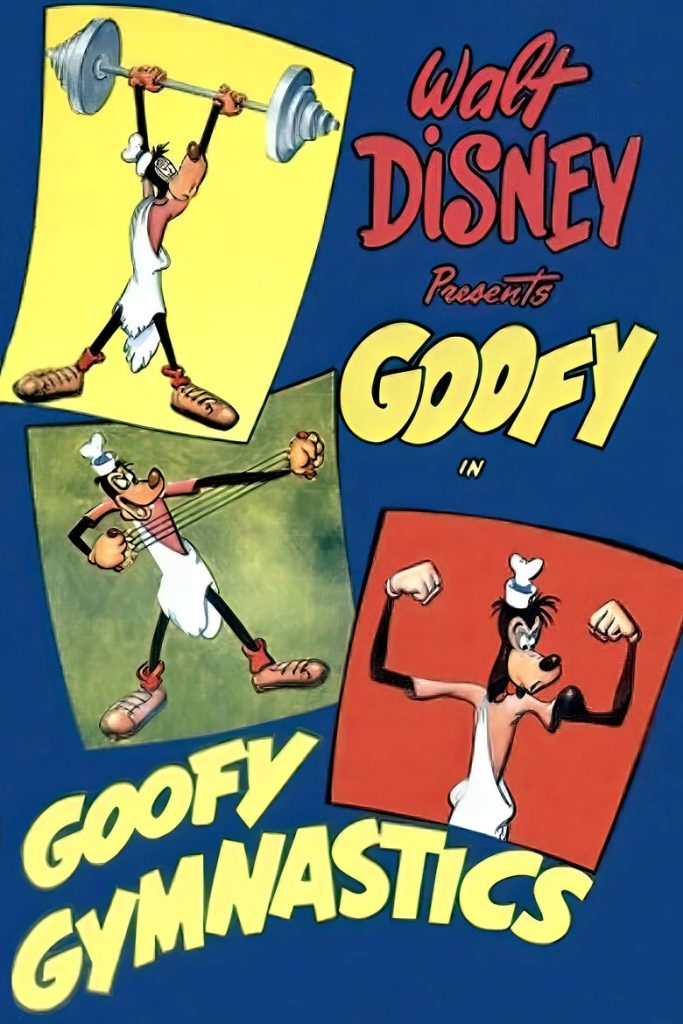
This 1949 animated short features Goofy attempting a mail-order bodybuilding course with humorous results. He engages in various exercises like weight lifting, chin-ups, and using a rubber-band stretch device, all of which lead to chaotic mishaps. The comedy stems from exaggerated physical gags as Goofy crashes through floors and gets tangled in equipment, showcasing classic slapstick animation.
Parent Guide
A classic cartoon with slapstick physical comedy featuring exaggerated accidents during exercise routines.
Content breakdown
Cartoon violence includes repeated falls, crashing through floors, and getting tangled in equipment with no serious consequences. Characters bounce back immediately from mishaps.
No scary or disturbing content. All mishaps are presented as humorous physical comedy.
No offensive or inappropriate language.
No sexual content or nudity.
No substance use depicted.
Lighthearted tone throughout with no emotionally intense moments.
Parent tips
This short film contains classic cartoon slapstick violence where Goofy experiences exaggerated falls, crashes through multiple floors, and gets tangled in exercise equipment without serious injury. The humor is physical and non-threatening, typical of vintage animation where characters bounce back quickly from mishaps.
Parents should be aware that while the violence is cartoonish and unrealistic, very young children might find the repeated crashing and falling sequences startling. The film portrays exercise equipment being used improperly in ways that could inspire imitation, so it's worth discussing safety with children.
At just 6 minutes long, this provides a brief, lighthearted viewing experience with simple physical comedy that doesn't involve complex themes or dialogue-heavy scenes.
Parent chat guide
After watching, talk about the difference between cartoon violence and real-life consequences. Ask what parts were funniest and why physical comedy can be entertaining even when characters experience mishaps.
For older children, you might discuss how animation techniques have changed since 1949 and how this type of humor compares to modern cartoons they enjoy.
Parent follow-up questions
- What was the funniest part when Goofy exercised?
- Have you ever tried to lift something that was too heavy?
- What exercise would you like to try?
- How do you think Goofy felt when he kept falling?
- What sounds did you hear when Goofy crashed?
- Why do you think Goofy kept having accidents with the exercise equipment?
- What should Goofy have done differently to exercise safely?
- How is cartoon falling different from real falling?
- What made this cartoon funny to watch?
- Have you ever seen other cartoons with similar physical comedy?
- How does the animation style help make the accidents seem funny instead of scary?
- What does this cartoon show about following instructions properly?
- Why might someone find physical comedy entertaining?
- How has cartoon humor changed since 1949?
- What safety lessons could someone learn from Goofy's mistakes?
- How does this short use exaggeration for comedic effect?
- What does this reflect about mid-20th century attitudes toward self-improvement products?
- How does the simple plot structure work for a 6-minute cartoon?
- What animation techniques from this era are still used today?
- Why might physical comedy remain popular across generations?
🎭 Story Kernel
At its core, Goofy Gymnastics is a deceptively simple meditation on perseverance and the absurdity of self-improvement. The plot isn't about Goofy mastering gymnastics; it's about his unwavering, blissful ignorance in the face of catastrophic failure. His drive isn't ambition or glory, but a pure, childlike desire to participate, making his relentless destruction of the gymnasium not a tragedy, but a triumphant expression of being true to one's chaotic self. The real conflict is between the ordered world of sports and Goofy's inherent, anarchic physics. His ultimate 'success'—typically causing massive property damage while remaining cheerfully oblivious—subverts the entire sports film genre, suggesting that joy is found not in victory, but in the unabashed, destructive process.
🎬 Visual Aesthetics
The film's visual language is a ballet of calculated chaos. The camera work is static and observational, framing Goofy's antics like a nature documentary studying a force of nature, which amplifies the humor. The color palette is bright, primary, and clean—typical of the era's athletic shorts and gym equipment—making the ensuing destruction visually stark and hilarious. The action style is pure, timeless slapstick: every movement follows a cause-and-effect physics that is both exaggerated and internally consistent. The symbolism is in the props; the parallel bars, pommel horse, and rings aren't equipment but adversaries in a silent, losing battle against Goofy's gravitational defiance. The visual joke is that the environment is always pristine before his entry, a canvas awaiting its inevitable demolition.
🔍 Details & Easter Eggs
💡 Behind the Scenes
Goofy Gymnastics is a 1949 Disney animated short, part of the long-running 'How to...' series starring Goofy. The voice of the narrator, who dryly describes proper gymnastic techniques while Goofy does the opposite, was provided by John McLeish, a Disney mainstay. The animation required extensive study of real gymnastic movements to accurately caricature them. Animators would film reference footage of athletes, then distort the physics for comedic effect. The short was directed by Jack Kinney, known for his fast-paced, gag-driven style. It was released as part of a package film called 'The Adventures of Ichabod and Mr. Toad,' though it's often remembered and shown as a standalone short.
Where to watch
Choose region:
- Disney Plus