
Gotta Kick It Up! (2002)
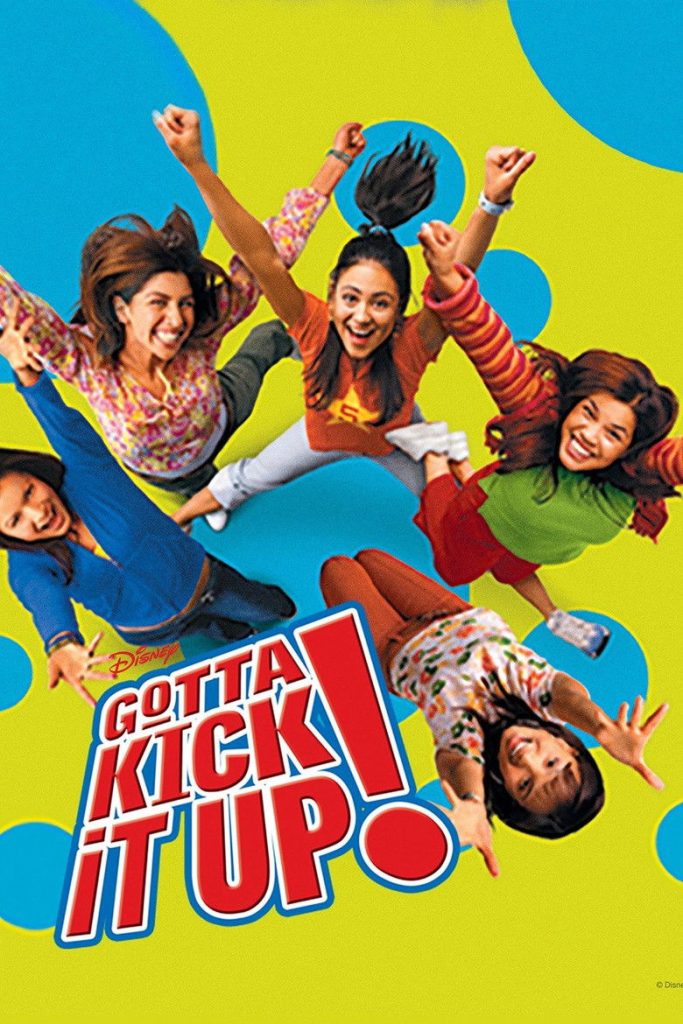
Story overview
Gotta Kick It Up! is a 2002 TV movie about a middle school dance team that faces disbandment until their biology teacher steps in as coach. The girls must overcome self-doubt, parental skepticism, and competitive challenges while building confidence through teamwork and their empowering chant 'si, se puede' (yes, I can). This uplifting story celebrates perseverance, cultural pride, and believing in oneself.
Parent Guide
A wholesome, uplifting TV movie perfect for family viewing with strong positive messages about perseverance, teamwork, and cultural pride. Completely appropriate for all ages with no concerning content.
Content breakdown
No violence. Mild competitive tension during dance competitions but nothing perilous or threatening.
Nothing scary or disturbing. The film maintains a consistently positive, encouraging tone throughout.
No offensive language. The Spanish phrase 'si, se puede' (yes, I can) is used positively throughout as an empowering chant.
No sexual content or nudity. Characters wear appropriate dance team uniforms and school-appropriate clothing.
No substance use of any kind. Characters are middle school students and teachers in appropriate school settings.
Mild emotional moments when girls face self-doubt or seek parental approval, but these are resolved positively and serve as learning moments about confidence and perseverance.
Parent tips
This family-friendly movie offers positive messages about teamwork, determination, and cultural identity. The Spanish phrase 'si, se puede' (yes, I can) serves as an empowering mantra throughout. Consider discussing with children: how the girls support each other through challenges, why parental approval matters to them, and what it means to believe in yourself even when others doubt you. The dance competitions provide mild tension but always resolve positively.
Parent chat guide
Parent follow-up questions
- Did you like the dancing in the movie?
- What was your favorite part?
- Can you say 'si, se puede' like the girls did?
- Why do you think the dance team almost didn't get to perform?
- How did the girls help each other when they felt nervous?
- What does 'yes, I can' mean to you?
- What challenges did the girls face from their families or school?
- How did the coach help them grow as a team?
- Why is it important to believe in yourself even when others doubt you?
- How does the film portray cultural identity through the 'si, se puede' chant?
- What did you think about the balance between competitive drive and teamwork?
- How realistic were the family dynamics and pressures shown in the movie?
🎭 Story Kernel
At its core, 'Gotta Kick It Up!' is less about competitive cheerleading and more about the fragile ecosystem of female mentorship and validation in underfunded public schools. The real conflict isn't against rival teams but against systemic indifference—the school's willingness to cut the program mirrors how girls' extracurricular passions are often deemed expendable. The students aren't just dancing for trophies; they're performing for dignity, seeking proof that their effort matters in an institution that has already written them off. The teacher's redemption arc is equally compelling; her initial reluctance stems from a fear of failure, not disinterest, making her eventual commitment a quiet rebellion against her own lowered expectations.
🎬 Visual Aesthetics
The film employs a distinctly early-2000s Disney Channel aesthetic: bright, saturated colors in the cheer sequences contrast sharply with the drab, beige tones of the school's administrative offices and hallways, visually underscoring the clash between youthful energy and institutional apathy. Camera work during practice scenes is intimate and shaky, emphasizing the raw, unpolished effort, while competition sequences switch to smooth, wide shots that mimic televised sports broadcasts, granting the girls the legitimacy they crave. Symbolism is straightforward but effective—the repeated shots of their worn-out sneakers versus the pristine shoes of wealthier teams silently scream about resource disparity without a line of dialogue.
🔍 Details & Easter Eggs
💡 Behind the Scenes
The film was shot on location at a real Los Angeles-area high school, utilizing many actual students as extras to bolster authenticity. It served as an early starring vehicle for America Ferrera, filmed just before her breakthrough role in 'Real Women Have Curves.' Interestingly, the cheer choreography was designed to be achievable by non-professionals, with the actors undergoing a condensed training period to perform most of the routines themselves, lending a genuine, slightly awkward physicality to the practice scenes that a more polished production would lack.
Where to watch
Choose region:
- Disney Plus
- Amazon Video
- Google Play Movies
- YouTube
- Fandango At Home