
Great Shark Chow Down (2019)
Story overview
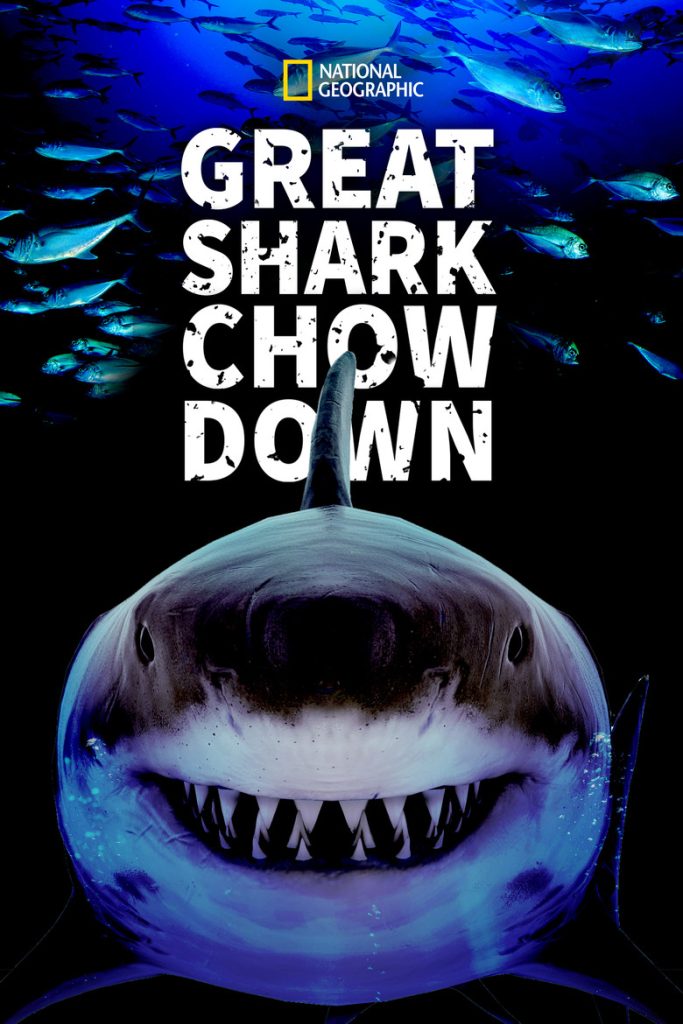
This 2019 documentary showcases five remarkable shark feeding events, featuring footage of hundreds of sharks feeding on bait fish and whale carcasses. It presents scientific perspectives on shark behavior in their natural habitats.
Parent Guide
Educational documentary about natural shark feeding behaviors suitable for most children with parental guidance for sensitive viewers.
Content breakdown
Natural predation scenes showing sharks feeding on fish and whale carcasses. No graphic violence or human injury shown.
Large numbers of sharks feeding might be intense for some children. Nighttime scenes with 700 sharks could be unsettling for sensitive viewers.
No concerning language expected in this scientific documentary.
No sexual content or nudity.
No substance use depicted.
Some tension from predator-prey interactions and scale of feeding events, but presented in educational context.
Parent tips
This documentary focuses on natural shark feeding behaviors without graphic violence. It may be intense for sensitive viewers due to large numbers of sharks and feeding scenes. Consider your child's comfort with marine predators before viewing.
Parent chat guide
Parent follow-up questions
- Did you see the big fish in the water?
- Were the sharks scary or interesting to watch?
- What colors did you see on the sharks?
- Why do you think sharks gather in such large groups to feed?
- How do scientists safely film these feeding events?
- What did you learn about how sharks help the ocean?
- What adaptations help sharks be such effective predators?
- How do the different shark species shown have different feeding strategies?
- Why is it important to document natural behaviors like these feeding events?
- How does this documentary's approach to shark behavior compare to sensationalized media portrayals?
- What conservation implications might come from understanding shark feeding behaviors?
- How do the filmmakers balance scientific documentation with creating engaging content?
🎭 Story Kernel
Beneath its surface-level monster spectacle, 'Great Shark Chow Down' is a surprisingly bleak satire of corporate greed and environmental hubris. The film's true antagonist isn't the mutated shark, but the bio-tech corporation that created it as a 'solution' to oceanic pollution, only to lose control. The characters are driven not by heroism, but by a desperate attempt to contain a PR disaster and protect shareholder value. Their panic stems from liability, not loss of life, framing the human tragedy as collateral damage in a failed profit scheme. The final act's 'victory'—blowing up the lab—feels less like a triumph and more like the incineration of evidence.
🎬 Visual Aesthetics
The film employs a stark, almost clinical visual dichotomy. The sun-drenched, overly-saturated surface scenes of beach panic contrast sharply with the deep-sea sequences, which are bathed in sickly green and blue hues from the lab's bioluminescent pollutants. The shark attacks are shot with a chaotic, shaky-cam style that obscures detail, cleverly masking the creature's occasionally dodgy CGI. More interesting is the static, surveillance-style footage used in the lab, reducing scientists to cold, monitored specimens in their own aquarium. The color palette progressively drains of warmth as the contamination spreads, ending in a finale lit almost entirely by industrial emergency lights and explosive fire.
🔍 Details & Easter Eggs
💡 Behind the Scenes
The lead shark was a practical animatronic nicknamed 'Bruce Jr.' by the crew, a nod to the original 'Jaws' shark. It malfunctioned constantly in salt water, forcing a last-minute shift to more CGI than planned. Several beach scenes were shot at a lake in British Columbia masquerading as the ocean, with added visual effects for waves. The actor playing the cynical marine biologist ad-libbed most of his sarcastic lines about corporate ethics, which the director loved and kept in the final cut.
Where to watch
Choose region:
- Disney Plus
- fuboTV