
Greater Kalesh (2025)
Story overview
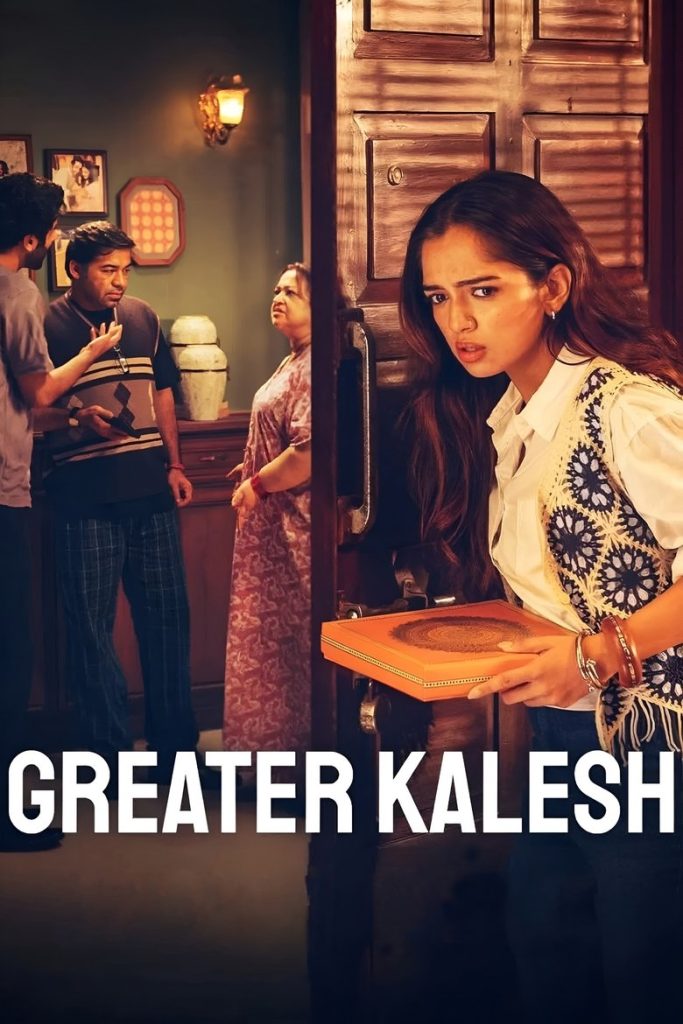
Twinkle returns home unexpectedly for Diwali, hoping to surprise her family with a festive reunion. However, her visit quickly reveals hidden secrets and unresolved conflicts that challenge the family's relationships. As tensions rise during the holiday preparations, the family must confront their differences and work through disagreements to rediscover their bonds in this heartfelt drama about family dynamics and cultural traditions.
Parent Guide
A family drama focusing on relationships and cultural traditions during Diwali. Contains emotional family conflicts but no concerning content. Suitable for most children with parental guidance for discussions about family dynamics.
Content breakdown
No physical violence or perilous situations. Conflict is entirely verbal and emotional between family members.
No scary or disturbing imagery. Some emotional tension from family arguments and revealed secrets, but nothing frightening.
No offensive language. Dialogue consists of family conversations and disagreements appropriate for general audiences.
No sexual content or nudity. Characters are dressed modestly in traditional and casual clothing.
No substance use shown. The film focuses on family interactions during holiday celebrations.
Moderate emotional intensity from family conflicts and revealed secrets. Characters express frustration, disappointment, and reconciliation. The resolution is positive and heartwarming.
Parent tips
This family drama explores relatable themes of family conflict and reconciliation during a cultural holiday. The emotional intensity comes from family arguments and revealed secrets rather than physical danger. Parents may want to discuss how families can work through disagreements respectfully. The film provides opportunities to talk about Diwali traditions and the importance of communication in families.
Parent chat guide
Parent follow-up questions
- What colors did you see in the Diwali decorations?
- How did the family show they loved each other?
- What was your favorite part of the celebration?
- Why do you think Twinkle wanted to surprise her family?
- How did the family members help each other when they were upset?
- What traditions did you notice during Diwali?
- What do you think about how the family handled their secrets?
- Have you ever had a family gathering where there were disagreements? How was it resolved?
- What does this movie teach us about communication in families?
- How realistic do you think the family conflicts were portrayed?
- What role do cultural traditions play in family identity, as shown in the film?
- How might different family members have different perspectives on the same situation?
🎭 Story Kernel
Greater Kalesh is a visceral examination of the fragility of the urban male ego, set against the backdrop of a volatile Delhi. The film expresses the idea that social hierarchy and personal dignity are often precariously balanced on trivialities. When a minor parking dispute escalates into a night of unintended carnage, the movie reveals how class resentment and generational gaps fuel a cycle of senseless violence. It is less about the incident itself and more about the kalesh—the inherent friction of a crowded, status-obsessed city where everyone is a hair-trigger away from explosion. Chandiok captures a specific brand of North Indian machismo, where backing down is seen as a social death, ultimately leading to a literal one. It is a dark, comedic, yet harrowing look at the high cost of saving face.
🎬 Visual Aesthetics
Visually, the film adopts a gritty, kinetic style that mirrors the frantic energy of its protagonists. The cinematography uses tight framing and handheld camera work to create a sense of mounting anxiety and spatial entrapment within Delhi’s narrow residential lanes. The lighting transitions from the artificial, cold glow of streetlamps to the oppressive shadows of interiors, symbolizing the characters' descent into a moral abyss. There is a deliberate lack of postcard shots of the city; instead, the camera lingers on the mundane and the messy—cracked pavements, cluttered dashboards, and sweat-slicked faces. This aesthetic choice grounds the film in a stark realism, making the absurd escalation of the plot feel disturbingly plausible. The visual rhythm accelerates alongside the conflict, effectively trapping the viewer in the unfolding chaos.
🔍 Details & Easter Eggs
💡 Behind the Scenes
Aditya Chandiok’s Greater Kalesh marked his directorial debut and had its world premiere at the 2024 International Film Festival Rotterdam in the Bright Future program. The film stars Sidharth Bhardwaj and Chaitanya Sharma, the latter being a well-known rapper performing under the stage name SlowCheeta. The title is a clever linguistic pun on Greater Kailash, one of South Delhi’s most affluent neighborhoods, replacing Kailash with Kalesh, a colloquial Hindi term for a heated quarrel or chaotic brawl. This wordplay perfectly encapsulates the film’s exploration of the thin line between high-society pretension and raw, ego-driven conflict.
Where to watch
Choose region:
- Netflix
- Netflix Standard with Ads
Trailer
Trailer playback is unavailable in your region.