
Growing Up Wild (2016)
Story overview
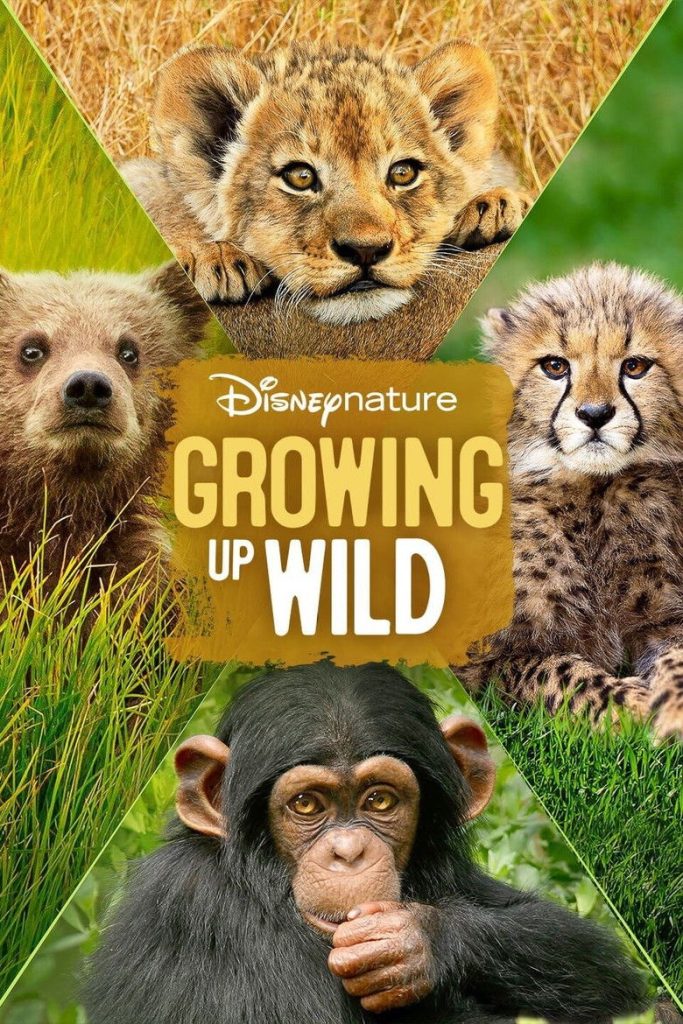
Growing Up Wild is a 2016 family documentary that follows young animals as they navigate the challenges of their natural habitats. The film showcases various species learning essential survival skills from their parents in different environments around the world. Through stunning wildlife footage, viewers witness the journey from infancy to independence in the animal kingdom.
Parent Guide
A gentle, educational wildlife documentary suitable for all ages with positive messages about growth and learning.
Content breakdown
Natural predator-prey interactions shown without graphic detail; some animals face mild survival challenges.
Young animals occasionally encounter predators or environmental dangers, but presented in an educational context.
No concerning language; narration is educational and family-friendly.
No sexual content; natural animal behaviors shown without explicit focus.
No substance use depicted.
Some emotional moments as animals face challenges, but overall uplifting tone.
Parent tips
This G-rated documentary offers excellent educational value about animal behavior and ecosystems. The content is appropriate for all ages, though younger children might need help understanding some concepts. Consider watching together to discuss the animals' experiences and relate them to family values like care and learning.
Parent chat guide
Parent follow-up questions
- What was your favorite animal in the movie?
- How do animal parents take care of their babies?
- What did the little animals learn to do?
- What challenges did the young animals face?
- How are animal families similar to or different from human families?
- What survival skills did the animals learn?
- How do different habitats affect how animals grow up?
- What adaptations help the animals survive in their environments?
- Why is it important for young animals to learn from their parents?
- How does the documentary portray the balance between independence and family support?
- What ecological concepts did you notice in the film?
- How might human activities affect the animals' natural learning processes?
🎭 Story Kernel
At its core, 'Growing Up Wild' is less about animal behavior and more about the universal narrative of adolescence. The film explores the tension between instinct and learned experience, portraying how each young creature must navigate the precarious transition from protected dependency to autonomous survival. It subtly critiques the human tendency to romanticize nature by showing the stark realities of this transition—failures are as common as successes. The driving force for every subject is the biological imperative to master their environment before it masters them, making this a coming-of-age story told through the lens of evolutionary necessity.
🎬 Visual Aesthetics
The cinematography employs an intimate, eye-level perspective that anthropomorphizes without artifice, making viewers feel like peers to these young animals. A warm, golden-hour color palette dominates, softening the harshness of the wild while highlighting textures of fur, feather, and landscape. Slow-motion sequences during key learning moments—like a young chimpanzee's first termite fishing attempt—elevate mundane actions into profound rituals. The camera lingers on moments of quiet observation, creating a visual rhythm that mirrors the patient, trial-and-error process of growth itself.
🔍 Details & Easter Eggs
💡 Behind the Scenes
The film's production involved over 3000 days of fieldwork across multiple continents. Voiceover narration was recorded by Daveed Diggs, whose rhythmic, almost musical delivery was specifically chosen to avoid the traditional 'documentary voice' and create a more contemporary, story-driven feel. Several sequences, particularly the aerial shots following migrating caribou, were captured using custom-designed camera rigs mounted on ultra-light aircraft to minimize disturbance to the animals. The editors worked with over 400 hours of raw footage to find the precise narrative threads connecting these disparate species.
Where to watch
Choose region:
- Disney Plus
- Amazon Video
- Apple TV
- Google Play Movies
- YouTube
- Fandango At Home
Trailer
Trailer playback is unavailable in your region.