
Gundam Wing: The Endless Waltz (1998)
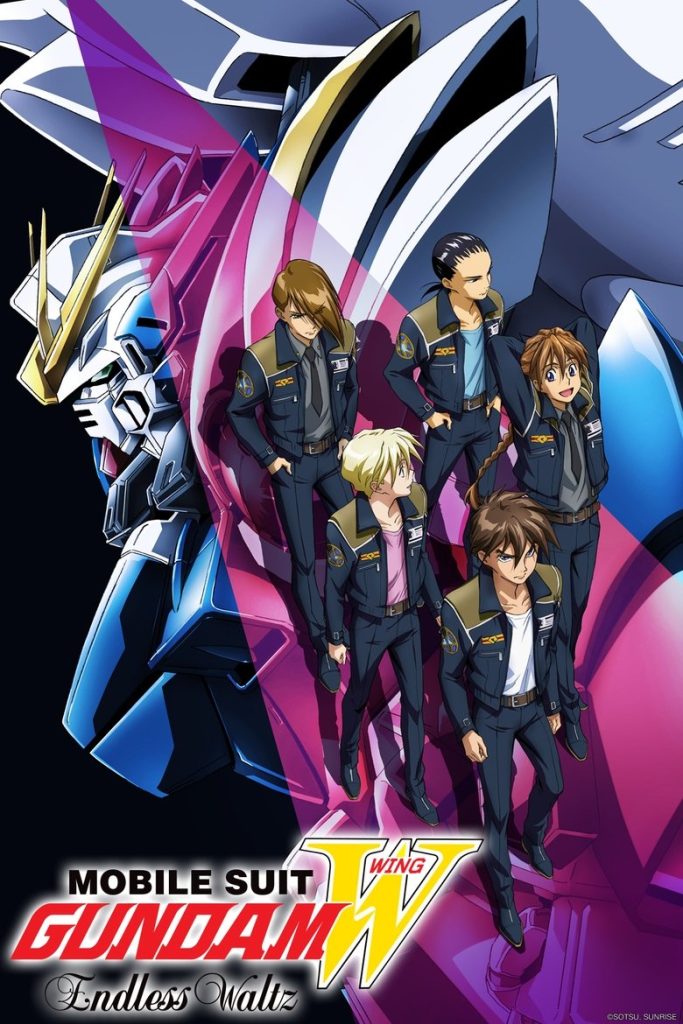
Story overview
In the year After Colony 196, one year after the war between Earth and space colonies has ended, peace prevails. The Gundam pilots are trying to move on with their lives, sending their giant war machines into the sun to be destroyed. However, when Relena Darlian, now a high-ranking official, is kidnapped by a colony seeking total dominance, the pilots are forced back into action to protect the fragile peace.
Parent Guide
Animated science fiction film with mecha combat and political themes. Contains intense action sequences but minimal graphic content.
Content breakdown
Animated robot battles with explosions, laser fire, and destruction of buildings/vehicles. Characters in peril during combat scenes. No blood or graphic injuries shown.
Intense action sequences with large-scale destruction. Kidnapping plotline may be concerning for sensitive viewers. No horror elements.
No offensive language in the English version. Original Japanese dialogue is mild.
No sexual content or nudity.
No depiction of substance use.
Characters face moral dilemmas about war and peace. Themes of sacrifice and responsibility. Some tense moments during action sequences.
Parent tips
This anime film features animated mecha combat with explosions and destruction, but no graphic violence. Themes include war, peace, and responsibility. Suitable for older children who can handle intense action sequences and complex political themes.
Parent chat guide
Parent follow-up questions
—
- What was your favorite robot in the movie?
- How did the characters work together to help their friend?
- What does 'endless waltz' mean in the story?
- Why do you think some people still wanted to fight after the war ended?
- How does the film explore the cycle of violence and peace?
- What political messages about power and governance does the film convey?
🎭 Story Kernel
The film's core is a brutal interrogation of pacifism's price. It posits that true peace isn't the absence of weapons, but the conscious, collective choice to reject them. The central conflict isn't against the Mariemaia Army, but against the Gundam pilots' own identities as instruments of war. Heero Yuy's arc is pivotal; his drive shifts from self-destruction to preservation, culminating in his refusal to self-detonate the Wing Zero. This symbolizes the pilots' final evolution: they must live with the consequences of their violence to build a future, not martyr themselves to atone for it. The ending—sending the Gundams into the sun—isn't a naive disarmament, but a profound act of faith in humanity's ability to choose peace without the crutch of ultimate weapons.
🎬 Visual Aesthetics
The OVA's visual language is a stark, polished evolution from the TV series. The color palette is dominated by cold blues, sterile whites, and the deep black of space, emphasizing the clinical, high-stakes finale. Action is less about chaotic skirmishes and more about deliberate, almost balletic duels, reflecting the pilots' mastery and the narrative's thematic precision. Key symbolism is visual: the descent of the Gundams from their orbital coffins is a literal fall from grace, while their final ascent into the sun is a purgative, phoenix-like sacrifice. The camera often frames characters in isolation against vast, empty backgrounds (space, control rooms), visually reinforcing their loneliness and the weight of their singular decisions.
🔍 Details & Easter Eggs
💡 Behind the Scenes
'The Endless Waltz' was originally produced as a 3-episode OVA in 1997, with a theatrical compilation released later. The iconic mecha redesigns, like the Wing Gundam Zero Custom, were created by Hajime Katoki, whose 'Katoki Version' designs are famed for added realism, panel lines, and mechanical detail. The English dub, produced by Bandai Entertainment, notably re-cast several roles from the TV series' earlier, less popular dub, leading to the definitive voice cast (like Mark Hildreth as Heero) recognized by Western fans. The film's title references the never-ending cycle of conflict, likening it to a repetitive dance.
Where to watch
Choose region:
- Crunchyroll
Trailer
Trailer playback is unavailable in your region.