
Happy New Year, Charlie Brown (1986)
Story overview
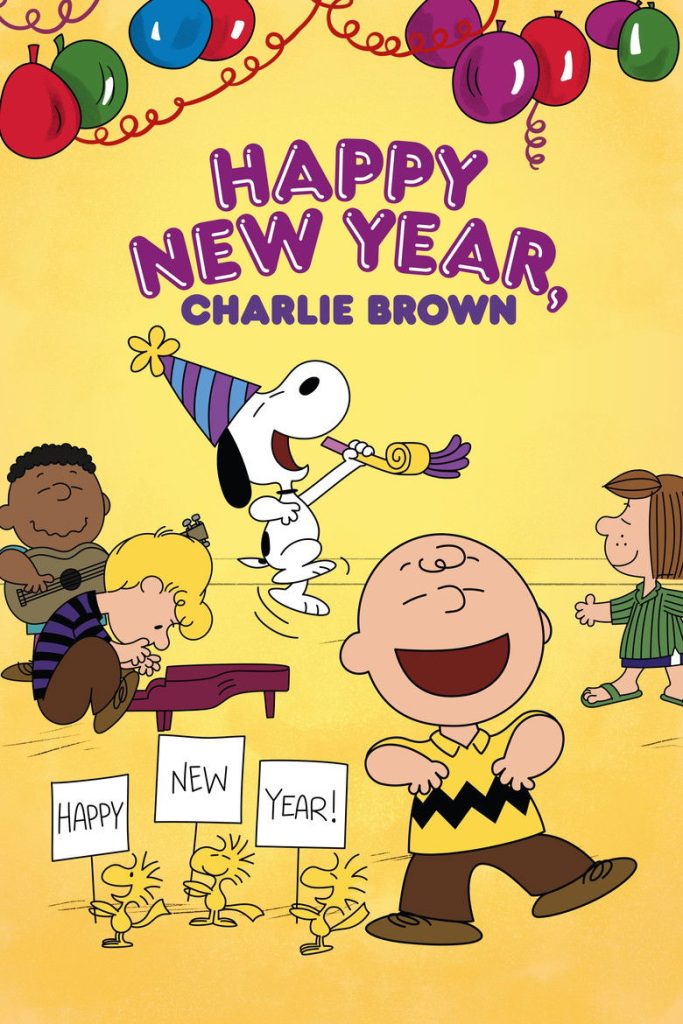
In this 1986 animated TV special, Charlie Brown faces a classic childhood dilemma: balancing schoolwork with social fun. On New Year's Eve, while Peppermint Patty hosts a party, Charlie Brown must complete a book report on Tolstoy's 'War and Peace.' His motivation comes from hoping to attend the party for a special dance with the Little Red-Haired Girl, leading to a humorous and relatable struggle with procrastination and priorities.
Parent Guide
A wholesome, family-friendly animated special with positive messages about responsibility and friendship. Perfect for young children with no concerning content.
Content breakdown
No violence, fighting, or perilous situations. The most intense moment is Charlie Brown's mild frustration with his homework.
Nothing scary or disturbing. The animation style is simple and cheerful throughout.
No inappropriate language. Typical Peanuts dialogue with child-friendly expressions.
No sexual content or nudity. Charlie Brown's interest in the Little Red-Haired Girl is portrayed as innocent childhood affection.
No references to alcohol, drugs, or tobacco use.
Mild frustration from Charlie Brown about his homework and mild anticipation about the party. All emotions are age-appropriate and gently handled.
Parent tips
This gentle Peanuts special offers positive themes about responsibility, friendship, and time management. Charlie Brown's earnest efforts to complete his assignment before enjoying the party model good behavior. The animation is simple and non-threatening, with no scary elements. At just 25 minutes, it's perfect for a short family viewing session. The G rating ensures it's appropriate for all ages.
Parent chat guide
Parent follow-up questions
- What was your favorite part of the movie?
- How did Charlie Brown feel about his homework?
- Did you like the party scenes?
- Why do you think Charlie Brown wanted to finish his book report?
- What would you do if you had homework but there was a party?
- How do you think Charlie Brown felt when he was trying to finish his work?
- What does this story teach us about balancing responsibilities and fun?
- How realistic do you think Charlie Brown's situation is for students?
- What strategies could help someone finish work more efficiently?
- How does this story reflect common adolescent dilemmas about priorities?
- What commentary might the creators be making about academic pressure versus social life?
- How do the characters' personalities influence their approach to the New Year's Eve situation?
🎭 Story Kernel
The film explores the anxiety of unmet expectations during holidays, using Charlie Brown's reluctance to host a New Year's Eve party as the central conflict. While superficially about social obligations, it's really about the pressure to perform happiness when feeling disconnected. Charlie Brown's quiet dread contrasts with Peppermint Patty's forceful enthusiasm, creating a tension between authentic emotion and social performance. The resolution isn't about the perfect party, but about finding connection despite imperfections—Snoopy's unexpected arrival as the midnight guest suggests that genuine moments often arrive unplanned.
🎬 Visual Aesthetics
The animation maintains the classic Peanuts aesthetic with its simple lines and muted color palette, but employs subtle visual storytelling. The contrast between Charlie Brown's static, slumped postures and Peppermint Patty's dynamic, sweeping movements visually represents their opposing approaches to the holiday. Interior scenes feel cramped and claustrophobic, mirroring Charlie Brown's anxiety about hosting. The midnight countdown sequence uses minimal animation—just a clock and characters' faces—creating tension through stillness rather than action. The color scheme remains consistently subdued, avoiding holiday clichés of bright reds and greens, which reinforces the film's melancholic undertone.
🔍 Details & Easter Eggs
💡 Behind the Scenes
This was the final Peanuts television special completed before Charles M. Schulz's death in 2000, making it particularly poignant in retrospect. Unlike most holiday specials, it was originally broadcast in April 1999 rather than during the holiday season. The animators intentionally kept the color palette more muted than previous Peanuts specials to match the story's melancholic tone. Several scenes were storyboarded but cut for time, including an extended sequence of Snoopy preparing his own 'party' in his doghouse. The special's relative obscurity compared to 'A Charlie Brown Christmas' makes it a hidden gem for Peanuts completists.
Where to watch
Choose region:
- Apple TV
- Apple TV Amazon Channel