
Harry Potter and the Order of the Phoenix (2007)
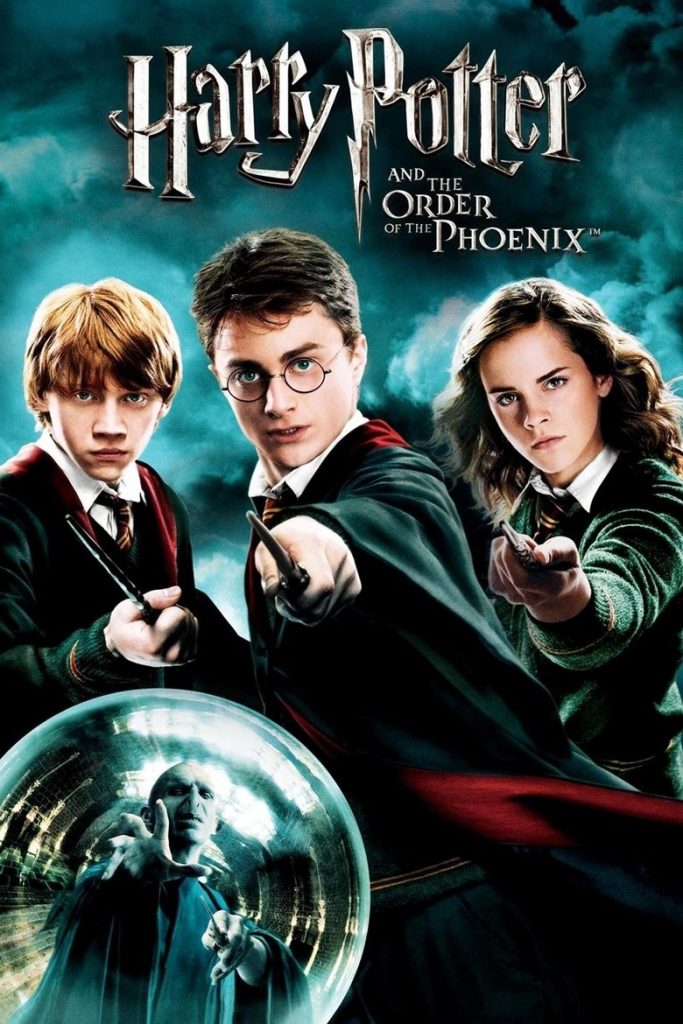
Story overview
In this fifth Harry Potter film, Harry returns to Hogwarts for his fifth year, where he faces increasing threats from the dark wizard Voldemort and a hostile Ministry of Magic that refuses to acknowledge his return. Harry forms a secret student group called Dumbledore's Army to teach defensive magic, while dealing with government interference at the school and disturbing visions connected to Voldemort. The story focuses on themes of resistance against authority, friendship under pressure, and the psychological toll of being a target in a growing magical war.
Parent Guide
Darker fantasy adventure with increased magical violence and psychological tension compared to earlier films. Suitable for mature children who can handle intense sequences and complex themes of oppression.
Content breakdown
Fantasy violence includes magical duels, spell-casting battles, and confrontations with dark creatures. Characters face peril from both human and magical threats, with some intense sequences.
Some frightening magical creatures and settings. Psychological elements include disturbing visions, mind invasion, and themes of being hunted. Darker tone than previous films.
Occasional mild insults and magical-world exclamations. No strong profanity.
Brief romantic elements limited to hand-holding and mild flirtation. No sexual content or nudity.
No substance use depicted. Magical potions are used for healing or magical purposes only.
Characters experience fear, isolation, anger, and grief. Themes of government oppression, betrayal by authority figures, and psychological connection to a dark enemy create emotional weight.
Parent tips
This installment is darker than earlier Harry Potter films, with increased magical violence and psychological tension. The PG-13 rating reflects intense fantasy action sequences, some frightening magical creatures, and themes of government oppression that may be complex for younger viewers. Parents should be prepared to discuss how characters handle fear, authority figures who abuse power, and the emotional weight of being targeted by evil forces.
Parent chat guide
Parent follow-up questions
- Which magical creature did you like best?
- What was your favorite spell to see?
- How did the friends help each other?
- What made you laugh in the movie?
- What color was the most magic?
- Why did Harry start teaching magic to his friends?
- How did the students work together when adults wouldn't help?
- What makes a good teacher versus a bad teacher?
- How did characters show bravery even when scared?
- What would you do if you saw someone being treated unfairly?
- What are different ways characters responded to unfair authority?
- How does the movie show the importance of standing up for what's right?
- What responsibilities come with having special abilities or knowledge?
- How do Harry's visions affect his relationships with friends?
- What does the movie suggest about how fear can be used to control people?
- How does the film portray institutional resistance to uncomfortable truths?
- What parallels can you draw between the Ministry's actions and real-world government overreach?
- How do characters balance loyalty to friends with larger moral responsibilities?
- What does the movie suggest about the psychological effects of being constantly targeted?
- How are leadership qualities demonstrated differently by various characters?
🎭 Story Kernel
At its core, 'Order of the Phoenix' explores the psychological toll of institutional gaslighting and the weaponization of bureaucracy against truth. Harry's journey isn't about defeating Voldemort directly, but navigating a system that denies his trauma to maintain political stability. The Ministry's denial of Voldemort's return mirrors real-world institutions silencing inconvenient truths. Umbridge represents the banality of evil in bureaucratic form - her cruelty is systematic, not magical. The film captures adolescence's isolation when adults refuse to believe your reality, making Harry's emotional withdrawal more devastating than any spell.
🎬 Visual Aesthetics
Director David Yates introduces a desaturated, gray-dominated palette reflecting the Ministry's oppressive bureaucracy and Harry's depression. The camera frequently isolates Harry in wide shots, emphasizing his alienation. Action sequences shift from magical spectacle to brutal efficiency - the Department of Mysteries battle feels chaotic and desperate rather than choreographed. Notice how Umbridge's office grows progressively pinker as her power increases, creating visual dissonance between her saccharine aesthetics and cruel actions. The film's lighting grows darker as political darkness spreads, with Hogwarts literally losing its warmth and color.
🔍 Details & Easter Eggs
💡 Behind the Scenes
Imelda Staunton based Dolores Umbridge on a strict schoolteacher she once had, particularly the character's high-pitched voice and obsession with pink. The Ministry of Magic sets were built at Leavesden Studios with over 300,000 square feet of space, requiring 200 tons of steel. Daniel Radcliffe performed most of his own stunt work in the Department of Mysteries battle, including being thrown through a glass pane. The prophecy orbs contained light bulbs that had to be individually replaced between takes, creating logistical nightmares for the crew.
Where to watch
Choose region:
- HBO Max
- HBO Max Amazon Channel
- Peacock Premium
- Peacock Premium Plus
- Amazon Video
- Apple TV
- Google Play Movies
- YouTube
- Fandango At Home
- Spectrum On Demand
- Plex
Trailer
Trailer playback is unavailable in your region.