
Harry Potter and the Philosopher’s Stone (2001)
Story overview
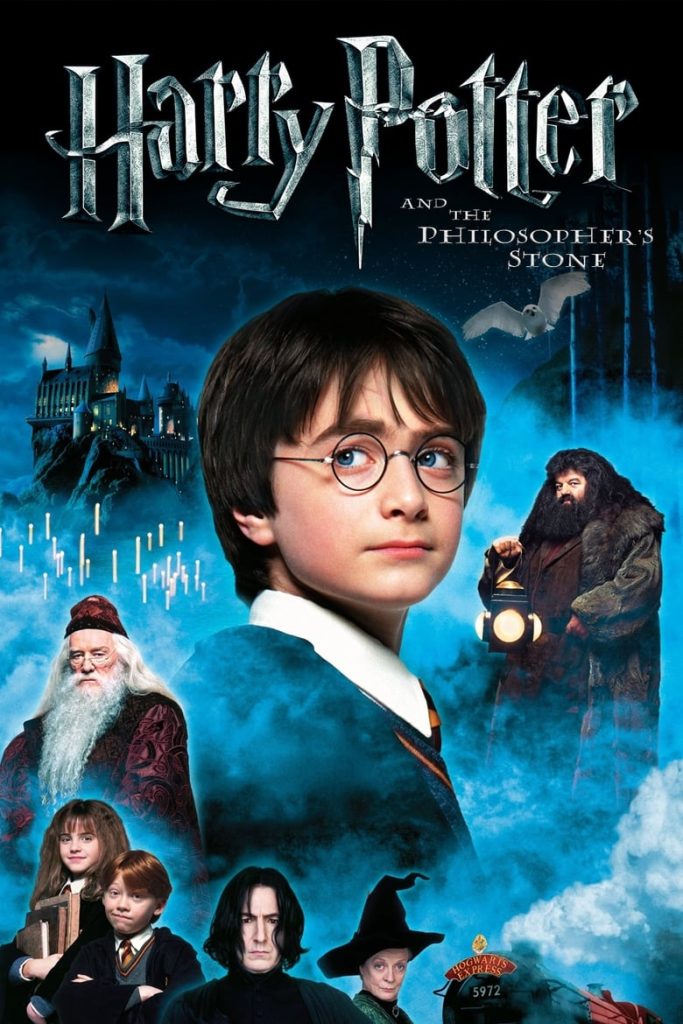
Harry Potter and the Philosopher's Stone follows an orphaned boy who discovers he is a wizard on his eleventh birthday. He is whisked away to Hogwarts School of Witchcraft and Wizardry, where he makes his first friends and learns about his magical heritage. The film centers on Harry's first year at school, where he uncovers a mystery involving a powerful magical object hidden within the castle.
Parent Guide
A magical adventure suitable for most children, with some suspenseful moments.
Content breakdown
Fantasy violence includes magical confrontations, a chess game with living pieces, and scenes of peril where characters are in danger. No graphic injuries are shown.
Some scenes may be frightening for sensitive viewers, including a large three-headed dog, a troll, and a villain with a distorted appearance. The tone is generally adventurous rather than horrific.
No offensive language is present.
No sexual content or nudity.
No substance use.
Emotional moments include themes of orphanhood, bullying, and facing fears, but are handled in an age-appropriate way within the fantasy context.
Parent tips
This film is a family-friendly introduction to the magical world of Harry Potter, rated PG for some scary moments and mild peril. The themes of friendship, bravery, and discovering one's identity are central and positive. Parents should be aware that there are scenes involving magical creatures and a villain that might be intense for very young viewers.
Parent chat guide
Parent follow-up questions
- Which magical animal did you like the most?
- What was your favorite part of Hogwarts castle?
- How did Harry feel when he got his letter?
- What color would you want your wizard robes to be?
- Was there a part that made you feel brave?
- Why do you think friendship was so important to Harry?
- What would you do if you found out you could do magic?
- How did the characters work together to solve problems?
- What makes a good friend, like Ron or Hermione?
- What lesson did Harry learn about telling the truth?
- How does Harry's background affect how he sees the wizarding world?
- What does the movie show about facing fears?
- Why is it important to question things, as Hermione does?
- How do the characters show loyalty to each other?
- What responsibilities come with having special abilities?
- How does the film establish the conflict between good and evil?
- What commentary does the movie offer on social hierarchies and prejudice?
- How does Harry's journey reflect the theme of self-discovery?
- In what ways does the setting of Hogwarts serve as a character itself?
- How are traditional fantasy tropes used or subverted in this story?
🎭 Story Kernel
At its core, 'Philosopher's Stone' explores the universal longing for identity and belonging. Harry's journey from the cupboard under the stairs to Hogwarts mirrors every child's search for where they fit in the world. The film isn't about defeating Voldemort—it's about Harry discovering he's not the freak the Dursleys made him believe he was. Every character is driven by this need: Hermione seeks intellectual validation, Ron craves recognition beyond his family's shadow, even Quirrell/Voldemort desires power to escape his own inadequacies. The Mirror of Erised reveals this beautifully—Harry sees family, not fame or glory.
🎬 Visual Aesthetics
Chris Columbus establishes the visual language of the Wizarding World with deliberate contrast. The Dursleys' suburban world is shot in muted grays and beiges, with static, symmetrical compositions reflecting their rigid conformity. Hogwarts explodes with warm golds, deep reds, and moving staircases—the camera becomes fluid, tracking through corridors with childlike wonder. Notice how magic is visualized: spells are golden light, the invisibility cloak creates a watery distortion, and the Mirror of Erised uses layered reflections. The chess sequence employs dramatic low angles, making children feel monumental in their first real test.
🔍 Details & Easter Eggs
💡 Behind the Scenes
The film's production faced immense pressure to cast perfectly. Daniel Radcliffe was discovered by producer David Heyman's wife at a theater performance. The Hogwarts exterior is a composite: Alnwick Castle for grounds, Durham Cathedral for corridors, and Gloucester Cathedral for the moving staircases scene. John Williams composed 'Hedwig's Theme' in just two weeks, creating one of cinema's most recognizable motifs. The chess pieces were life-sized fiberglass sculptures moved by remote control, with the 'death' scenes requiring puppeteers to collapse them realistically.
Where to watch
Choose region:
- HBO Max
- Peacock Premium
- USA Network
- Peacock Premium Plus
- Amazon Video
- Apple TV
- Google Play Movies
- YouTube
- Fandango At Home
- Spectrum On Demand
- Plex
Trailer
Trailer playback is unavailable in your region.