
Harry Potter and the Prisoner of Azkaban (2004)
Story overview
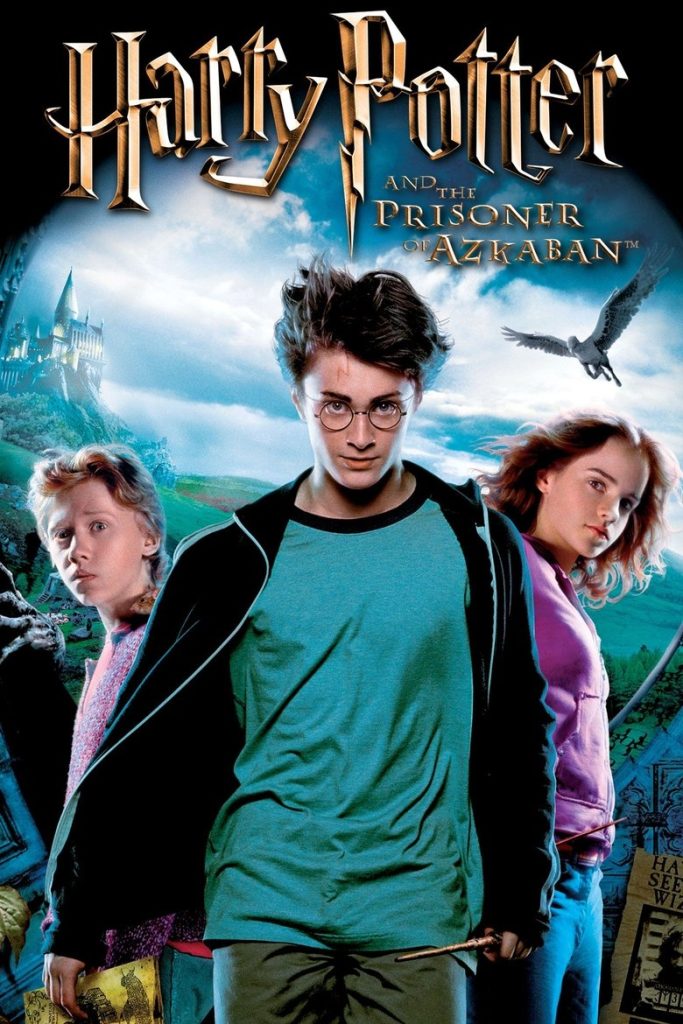
In this third installment of the Harry Potter series, Harry returns to Hogwarts for his third year, where he learns that a dangerous prisoner named Sirius Black has escaped from Azkaban prison and may be targeting him. Harry discovers new magical creatures like hippogriffs and dementors while uncovering secrets about his past. The story follows Harry, Ron, and Hermione as they navigate teenage challenges, magical classes, and a mystery involving time travel and betrayal.
Parent Guide
A darker installment in the series with increased emotional intensity and frightening elements, suitable for children who have enjoyed previous films and can handle more mature themes.
Content breakdown
Magical confrontations, creatures attacking characters, and scenes of peril. Some intense chase sequences and magical battles without graphic violence.
Menacing dementor creatures that feed on happiness, dark atmospheric settings, and themes of betrayal. Some jump scares and tense moments.
Occasional mild insults and teenage bickering typical of the age group. No strong profanity.
No sexual content or nudity. Some mild teenage crushes and romantic hints.
No substance use depicted. Magical potions are part of the fantasy setting.
Themes of loss, betrayal, and confronting traumatic past events. Characters experience fear, anger, and sadness related to family history and danger.
Parent tips
This film introduces darker themes than previous installments, with menacing dementor creatures that can be frightening for younger viewers. The story deals with themes of betrayal, injustice, and confronting fears from the past. While the magical adventure remains central, parents should be prepared to discuss the emotional intensity of certain scenes involving loss and danger.
The time-travel elements might require some explanation for younger viewers to understand the plot's complexity. The film maintains the series' core values of friendship, courage, and standing up for what's right, but with increased maturity in its storytelling approach.
Parent chat guide
You could explore themes of justice and fairness by talking about how characters are treated in the story. The time-travel aspect provides an opportunity to discuss consequences and how small actions can have big impacts.
Parent follow-up questions
- What was your favorite magical creature in the movie?
- How did Harry's friends help him when he was scared?
- What colors did you see in the magic spells?
- What would you do if you had a magic wand?
- Which part made you feel happy?
- Why do you think the dementors were so scary to Harry?
- How did Hermione use her intelligence to help her friends?
- What did you learn about being a good friend from this movie?
- How would you feel if you could travel back in time like the characters?
- What was fair or unfair in how characters treated each other?
- What do you think the movie shows about facing your fears?
- How does the story explore the theme of trust and betrayal?
- What consequences did characters face for their actions?
- How did the time-travel element change your understanding of the story?
- What messages does the film give about standing up for what's right?
- How does this film develop Harry's character compared to previous movies?
- What commentary does the movie make about justice systems and authority?
- How are themes of trauma and memory explored through the dementors?
- What does the film suggest about the complexity of good and evil?
- How does the time-travel plot device comment on fate versus choice?
🎭 Story Kernel
At its core, Prisoner of Azkaban is about confronting trauma rather than fighting evil. Harry's journey shifts from battling external villains to facing internal demons—his parents' death, his own mortality, and the weight of his legacy. The Dementors represent depression that feeds on happy memories, while Sirius Black and Remus Lupin embody how trauma can twist people into monsters or mentors. The Time-Turner sequence reveals that salvation comes not from defeating enemies, but from understanding them—Harry saves himself by learning to save others. This is the film where Harry stops being a child reacting to the wizarding world and starts shaping his own destiny.
🎬 Visual Aesthetics
Alfonso Cuarón's direction transforms Hogwarts from a storybook castle into a living, breathing world with texture and weather. The color palette shifts from warm golds to cold blues and grays, mirroring Harry's emotional state. Notice how camera movements become more fluid—the extended tracking shot through the Leaky Cauldron, the handheld intimacy of the Knight Bus sequence. The Whomping Willow changes with the seasons, becoming a visual timeline. Most strikingly, the Dementors are filmed with chilling minimalism—their presence signaled by frost, breath, and shadow rather than elaborate effects, making them feel genuinely haunting.
🔍 Details & Easter Eggs
💡 Behind the Scenes
This was the first Harry Potter film shot outside the UK, with Hagrid's hut and the Whomping Willow scenes filmed in Scotland's Glen Coe. Alfonso Cuarón asked the three leads to write essays about their characters from first-person perspective—Emma Watson wrote 16 pages, Daniel Radcliffe wrote one page, and Rupert Grint never turned his in. The Dementors' chilling effect was achieved by opening freezer doors off-camera during scenes. Gary Oldman studied dog behavior for months to portray Sirius Black's animagus form, while David Thewlis based Lupin's weary physicality on his father who had chronic fatigue syndrome.
Where to watch
Choose region:
- HBO Max
- HBO Max Amazon Channel
- Peacock Premium
- Peacock Premium Plus
- Amazon Video
- Apple TV
- Google Play Movies
- YouTube
- Fandango At Home
- Spectrum On Demand
- Plex
Trailer
Trailer playback is unavailable in your region.