
Hellboy (2004)
Story overview
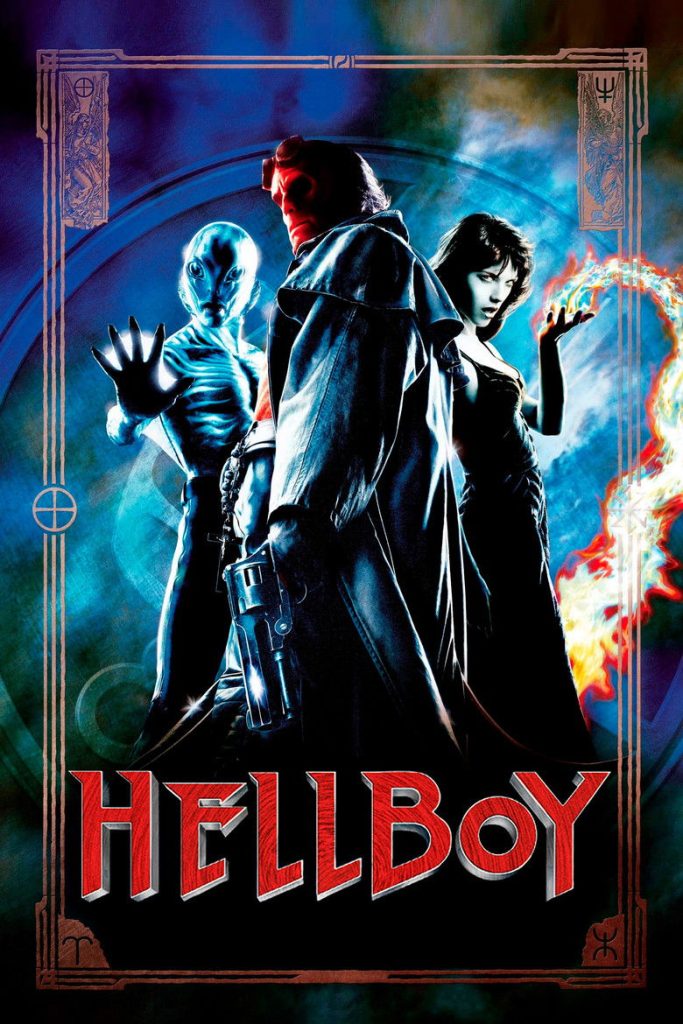
Hellboy (2004) is a fantasy action film directed by Guillermo del Toro. Set during World War II, Nazis attempt a black magic ritual that summons a baby demon, who is rescued by Allied forces and named Hellboy. Sixty years later, Hellboy works as a paranormal agent for the Bureau of Paranormal Research & Defense, alongside allies like Abe Sapien (a psychic merman) and Liz Sherman (a pyrokinetic woman), protecting America from dark supernatural threats. The film blends historical elements with comic-book-style action and supernatural themes.
Parent Guide
A dark fantasy action film with moderate violence, scary imagery, and supernatural themes. Recommended for teens and mature tweens; not suitable for young children due to intense scenes and mature content.
Content breakdown
Fantasy violence includes fistfights, gunfire, monster battles, and supernatural attacks. Characters are injured or killed (e.g., by creatures or explosions), but gore is minimal. Some perilous scenes, such as characters in life-threatening situations during action sequences.
Features scary/disturbing elements: demonic creatures, Nazi occult rituals, dark magic, and intense supernatural moments (e.g., summoning scenes). The tone is dark and gothic, which might be frightening for sensitive viewers, especially younger children.
Infrequent mild language (e.g., 'hell', 'damn'). No strong profanity.
No sexual content or nudity. Some mild romantic tension between characters is implied but not explicit.
No depiction of substance use.
Moderate emotional intensity due to action-packed scenes, character conflicts, and dark themes (e.g., good vs. evil, identity struggles). Might be overwhelming for very young or sensitive viewers.
Parent tips
This PG-13 rated film features moderate fantasy violence, scary creatures, and some intense scenes. Best suited for viewers aged 13 and up, though mature tweens (10-12) may handle it with guidance. Discuss the film's themes of good vs. evil, identity, and teamwork. Note: Contains supernatural elements, Nazi references, and monster battles that might be too intense for younger children.
Parent chat guide
Parent follow-up questions
- Was Hellboy a good guy or a bad guy? Why?
- What was your favorite creature in the movie?
- How did the friends help each other?
- Why do you think Hellboy decided to fight for good instead of evil?
- What powers did Liz and Abe have, and how did they use them?
- What made the monsters in the movie scary or not scary to you?
- How does the movie mix real history (like WWII) with fantasy elements? Does it work?
- What challenges did Hellboy face because of how he looks or where he came from?
- Do you think the violence in the movie was necessary for the story? Why or why not?
- Analyze the film's themes of destiny vs. free will—how does Hellboy defy his 'demonic' fate?
- How does Guillermo del Toro use visual style (like creature design) to enhance the story?
- Compare this to other superhero/fantasy films: what makes Hellboy unique or similar?
🎭 Story Kernel
At its core, Hellboy explores the tension between destiny and choice through a protagonist literally born to end the world. Hellboy's struggle isn't about whether he's good or evil, but whether he can reject the apocalyptic purpose written into his very biology. The film presents identity as something fought for against both external expectations (Broom's fatherly guidance) and internal programming (his demonic heritage). Every character grapples with their nature: Liz Sherman fears her power, Abe Sapien hides his sensitivity, and even the villain Rasputin believes he's fulfilling a necessary cosmic reset. The real conflict isn't Hellboy versus monsters, but Hellboy versus the story he's supposed to live.
🎬 Visual Aesthetics
Del Toro's visual language creates a tactile, worn universe where the supernatural feels oddly mundane. The Bureau for Paranormal Research and Defense headquarters isn't sleek sci-fi but a cluttered, bureaucratic space where ancient artifacts share shelves with filing cabinets. Hellboy's red skin isn't glossy CGI but appears textured like cured leather, making him feel physically present. The color palette favors muted browns and grays punctuated by Hellboy's crimson and Liz's fiery oranges, visually representing how the extraordinary disrupts the ordinary. Action scenes have a weighty, almost clumsy physicality—when Hellboy swings the Samaritan, you feel the heft.
🔍 Details & Easter Eggs
💡 Behind the Scenes
Ron Perlman spent three hours daily in makeup, requiring him to arrive at 3 AM. The prosthetic suit weighed 40 pounds and included animatronic facial pieces controlled by 15 technicians. Del Toro intentionally avoided digital effects for Hellboy whenever possible, preferring practical makeup to help Perlman's performance feel physically real. The film's New Jersey locations stood in for a fictionalized New York because Del Toro wanted a more decayed, industrial aesthetic than shiny Manhattan offered.
Where to watch
Choose region:
- Netflix
- Amazon Video
- Apple TV Store
- Google Play Movies
- YouTube
- Fandango At Home
- Spectrum On Demand
Trailer
Trailer playback is unavailable in your region.