
Herod’s Law (1999)
Story overview
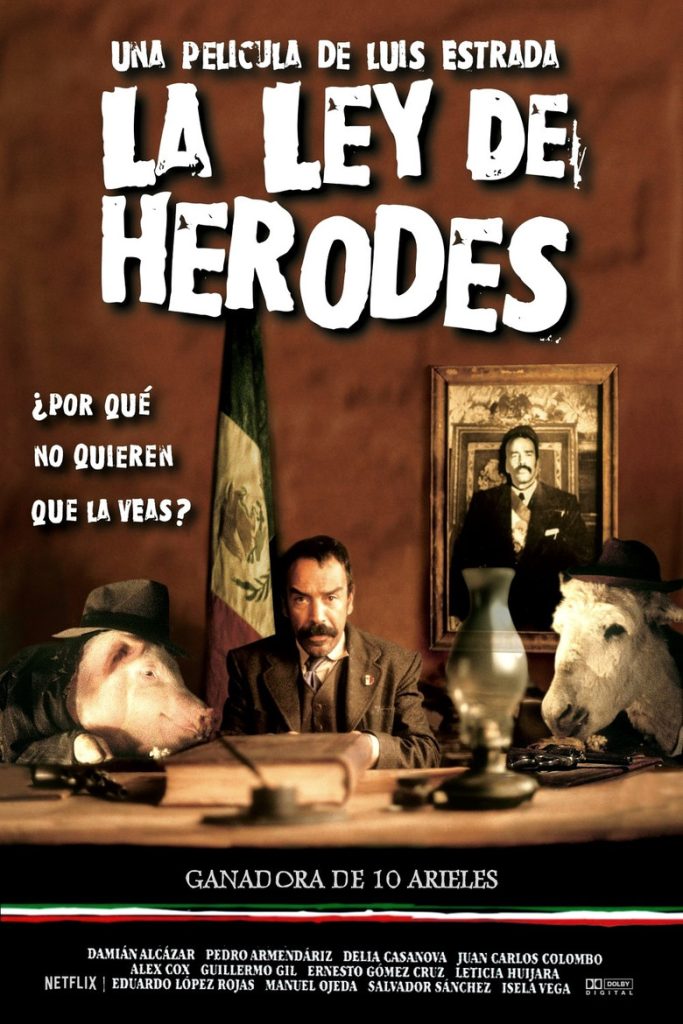
Herod's Law is a 1999 dark comedy crime drama that follows a man appointed as mayor of a small town, where he quickly becomes entangled in corruption and moral dilemmas. The film blends humor with serious themes of power, greed, and societal decay, presenting a satirical look at political systems. As a mystery unfolds, characters navigate complex situations that challenge their ethics and reveal the darker sides of human nature.
Parent Guide
This R-rated film contains mature themes and content suitable only for adults. It explores complex issues through a dark comedic lens, requiring viewer discretion.
Content breakdown
May include scenes of crime-related peril, confrontations, or implied violence typical of the crime genre.
Themes of corruption and moral decay could be unsettling, with a dark tone that might disturb sensitive viewers.
Likely contains strong language consistent with an R rating and adult-oriented dialogue.
May include adult themes or references, given the R rating and mature subject matter.
Could depict substance use in social or crime-related contexts, as common in adult dramas.
Explores intense themes of greed, power, and ethics, which may evoke strong emotional responses.
Parent tips
This film is rated R, indicating content suitable for mature audiences only. Parents should be aware that it deals with adult themes including corruption, crime, and moral ambiguity, which may be confusing or inappropriate for younger viewers. The dark comedic tone and dramatic elements require a level of maturity to understand the satire and underlying messages.
Parent chat guide
Parent follow-up questions
- What was your favorite part of the movie?
- Did you see any characters being kind or unkind?
- What colors or sounds did you notice in the film?
- What do you think the main character learned by the end?
- How did the movie make you feel during the funny parts?
- Can you describe a problem someone had in the story?
- Why do you think the characters made certain choices in the film?
- What message do you think the movie was trying to share?
- How does the movie show the difference between right and wrong?
- How does the film use satire to comment on real-world issues?
- What ethical dilemmas did the characters face, and how were they resolved?
- In what ways did the movie challenge your views on power and corruption?
🎭 Story Kernel
At its core, 'Herod's Law' explores how idealism inevitably succumbs to institutionalized corruption when faced with the brutal pragmatism of power. The film follows Juan Vargas, a naive teacher appointed as mayor of a remote town, who initially believes in following legal procedures. His transformation isn't about personal greed but survival within a system where every institution—from the church to the police—operates through bribery and coercion. The driving force isn't character development but systemic pressure: Vargas learns that 'Herod's Law' (take or be taken) governs everything. The film suggests that in such environments, morality becomes a luxury only the powerless can afford, and power structures perpetuate themselves by corrupting anyone who enters them.
🎬 Visual Aesthetics
Director Luis Estrada employs a deliberately drab, washed-out color palette dominated by browns and grays that mirrors the moral decay of the political system. The camera often observes characters from a distance, creating a sense of detachment that emphasizes how corruption operates as an impersonal force rather than individual villainy. Visual symbolism appears in the decaying municipal building—its peeling paint and broken furniture representing the crumbling state institutions. The film's few moments of color (like Vargas's initial clean white shirt) gradually become stained, visually tracking his moral compromise. The cinematography avoids glamorizing anything, presenting even violent moments with stark, unflinching realism that reinforces the film's bleak worldview.
🔍 Details & Easter Eggs
💡 Behind the Scenes
The film faced significant political pressure during production in 1999, with the then-ruling PRI party attempting to block its release due to its explicit critique of Mexican political corruption. Actor Damián Alcázar (who plays Vargas) studied real-life small-town politicians to develop his character's physical mannerisms. The fictional town of San Pedro de los Saguaros was actually filmed in multiple locations around Mexico State, with the production team deliberately choosing deteriorating buildings to enhance the film's atmosphere. Director Luis Estrada intentionally cast actors who weren't conventionally handsome to emphasize the gritty realism of political life, breaking from Mexico's tradition of glamorizing political figures in cinema.
Where to watch
Choose region:
- Netflix
- Netflix Standard with Ads
Trailer
Trailer playback is unavailable in your region.