
Heroes of the Sky: The Mighty Eighth Air Force (2020)
Story overview
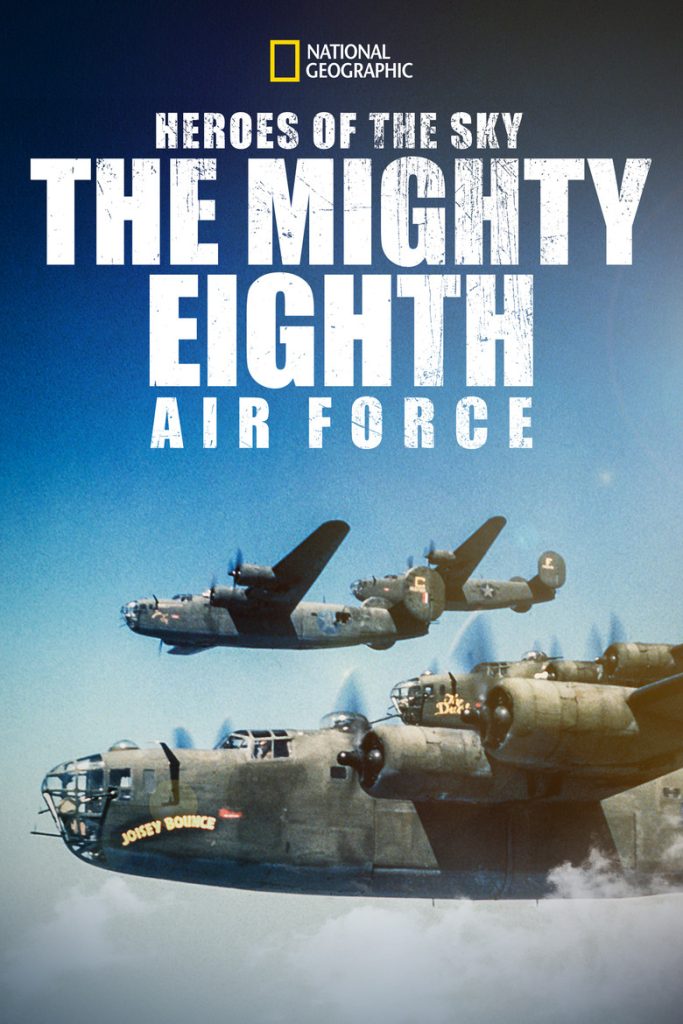
This documentary explores the history and experiences of the Eighth Air Force during World War II, focusing on their strategic bombing campaigns over Europe. It covers the challenges faced by aircrews, the technological developments of the era, and the impact of their missions on the war effort. The film provides historical context through archival footage, interviews, and expert commentary to educate viewers about this significant military unit.
Parent Guide
Educational documentary about WWII aviation history with wartime footage and discussions of combat. Suitable for mature children with parental guidance.
Content breakdown
Contains historical wartime footage showing explosions, damaged cities, and combat situations. Discussions of casualties and military operations.
May include images of wartime destruction and discussions of death in historical context. No graphic violence shown.
No offensive language expected in educational documentary format.
No sexual content or nudity in historical documentary.
No depiction of substance use in educational historical content.
Deals with serious historical topics including war, sacrifice, and loss. May evoke strong emotions about historical events.
Parent tips
This documentary deals with historical warfare topics that may be intense for younger viewers. Parents should be prepared to discuss the realities of war, including combat, loss, and historical context. The film is educational but may contain footage of wartime destruction and discussions of casualties that could be upsetting to sensitive children.
Consider watching together with children ages 8-12 to provide context and answer questions. For teens, this can serve as a starting point for discussions about history, military strategy, and the human cost of war. The documentary format makes it suitable for family viewing with appropriate guidance.
Parent chat guide
During viewing, pause if needed to check in with your child about how they're feeling. After watching, ask open-ended questions about what they learned and how they felt about the content. Focus on the historical significance and bravery of the individuals while acknowledging the difficult realities of war.
Use this as an opportunity to discuss how we learn from history and why it's important to remember these events. Emphasize the educational value while being sensitive to any emotional reactions.
Parent follow-up questions
- What did you see in the airplanes?
- What colors did you notice in the movie?
- How did the people in the movie help each other?
- What was your favorite part to watch?
- Did you see any animals in the movie?
- What did you learn about airplanes from long ago?
- Why do you think people made movies about these events?
- How do you think the pilots felt flying those planes?
- What was the most interesting fact you learned?
- What questions do you have after watching this?
- What challenges did the aircrews face during their missions?
- Why was the Eighth Air Force important during World War II?
- How has airplane technology changed since this time period?
- What did you learn about teamwork from this documentary?
- How do documentaries help us understand history better?
- What strategic role did bombing campaigns play in World War II?
- How does this documentary present the human cost of warfare?
- What ethical questions does this historical period raise about military tactics?
- How reliable are historical documentaries compared to other sources?
- What connections can you make between this historical period and modern conflicts?
🎭 Story Kernel
The film's core isn't about winning the war, but about the psychological cost of industrial-scale warfare on the individual. It expresses the dehumanizing paradox of the Mighty Eighth: young men must become cold, efficient cogs in a vast bombing machine to survive, yet that very process strips away the humanity they're supposedly fighting for. Characters are driven not by patriotic fervor, but by a desperate, grim camaraderie and the sheer, grinding will to complete one more mission—the only metric of success in a campaign where survival rates were a grim lottery. The narrative engine is the tension between the mission's strategic necessity and its horrific, intimate human toll.
🎬 Visual Aesthetics
The visual language is a stark study in contrasts. The air is a realm of terrifying, sublime beauty—vast, sun-drenched cloudscapes and the geometric precision of bomber formations. This clashes violently with the interior hell of the B-17s: a claustrophobic, cacophonous world of shaking metal, freezing air, and sudden, brutal violence rendered in chaotic, handheld shots. The color palette deliberately drains during combat, leaving cold blues and metallic grays, punctuated only by the hellish orange of flak bursts and engine fires. This aesthetic doesn't glorify; it immerses you in a sensory overload of fear and mechanical fragility.
🔍 Details & Easter Eggs
💡 Behind the Scenes
To achieve authenticity, the production utilized a small fleet of actual, airworthy B-17 Flying Fortresses, with many aerial sequences filmed in-flight. The cast underwent a condensed 'boot camp' with military advisors to learn crew procedures and the physicality of operating in the cramped, freezing conditions. Notably, several scenes used practical effects and in-camera techniques for the combat damage instead of relying solely on CGI, with crews manually rigging pyrotechnics on replica fuselage sections to capture the visceral impact of flak and gunfire.
Where to watch
Choose region:
- Disney Plus
- fuboTV