
Heroes: Silence and Rock & Roll (2021)
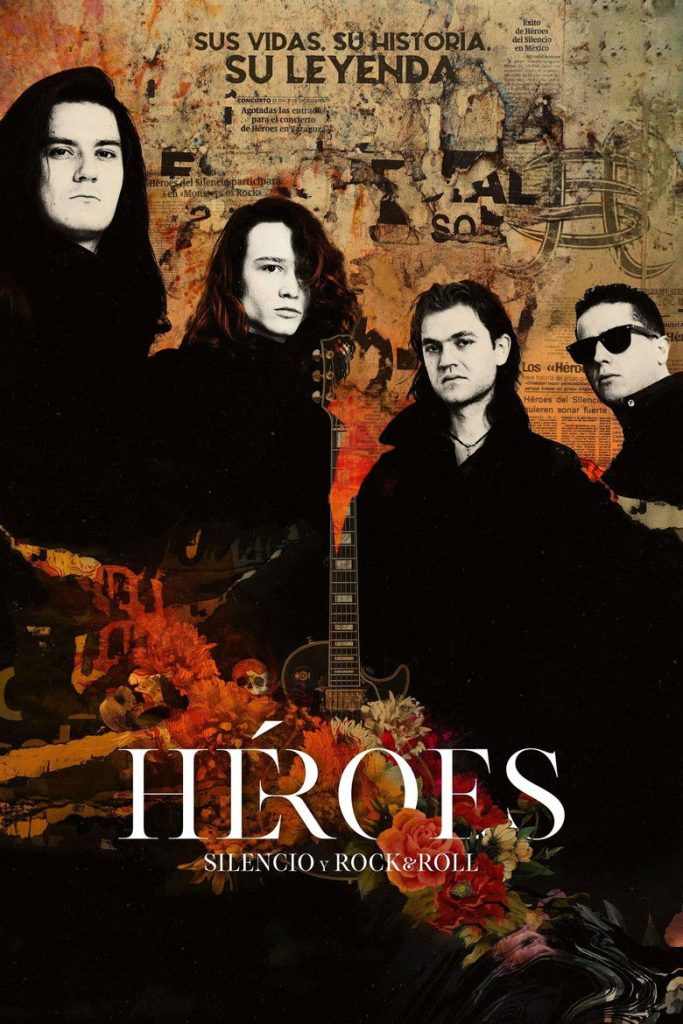
Story overview
This 2021 Spanish documentary explores the rise of Héroes del Silencio, a seminal 1980s Spanish rock band anchored by frontman Enrique Bunbury. The film examines the band's formation, musical evolution, cultural impact, and legacy through interviews with band members including Bunbury, Pedro Andreu, Joaquin Cardiel, Juan Valdivia, and Ignacio 'Pito' Cubillas. As a music documentary, it focuses on artistic development, creative processes, and the Spanish rock scene of the era rather than dramatic storytelling.
Parent Guide
A clean, educational documentary about Spanish rock history suitable for most children. The film contains no concerning content and focuses entirely on music, creativity, and band dynamics.
Content breakdown
No violence, peril, or dangerous situations. The documentary consists entirely of interviews, archival footage, and musical performances.
Nothing scary or disturbing. The tone is analytical and celebratory of musical achievement.
No profanity or concerning language. Conversations focus on music history and artistic processes.
No sexual content or nudity. Band members are dressed casually in interviews and performances.
No depiction or discussion of substance use. The focus remains strictly on musical career and artistic development.
Mild emotional moments when discussing the band's breakup or challenges, but presented in a reflective, documentary style rather than dramatic reenactment.
Parent tips
This documentary is appropriate for most children aged 8+ with an interest in music history. The content focuses entirely on the band's career and music, with no concerning material. Younger viewers may find the documentary format less engaging than narrative films. Consider watching together if your child shows interest in music documentaries or Spanish culture. The film provides educational value about Spanish rock history and artistic dedication.
Parent chat guide
Parent follow-up questions
- Did you like the music in the movie?
- What instruments did you see?
- Was it fun to watch people play music?
- What was most interesting about how the band started?
- Which band member seemed most interesting to you and why?
- What did you learn about Spanish music?
- How did the band's sound change over time?
- What challenges do you think they faced as musicians?
- How does this documentary help preserve musical history?
- What cultural factors influenced Spanish rock in the 1980s?
- How does Héroes del Silencio compare to rock movements in other countries?
- What makes documentary filmmaking an effective way to explore music history?
🎭 Story Kernel
The film is not about the triumph of rock music over oppression, but about the profound power of silence as the ultimate form of resistance. The protagonist's journey from a rebellious guitarist to a man who chooses not to play reveals that true rebellion isn't in the noise you make, but in the noise you refuse to make. The oppressive regime seeks to control expression, but the film argues that the deliberate withholding of expression—the silent guitar, the unsung lyric—becomes a more potent, unassailable form of protest. The characters are driven not by a desire for fame or revolution, but by a need to protect the sanctity of their internal artistic voice, even if it means externalizing it as nothing.
🎬 Visual Aesthetics
The cinematography masterfully employs a desaturated, concrete-gray palette for scenes of control and oppression, which starkly contrasts with the warm, golden-hued flashbacks to the band's creative peak. The camera often lingers in static, wide shots during moments of bureaucratic interrogation, making the characters feel small and trapped. Conversely, the concert scenes use shaky, intimate close-ups and rapid cuts that mimic the visceral energy of a live performance. A recurring visual motif is the empty stage or silent instrument framed centrally, symbolizing the void left by censored art. The final shot, a slow zoom on the protagonist's hands resting on his unplugged guitar, is devastating in its stillness.
🔍 Details & Easter Eggs
💡 Behind the Scenes
The lead actor, known primarily for dramatic roles, undertook three months of intensive guitar lessons to perform all the playing scenes himself, refusing a hand double. The concert sequences were filmed in a single, legendary 18-hour shoot in an abandoned Soviet-era theater in Eastern Europe to capture authentic, exhausted energy. The director mandated that all scenes depicting the oppressive 'Ministry of Culture' be filmed in actual government buildings from the communist era, lending an unnerving authenticity to the sterile, intimidating environments.
Where to watch
Choose region:
- Netflix
- Netflix Standard with Ads