
Hichki (2018)
Story overview
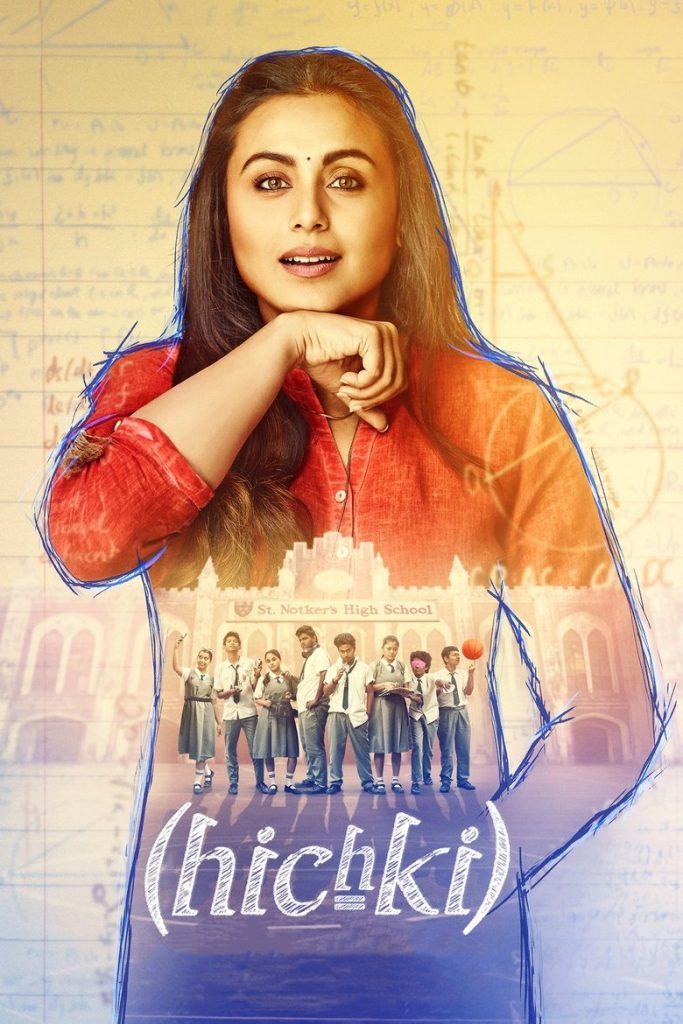
Hichki is a 2018 Indian drama-comedy film about a determined teacher with Tourette syndrome who takes on a challenging class of underprivileged students. The story follows her journey as she faces prejudice and skepticism while trying to connect with her students and help them succeed. Through perseverance and innovative teaching methods, she inspires her class and proves that differences can be strengths.
Parent Guide
A heartwarming drama about a teacher overcoming challenges to inspire her students, suitable for most children with parental guidance for younger viewers.
Content breakdown
Some tense moments and verbal conflicts between characters, but no physical violence.
Emotional scenes involving discrimination and challenging situations, but nothing graphic or frightening.
Occasional mild language or disrespectful comments between characters.
No sexual content or nudity present.
No substance use depicted.
Emotional scenes involving discrimination, educational challenges, and personal struggles that may be intense for sensitive viewers.
Parent tips
Hichki offers valuable lessons about overcoming adversity, empathy, and the power of education. The film portrays a teacher with Tourette syndrome facing discrimination, which provides opportunities to discuss disability awareness and resilience with children. While the movie has some emotional moments and mild conflict, it's generally uplifting and focuses on positive messages about inclusion and determination.
Parent chat guide
Parent follow-up questions
- How did the teacher help her students?
- What made the teacher special?
- How did the students feel about their teacher?
- Why do you think some people didn't believe in the teacher at first?
- How did the teacher's condition help her understand her students better?
- What did the students learn from their teacher?
- How does the film show the impact of socioeconomic differences on education?
- What strategies did the teacher use to connect with her challenging class?
- How did the teacher turn her perceived weakness into a strength?
- How does the film address systemic issues in education through personal stories?
- What does the movie suggest about the relationship between disability and innovation?
- How do the characters' journeys reflect broader social challenges in India?
🎭 Story Kernel
At its core, 'Hichki' explores how perceived weaknesses can transform into strengths when channeled through empathy and purpose. Naina Mathur's Tourette syndrome, which causes involuntary vocal tics ('hichki'), isn't just a disability to overcome—it becomes her authentic voice in a system that values conformity. The film critiques India's education system that segregates 'meritorious' students from underprivileged ones, revealing how both groups are trapped by societal expectations. The real conflict isn't Naina versus her condition, but her progressive teaching philosophy against an institution that measures success by test scores rather than human potential. The students' transformation mirrors Naina's own journey from seeking acceptance to embracing her difference as power.
🎬 Visual Aesthetics
The film employs a deliberate visual contrast between sterile institutional spaces and vibrant classroom scenes. Early sequences at the elite school feature cool blues and grays with symmetrical compositions, reflecting rigid order. When Naina enters her classroom of 'unteachable' students, the palette warms to yellows and browns with more handheld, intimate camerawork. The camera often lingers on faces during tic episodes rather than cutting away, normalizing Naina's condition. Key moments use visual metaphors: students literally breaking down a wall between classrooms symbolizes breaking social barriers. The final exam sequence uses dynamic tracking shots that contrast with earlier static classroom scenes, visually representing the students' newfound confidence.
🔍 Details & Easter Eggs
💡 Behind the Scenes
Rani Mukerji prepared for her role by spending time with people who have Tourette syndrome and working with a neurologist to understand the condition's nuances. The classroom scenes were shot in a real Mumbai school during summer break to capture authentic educational environments. Director Siddharth P. Malhotra intentionally cast relatively unknown young actors for the student roles to enhance their 'outsider' authenticity. The film's Hindi title 'Hichki' translates literally to 'hiccup,' but carries deeper cultural connotations about interruptions in life's flow. Several classroom teaching methods shown were developed with educational consultants to ensure pedagogical accuracy.
Where to watch
Choose region:
- Netflix
- Netflix Standard with Ads
- Apple TV
- Google Play Movies
- YouTube