
Hidden Figures (2016)
Story overview
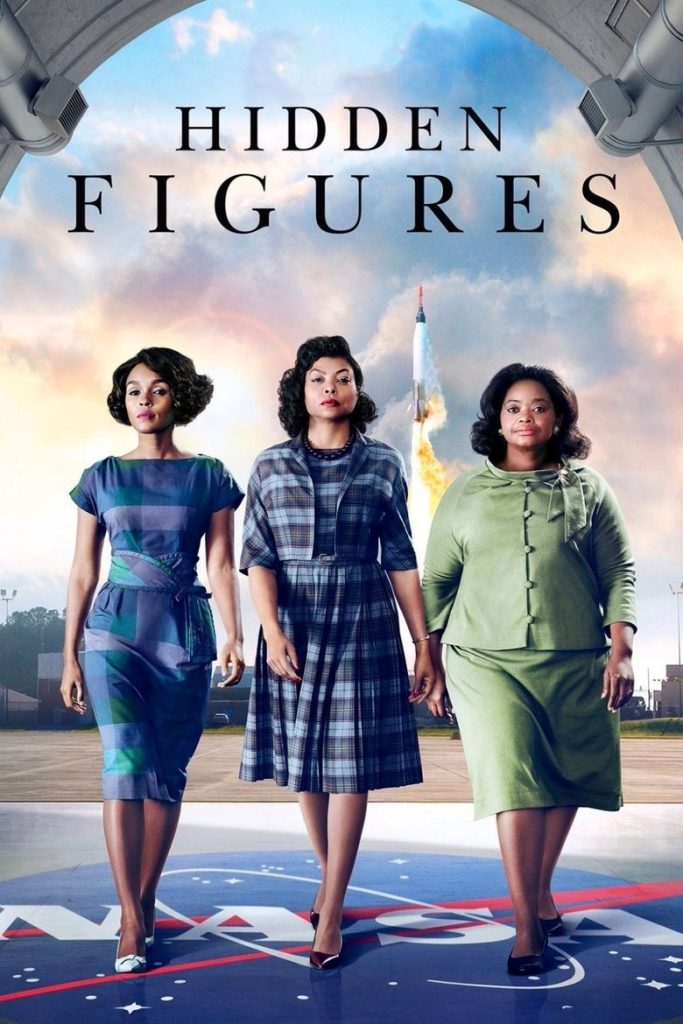
Hidden Figures tells the inspiring true story of three brilliant African-American women mathematicians who worked at NASA during the early 1960s space race. The film follows Katherine Johnson, Dorothy Vaughan, and Mary Jackson as they overcome racial and gender discrimination to make crucial contributions to America's space program. Their perseverance and intelligence helped launch astronaut John Glenn into orbit, breaking barriers in both science and society.
Parent Guide
Educational historical drama about overcoming discrimination through intelligence and perseverance.
Content breakdown
No physical violence. Some tense moments related to space mission safety concerns.
Emotional scenes of discrimination and segregation that may be upsetting but are not graphic.
Occasional mild language related to racial terms used in historical context.
No sexual content or nudity.
No substance use depicted.
Strong themes of discrimination and perseverance may be emotionally engaging for sensitive viewers.
Parent tips
This historical drama provides an excellent opportunity to discuss important themes like racial segregation, gender equality, and perseverance in the face of adversity. The film portrays discrimination realistically but without graphic content, showing how these women maintained their dignity and professionalism despite unfair treatment. Parents can use this movie to talk about historical context, civil rights, and the value of education and determination.
Parent chat guide
Parent follow-up questions
- What did the women in the movie do for their jobs?
- How did the friends help each other?
- What was your favorite part of the movie?
- Why did Katherine have to use a different bathroom?
- How did Dorothy learn about computers?
- What did Mary want to become and why was it difficult?
- How did segregation affect the characters' daily lives?
- What qualities helped these women succeed despite obstacles?
- Why was their work important for the space program?
- How does the film portray institutional racism versus individual prejudice?
- What strategies did the women use to navigate discriminatory systems?
- How does this historical context relate to current discussions about diversity in STEM fields?
🎭 Story Kernel
Hidden Figures is less about individual genius and more about systemic exclusion and the quiet, relentless labor required to dismantle it. The core drive isn't just getting a man into orbit; it's Katherine Johnson's fight to attend a briefing, Dorothy Vaughan's quest to learn FORTRAN, and Mary Jackson's battle to take a night class. Their brilliance is a given; the film's tension comes from the bureaucratic and social barriers designed to waste that brilliance. The real victory isn't John Glenn's safe return, but the moment the 'Colored Ladies Bathroom' sign is taken down—a small, tangible crack in the edifice of segregation, achieved not by a grand speech but by Katherine simply refusing to run a half-mile to relieve herself.
🎬 Visual Aesthetics
The film employs a deliberate visual dichotomy. The NASA campus is shot with clean, geometric lines and a palette of sterile whites, grays, and beiges, mirroring the cold logic of engineering and the impersonal nature of institutional racism. This contrasts sharply with the warm, vibrant colors of the Black community's homes and churches. Camera work is often observational, placing us as silent witnesses to microaggressions, like the prolonged shot of Katherine's coffee pot, segregated and labeled. The most powerful visual motif is running: Katherine's frantic dashes to the distant bathroom visually map the literal extra miles Black employees were forced to travel, making an abstract injustice physically exhausting and visible.
🔍 Details & Easter Eggs
💡 Behind the Scenes
To ensure accuracy, the actresses portraying the lead mathematicians—Taraji P. Henson, Octavia Spencer, and Janelle Monáe—received tutoring from real mathematicians and NASA veterans. The film shot at several historically significant locations, including the former West Area Computing office at Langley Research Center. Costume designers meticulously recreated 1960s fashion, using color strategically—Katherine's vibrant dresses stand out defiantly against NASA's drab interiors. Director Theodore Melfi insisted on using practical effects and real period-appropriate technology where possible to ground the story in tangible reality.
Where to watch
Choose region:
- HBO Max
- HBO Max Amazon Channel
- Amazon Video
- Apple TV
- Google Play Movies
- YouTube
- Fandango At Home
Trailer
Trailer playback is unavailable in your region.