
High and Low (1963)
Story overview
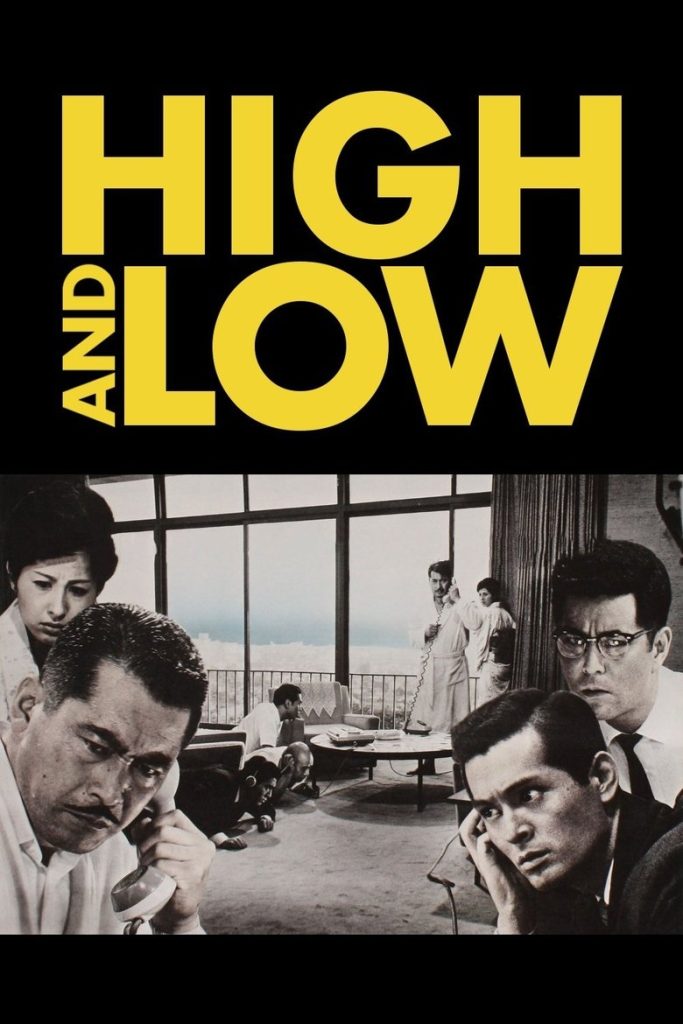
High and Low is a Japanese crime drama from acclaimed director Akira Kurosawa. The story follows a wealthy shoe executive who faces an agonizing moral dilemma when kidnappers mistakenly abduct his chauffeur's son but still demand an enormous ransom. The film explores themes of class conflict, ethical responsibility, and the tension between personal ambition and human compassion. It's a tense, character-driven thriller that examines what people are willing to sacrifice for others.
Parent Guide
A tense moral drama suitable for mature teens that explores ethical dilemmas and class conflict with minimal graphic content but significant emotional intensity.
Content breakdown
The film centers on a kidnapping plot but shows minimal physical violence. There's psychological tension and peril related to the abduction scenario.
The kidnapping premise and moral pressure could be disturbing, especially for sensitive viewers. Tense situations create anxiety but without graphic horror elements.
No notable strong language issues in the English subtitles or dubbing.
No sexual content or nudity present.
Some social drinking in scenes, typical of adult interactions in the time period.
High emotional stakes throughout as characters face difficult moral choices with significant consequences.
Parent tips
This film deals with mature themes including kidnapping, moral dilemmas, and class differences that may be challenging for younger viewers. While there's minimal graphic violence, the psychological tension and emotional stakes are high throughout. The film's length (over 2 hours) and deliberate pacing might test the attention span of younger children.
Parents should be aware that the central premise involves the kidnapping of a child, which could be frightening or upsetting for some viewers. The film explores complex ethical questions about responsibility and sacrifice that may require discussion with older children and teens. The black-and-white cinematography and subtitles (if watching in Japanese) might also affect engagement for some viewers.
Parent chat guide
After watching, focus conversations on the ethical questions raised: What would you do in a similar situation? How do we balance personal interests with helping others? Discuss how the film portrays different social classes and the responsibilities that come with wealth and power. For older viewers, you might explore how the film's structure builds suspense and develops characters through dialogue rather than action.
Parent follow-up questions
- How did the movie make you feel?
- What was your favorite part?
- What does it mean to help someone?
- Did you see any people being kind?
- What colors did you see in the movie?
- Why was it hard for the main character to decide what to do?
- What does 'responsibility' mean in the story?
- How did the characters show they cared about each other?
- What would you do if you saw someone needing help?
- How did the music and pictures help tell the story?
- What moral dilemma does the main character face?
- How does the film show differences between rich and poor people?
- What sacrifices do characters make for others?
- How does the film build tension without much action?
- What message do you think the director wanted to share?
- How does the film explore themes of social responsibility versus personal ambition?
- What commentary does the film make about class structures in society?
- How effective is the film's slow-burn approach to building suspense?
- What ethical frameworks could apply to the main character's decision?
- How does the cinematography and framing contribute to the film's themes?
🎭 Story Kernel
At its core, 'High and Low' dissects the illusion of social hierarchy through the crucible of a kidnapping. Gondo, the wealthy executive, begins the film literally above Yokohama in his hilltop mansion, physically and metaphorically 'high.' The ransom demand forces him down into the city's sweltering streets and police stations—the 'low.' Yet Kurosawa's genius reveals this distinction as false. The kidnapper, a disgruntled medical intern, operates from society's literal basement but shares Gondo's ruthless drive for status. The film argues that capitalism's ladder creates moral vertigo; the 'high' must descend to understand the system's violence, while the 'low' climbs only to find emptiness at the top. It's less a crime thriller than a surgical examination of post-war Japan's soul.
🎬 Visual Aesthetics
Kurosawa masterfully uses the widescreen Tohoscope format to create a stark visual dialectic. The first act is a claustrophobic chamber piece in Gondo's modernist mansion, with static, carefully composed shots that feel like a tense stage play. When the action descends into Yokohama, the camera becomes restless, employing handheld urgency in crowded trains and sweaty police rooms. The color palette is deliberately muted—beiges, grays, and the oppressive yellow of the summer heat—making the sudden bursts of color (the kidnapper's red shirt in the train, the neon of the drug district) feel like moral warnings. The famous train sequence, shot with multiple cameras to maintain spatial continuity, turns public transit into a panopticon where every passenger is both suspect and witness.
🔍 Details & Easter Eggs
💡 Behind the Scenes
Toshiro Mifune, playing Gondo, insisted on wearing his own tailored suits to authentically portray a wealthy executive, contrasting sharply with the off-the-rack uniforms of the police. The famous train sequence was a logistical nightmare, requiring precise synchronization of seven cameras on a moving train to capture the continuous, real-time feel. Kurosawa adapted the film from Ed McBain's pulp novel 'King's Ransom,' but transposed it to Japan, adding layers of commentary on the country's rapid economic growth and its discontents. The Yokohama slum scenes were shot in a real neighborhood scheduled for demolition, giving the film an unvarnished, documentary-like grit that studio sets couldn't replicate.
Where to watch
Choose region:
- HBO Max
- HBO Max Amazon Channel
- Criterion Channel
- TCM
- Amazon Video
- Apple TV
- Fandango At Home
- Shout! Factory TV
- Kanopy
- Plex
- Plex Channel
Trailer
Trailer playback is unavailable in your region.