
High & Low The Worst X (2022)
Story overview
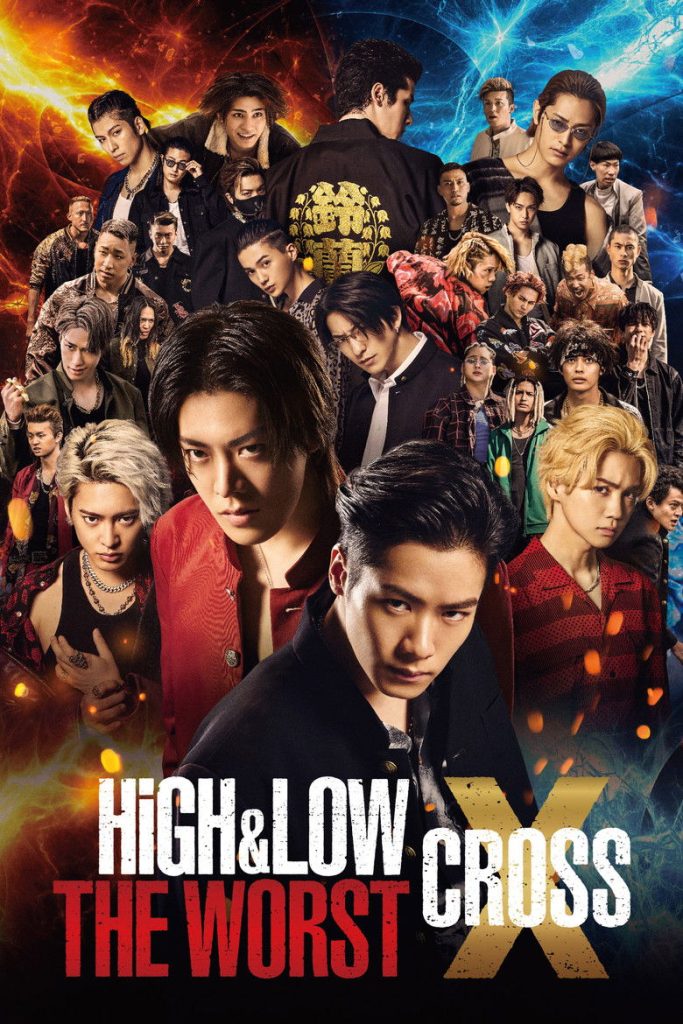
High & Low The Worst X is a 2022 Japanese action film that continues the popular franchise. The movie follows rival groups in intense urban conflicts, focusing on themes of loyalty, rivalry, and street justice. Expect dynamic fight sequences and dramatic confrontations typical of the action genre.
Parent Guide
Action film with significant violence and intense confrontations between rival groups. Recommended for mature teens who can handle action violence and understand fictional portrayals of conflict.
Content breakdown
Extensive hand-to-hand combat, group fights, and dramatic confrontations typical of action films. Characters engage in physical altercations throughout the movie.
Intense confrontations and group conflicts may be disturbing to sensitive viewers. The atmosphere of rivalry and tension is sustained throughout.
May contain some strong language typical of action films, but specific content unknown from input.
No sexual content or nudity indicated from available information.
No substance use indicated from available information.
High-stakes conflicts and loyalty themes create emotional tension throughout the film.
Parent tips
This film contains significant action violence including hand-to-hand combat, group fights, and dramatic confrontations typical of the franchise. Parents should be aware that the movie portrays rival groups in conflict situations that may be intense for younger viewers. Consider the maturity level of your child when deciding if this film is appropriate, as it deals with themes of violence and group rivalry.
Parent chat guide
Parent follow-up questions
- How did the characters feel when they were fighting?
- What colors did you see in the movie?
- Did you see any friends helping each other?
- What sounds did you hear during the action scenes?
- How would you solve problems without fighting?
- Why do you think the groups were fighting?
- How did the characters show loyalty to their friends?
- What could the characters have done differently to avoid violence?
- How did the music make you feel during action scenes?
- What makes someone a good leader in difficult situations?
- What messages does the film send about solving conflicts?
- How does the movie portray group loyalty versus individual choice?
- What are the consequences of violence shown in the film?
- How do the action scenes affect the story's pacing?
- What real-life situations might resemble the conflicts in the movie?
- How does the film explore themes of honor and street justice?
- What social dynamics are portrayed between the rival groups?
- How does the action genre influence character development in this film?
- What cultural elements might be specific to Japanese action cinema?
- How does the film balance entertainment with its portrayal of violence?
🎭 Story Kernel
The film's core isn't about gang warfare but about the fragile nature of power structures in lawless environments. It explores how leadership is constantly tested not by external enemies but by internal ambition and shifting loyalties. Characters are driven by a primal need for territory and respect, yet the movie reveals how these concepts are illusions in a world where today's ally is tomorrow's rival. The narrative dismantles the romanticized yakuza hierarchy, showing instead a chaotic ecosystem where survival depends on reading micro-shifts in social dynamics. Ultimately, it's a study of organizational entropy—how any system without legitimate authority inevitably consumes itself.
🎬 Visual Aesthetics
Director Tsutomu Hanabusa employs a gritty, handheld aesthetic that creates visceral immediacy during chaotic brawls, contrasting with static, wide shots that emphasize the bleak urban landscapes where these conflicts unfold. The color palette is deliberately desaturated, dominated by concrete grays and neon-tinged nights, mirroring the characters' emotionally barren existence. Fight choreography favors brutal realism over stylized spectacle—punches land with audible impact, and exhaustion becomes a visible character in prolonged conflicts. Symbolically, the recurring overhead shots of labyrinthine streets and cramped interiors visually trap characters in their circumstances, while strategic use of reflections in puddles and windows subtly suggests fractured identities and dual loyalties.
🔍 Details & Easter Eggs
💡 Behind the Scenes
Many supporting cast members were actual martial artists and street performers rather than professional actors, lending authentic physicality to the fight sequences. The film was shot almost entirely on location in Osaka's less-glamorous districts, with residents occasionally appearing as background extras. Director Hanabusa insisted on minimal CGI for injuries and impacts, preferring practical effects that required precise timing from performers. Several key dialogue scenes were improvised based on character motivations rather than strict scripts, creating more naturalistic tension. The production deliberately used older digital cameras in some sequences to achieve a grainier, more documentary-like texture.
Where to watch
Choose region:
- Netflix
- Netflix Standard with Ads
Trailer
Trailer playback is unavailable in your region.